|

 Chatboards
 Mailrings
 Classifieds
 Lessons
 Jobs
Jobs
 Projects
|
  |

|



 A Computer Teacher Shows the Way | |||||||||||||||
| by Harry & Rosemary Wong Special to the Gazette August 1, 2008 |
|||||||||||||||
|
|||||||||||||||
|
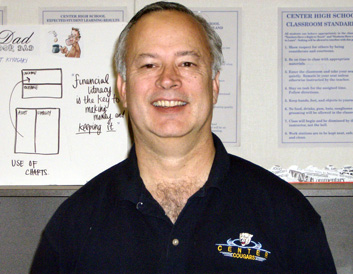
“Whoever is doing all the work is doing all the learning,” says Holland Myers, a high-school teacher from California. “Unfortunately it took me ten years and a feeling of almost total desperation before I figured that out,” he says. Twenty years ago, Holland was at the end of his rope. He was feeling completely demoralized by the thought of dealing with yet another semester of uninterested, unmotivated, and unruly students. For his first ten years, he taught a required one-semester computer literacy course to ninth-grade students.
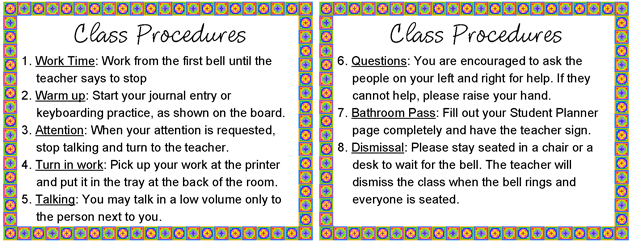
“At Center High, the typing course and my computer literacy course swap students each semester,” Holland told us. “As the new semester approached, reports from the typing teachers were filled with warnings. One teacher told me that this was the worst group of students he had seen in 23 years of teaching. At the time, I was only 38 years old and I already couldn’t tolerate the thought of teaching another 20 years or so until retirement. My students had no interest in learning and I felt I was serving as little more than a babysitter. I had no idea how I would face this next semester of students. “As luck would have it, at semester’s end, I attended an in-service training led by Dr. Harry Wong. I was tremendously impressed by the concepts and suggestions he made. Desperate to change my classroom environment, I went straight home and ordered The First Days of School. “I had only one week to prepare for my new semester. Using the book as a foundation, I set up the model for a different approach to teaching. I wanted my students to understand from the minute they entered my classroom that this was a place where learning would occur.” His First Day of School Holland began by creating procedures for his classroom. He communicated them via computer generated posters he made and hung on the wall.
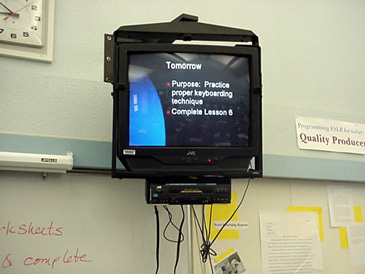
A banner that read “Welcome to Success!” was also hung along with samples of student work. Holland created a packet to give each student at the beginning of class on the first day. Each packet included a personalized cover letter welcoming the student to the class and copies of all the posters. “When the students entered my class, they were asked to immediately begin their first assignment,” says Holland. “Instructions were posted on the board. Now, I use a monitor.
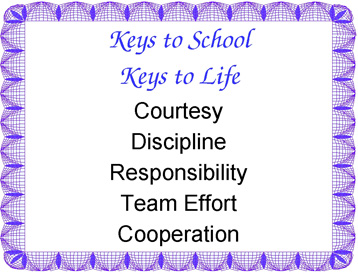
As they worked, I approached each student individually and handed him or her the classroom packet I had prepared. As I did so, I made a simple comment to each one. ‘Catherine, it’s good to have you in class,’ or ‘Eric, I’m glad you’re here today.’ The students looked at me strangely as if I was speaking in a foreign language, but I continued anyway. “After the students finished their assignment, I explained about the class and its priorities. I told them, ‘This is the most exciting class you will ever take! We are not going to learn about computers, we are going to learn about success! This is the most exciting class you will ever take because you will be successful here, and being successful here means that you can be successful anywhere. And do you know why? It’s because we are going to practice the things that successful people do.’ I pointed to a poster on the wall and said, ‘If you do these five things, you will be successful and magic will happen every time.’
“We need to practice courtesy, discipline, responsibility, team effort, and cooperation ON something,” Holland told his class, “so we will practice them on learning about computers. Learning about computers is very easy with these five things. It is very difficult without them.” Practice the Procedures Next Holland reviewed all of his classroom procedures with his students. Together they practiced them, over and over. (See The First Days of School, page 175.) “I praised my class every time, even when we had to repeat a procedure to get it right. I would find something good to say before we talked about how to improve next time.” “In my class, the students know to immediately give me their attention when I ring a bell. A poster on the wall outlines the procedure.
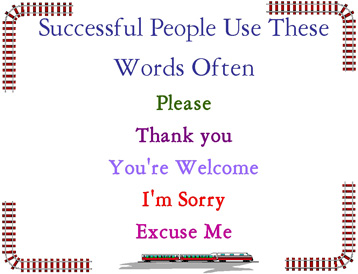
“Four weeks before, I might have said, ‘May I have your attention, please,’ repeating it over and over, more loudly each time until finally I would be yelling, ‘Why can’t you do this right? How difficult can this be? All you have to do is stop typing and shut up!’ “Now, because they have learned our classroom procedures, my students give me their immediate attention. Instead of yelling, I find myself saying, ‘You stopped typing exactly when I asked. That was excellent! Thank you very much!’ “And a funny thing happened. My students were smiling. They had successfully completed a procedure. Several of them came up to me to say, “‘Mr. Myers, I think I’m going to enjoy this class.’” How He Handled Cheating Just two weeks later, Holland was sidelined with a nasty flu bug and was out for four days. His students had completed a lot of work in his absence, but out of the 120 students in his four classes, he noticed that at least 10 had printed out other students’ work and put their own names on it. Holland tells us, “I couldn’t decide how to be positive about this flagrant cheating. I knew if I came back yelling, I would be less than effective in communicating with my students. I decided to teach a different lesson. “When I returned to class, I told the students that I had discovered that some of them had cheated on their assignments. ‘Cheating and lying are things that successful people don’t do,’ I told them. ‘It is only a path to failure. But one of life’s lessons is that sometimes, successful people who make a mistake can salvage success out of failure through honesty, if they are honest soon enough. If your boss catches you in a lie or being dishonest, then it is too late. “‘But if you can tell your boss about your mistake before it is discovered, then your honesty and dedication will be remembered, not the mistake. “‘So, if you want to salvage success out of failure in my class, and if you have made a mistake, please tell me that you would like to take back some pages of your work before I grade it at the end of the day.’ “Eighteen students turned themselves in. And not a single one repeated that mistake again.” He Taught Them Success “Over the next ten weeks, I continued to teach my students our classroom elements of success. I explained to my students that courtesy is based on an attitude and that certain words are used to convey it. The attitude is to be nice to each other. The words are Please, Thank You, You’re Welcome, Excuse Me, and I’m Sorry. I posted these five phrases on a poster titled Words to Success which hung on the wall. (See The First Days of School, Chapter 10.)
“One day, a student with a history of being rude came up as I was talking to another teacher. I saw a pained look on this face, followed by a puzzled look. Finally, he glanced at the wall and breathed a sigh of relief. ‘EXCUSE ME, Mr. Myers,’ he began. He had learned that he couldn’t just interrupt our conversation, but he couldn’t remember what to say. The poster on the wall gave him his clue.” Before Holland began teaching his students the components of success, an average of about 35 percent had received a C- or lower in his class. In an effort to increase the number of successful students and to convey the importance of team effort, Holland borrowed an example from the business world. Just as employees are often rewarded for reaching a corporate goal, his students would also be rewarded for reaching a class goal. Together the class set the goal that every single student would have a C or better by the end of the quarter. Anything lower than a C would not be good enough. If they met that goal, they would be treated to a party by Holland. The students were taught to work together to help each other. Holland observed firsthand that the students doing the most work, did the most learning. When students tutored other students, they themselves learned more as well. And when questions could not be answered by other students, Holland would work one-on-one with the students who needed help. At the end of the quarter, all four of Holland’s computer literacy classes had met their goals. Not one student received a grade lower than a C. All four classes celebrated with a party. Holland said, “All this from some of ‘the worst students’ my peer teachers had seen in 23 years! The other teachers wondered how I did it. I told them, ‘I didn’t do it. When the in-service was over, I came up to thank Harry for helping me “do it.” A Well-Oiled Machine in the Worst of Times Holland Myers is a proactive teacher. The old adage, “into each life, some rain must fall,” certainly rang true for Holland several years after he had become an effective teacher. He says, “One year, I had personal issues at home with an ill family member that consumed a lot of my attention. Quite honestly, there were many times that year that I felt unable to focus on my students. Interestingly there was another teacher that same year with similar family problems. “The big difference: my classes knew exactly what was expected of them. They understood the value of teamwork and cooperative learning. They respected the procedures of our classroom and showed courtesy for each other and for me. Even without my full attention, my classes continued to run like a well-oiled machine. And the students were successful. “My colleague did not have classroom procedures in place. Unable to focus on his class, he resorted to taking them to the library every day with no specific goals or task. His students simply did not learn that year.” Teachers are human. They and members of their families can get sick. Or they might have to deal with other things outside of school that can have a negative impact on them. But when teachers are proactive in implementing a classroom management plan, student learning can take place—even in the absence of the teacher—because the students know what to do. Effective Teachers Are Proactive We know that effective teachers are proactive. They use classroom management techniques to prevent problems from occurring. And under adversity the students all know what to do, which is what they must learn to do as a successful adult. Proactive teachers have classrooms that almost run themselves—just like a well-oiled machine. Nathan Gibbs (March 2004), Beth Sommers (May 2007), Elmo Sanchez (August 2007), Kazim Cicek (November 2004) and many more are examples of proactive teachers with smooth-running classrooms who have been highlighted in this column through the years. Holland summarizes his characteristics of a well-managed classroom:
Holland’s classroom management plan has remained highly effective for the past twenty years. It is what has made him an effective teacher with successful students. Twenty-two years ago, he made a personal commitment: “Twenty-two years is too long to baby-sit. I knew I either had to give up and start coming to school just to baby-sit and hate it the whole time, or I had to find a new way to teach.” And he still keeps on ticking! Holland hasn’t rested on his laurels, so to speak. Just as he expects his students to learn, he demands the same of himself. He understands that effective teachers never cease to learn. He says, “I remember what Harry said at our school in-service 20 years ago: If
you learn or do just 10 percent more every year, you will be in the “So, it became a personal goal of mine to learn something new every year. Every year, I studied for a new credential, took a new class, or followed coursework that interested me.” Over the years, Holland has become certified to teach K-12 life sciences, physical science, mathematics, and computer concepts and applications. He also holds a lifetime community college credential in computers and related applications. Just recently Holland passed the School Leaders Licensure Assessment test, which enables him to apply for an administrative credential. “I like to think of myself as a master teacher with 30 years of experience. I know some of my peers who have had one year of experience, 30 times. The difference between us is not aptitude; they may be smarter or even more natural teachers than I. The difference is that every year I try to give 10 percent more than I did the previous year.” He tells us, “I’m certainly not ready for retirement, but I have turned over the department chairmanship to another teacher so I can help with her transition while I am still here. I haven’t yet decided what’s next on my list. “But you can be sure, I’m ready to try something new . . . to learn something new!” Holland’s Top Four Things All Teachers Should Know Reflecting on his career, Holland shares with you the four most important tips for other teachers: 1.
Whoever is doing all the work is doing all the learning. 2.
There is no learning in an out-of-control classroom. 3.
You can start the year over any time you like. 4. A good classroom management system will succeed most of the time for 80% of your students, all of the time for 15% of your students, and none of the time for 5% of your students. Don’t assume that you are doing something wrong because there are one or two students you cannot reach. Writing referrals, handing out suspensions, calling home, and contacting other resources are all part of the process. The goal is to help those students into an educational environment where they can be successful. Unlike computers and its related technology that outdates itself with the next latest, greatest device in the blink of an eye, classroom management is timeless. You’ll never find the concept of classroom management in the e-waste pile of fads and programs that promised student and teacher success. Launch your classroom management plan at the start of this new school year. Use technology to assist you. PowerPoint presentations are easy to create to visually present your procedures to the class. Click here to see an example. Get everyone on the same homepage when the school year begins. Creating Success As Holland believes and practices, it is our firm belief that every student has the potential for success and all we have to do as teachers is to create the structure for learning to take place. That doesn’t mean the formula will work for everyone as Holland states in #4 in his list of all things teachers should know. But, that is our job as teachers, to constantly rework, tweak, modify, and change our classroom and our instruction to unlock the potential in all students. Holland did not produce student success. He created the opportunity for his students to succeed. When the students’ succeeded, they continued to grow and learn in the hands of an effective teacher, Holland Myers. We
hope this article about an effective teacher will help you to reboot your
classroom for student success this new school year!  For
a printable version of this article click
here. For
a printable version of this article click
here.

 »
More Gazette articles... »
More Gazette articles... |
|||||||||||||||
|