
|

 Chatboards
 Mailrings
 Classifieds
 Lessons
 Jobs
Jobs
 Projects
|
  |

Effective Teaching... by Harry and Rosemary Wong
To print: Select File and then Print from your browser's menu
------------------------------------------------------------------
This article was printed from Teachers.Net Gazette,
located at https://teachers.net.
------------------------------------------------------------------
February 2002
A Stress Free Teacher
Because of the teachers in the alternative program,
I am doing better in class and in life.
Chris Taylor, 7th grader
Lafayette, LA
The Town: Lafayette, Louisiana
The School: N. P. Moss Middle School
The Setting: A High Poverty Middle School
The Population: 95% African-American, 92% Free and Reduced Lunches
The Problems: Poor discipline, poor social skills, and academic failure
The Outcome: 93% of class pass Louisiana Educational Assessment Program test
The Secret: Liz Breaux, classroom teacher
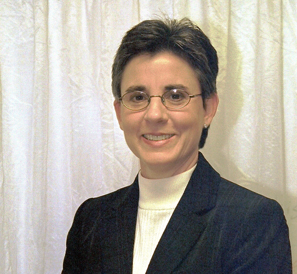
Liz Breaux has been teaching for 17 years. At N. P, Moss Middle School, she seldom has major problems, her students are successful, and she is basically stress free! Administrators, teachers, and parents have often wondered what's Liz's "secret" recipe for success with her students.
Liz has no secrets, because effective teachers do not employ tricks of the trade, the latest fad, or untested opinions. Liz Breaux's success is based on good classroom management skills, which are known to all effective classroom teachers. These can all be found in Unit C of The First Days of School.
Currently, Liz teaches Language Arts in a middle school to alternative students who are anywhere from one to three years behind their appropriate grade levels and who have experienced failure in so many forms that they know little else. Thanks to
her students are highly successful. Last year, all of her students passed the 7th grade--and the curriculum is accelerated to prepare them for the statewide 8th grade test.
- simple structural procedures,
- a positive attitude, and
- high student expectations,
A "Start/Stop" Page
The beginning is the most important part of the work. Plato On the first day of school, Liz Breaux greets her students at the door and instructs each one to find the desk which has a "start/stop" page with their name written on it. Silent reading is done daily for the first ten minutes of class. Each day students use this sheet to record the page on which they start and then the page on which they stop their reading.
She also uses this sheet as a roll "call" tool (names are never actually "called out"), as sheets are left in books, which are laid out on the counter daily. On succeeding days, the students pick up their books upon entering class and begin their daily reading. The teacher can mark absences while students are reading by checking which students' books have remained on the counter.
On the first day of school, Liz Breaux explains the "start/stop" procedure, which will commence as soon as all students have checked out a book from the library. Since this activity is a graded activity, she also explains the grading scale on the first day, as students must know the importance of their daily reading and how they will be graded on a six-week basis. The school uses the Accelerated Reader computer tests, so each book that a student checks out comes complete with a test which students take, on the computer, once the book has been read.
"Star Chart"
Liz Breaux uses an accountability/responsibility technique she calls her "Star Chart," which she says, "Works beautifully!"
There are four colored charts (white, yellow, red, and blue, in that order), which are placed on the bulletin board. A numbered star for each student is on the red chart on the first day of school. Students are given a number on that first day, also. The object is to get your star to the blue chart. Stars remain on a chart from Monday- Friday. A student whose star is on the blue chart for that week can add 5 points to all graded assignment that week. She changes stars after school every Friday. Students move "up" a chart when they do the following for one week:
- turn in all homework that week
- are on time to class every day that week
- receive no conduct marks/demerits that week
- bring all materials to class that week
A student who is deficient in any one or more areas above for that week will have his/her star moved "down" one chart. There is no penalty for going down, other than forfeiting the opportunity for the extra points that week. STUDENTS LOVE THIS! They can't wait for Monday mornings to see on which chart their star is! They know that if their star is on the blue chart, they may write their own +5 at the top of every graded assignment that week!
"Graded Assignment Folder"
The students are each given a "graded assignment folder." They are to write their names on their folders and on the "grade sheet" which has already been placed inside the folder. From here on, they are responsible for writing down and inserting all returned graded assignments. (This is for student use only, as the teacher keeps all scores in a grade book!) The grade sheet is a chart, which lists every assignment that they will have for that six-week period. Whenever an assignment is returned, students are given their folders. They record the following:
- type of assignment
- possible points that can be earned on the assignment
- total points actually earned on the assignment
- letter grade given according to points earned
The students are shown how to tally "points earned" and "possible points," and how to use these two figures to average their grades. This way, they can do a quick average of their own from time to time during the six-week period. This keeps the students constantly aware of their averages throughout the six-week period. There is NEVER a question about a grade, as students know exactly what they have earned. Parents receive a copy of this also, as it is very easy to read and understand and keeps them abreast of academic progress.
Social Skills
Ms. Breaux not only helped me with my schoolwork
but with my social skills. Without this program,
I'd be just another at risk kid.Victor Senegal, 7th grader
Lafayette, LALiz Breaux teaches and models and the students practice and rehearse an extensive list of social skills throughout the year. She begins with "getting the teacher's attention." She begins by asking a question that every student will know the answer to and will be eager to share. When the question is asked, the students invariably all answer at once. She commends them for their enthusiasm, but explains that they cannot all answer at once. She informs them that from now on they must raise their hand and answer only when called upon. They then practice this.
Liz Breaux then asks a variety of fun questions that they will all be eager to answer. This activity is always fun and is also a way for everyone to get to know one another.
The following is a list of some of the other social skills that her students typically DO NOT possess when they come to school. She treats each skill like the above, making it a learning activity.
- Entering and exiting the room
- Disagreeing appropriately
- Accepting "no" for an answer
- Greeting others appropriately
- Saying "please," "thank you," and "you're welcome"
- Additional procedures as the year progresses
Using this technique, Liz Breaux has very few major discipline problems in the classroom, due to the efficacy of structured procedures and routines. For literally everything that the students do in the classroom, behaviorally and academically, structured procedures are implemented. When students do not follow the procedures, as does happen from time to time, she does not scold them. She simply reminds them of the procedures and they practice them again. This way, students always know what is expected of them, they know exactly what to expect from the teacher, and the classroom runs very smoothly. The classroom atmosphere is extremely work-oriented, yet it is always pleasant and supportive.
This is why Liz Breaux says she has very little work-related stress---because good classroom management is the key! When asked by new teachers at one of her workshops recently if she had a "secret," she referred them to The First Days of School and said, "Here's the secret."
Establish Consistency the First Week of School
Let's review what Liz Breaux does to make her classroom run so smoothly so that her students can improve academically.
Liz spends her first week of school basically teaching procedures, first in management and then in academics. She implements and practices with her students things such as entering the classroom, sharpening pencils, getting busy with bellwork upon entering, asking for permission to speak, treating one another with dignity, passing in papers, keeping track of supplies, working in groups, etc. And all the while, she never raises her voice.
When students don't follow the procedure, she simply reminds them and practices the appropriate procedure with them. She also makes sure that students are constantly working--from bell to bell. Many of her students will tell you that they're so busy, they literally don't have time to misbehave! And she remains, most importantly, consistent.
The most important concept to install the first week of school is CONSISTENCY.
Academic Procedures
When Liz Breaux feels certain that students understand the basic operational procedures of the classroom, she moves on to academic procedures. Her students come to her with very poor reading and writing skills. She begins by teaching basic paragraph structure--the "five finger rule" of topic sentence, three detail sentences, and one closing sentence. Students practice and practice and practice until they understand and can implement the basic procedure. She then moves on to extended writings where the same procedure is applied--five paragraphs, with one opening paragraph, three detail paragraphs, and one closing paragraph. Students can grasp this concept due to the simple procedures.
If not for you, I would not know
how to write an essay.Curtis Thomas, 7th grader
Lafayette, LAMy life is so much easier, now that I
finally understand how TO DO the
work. Thank you for making a
difference in my life.LaShonda Harris, 7th grader
Lafayette, LAThe students behave in class because they know exactly what is expected of them, and they are made to feel successful! By March of the school year, students have become so accustomed to writing and reading, due to structured practice following basic procedures, that they are well prepared for the 8th grade LEAP test--Louisiana Educational Assessment Program. A passing grade on this test allows her 7th grade alternative students to move to the 9th grade, skipping the 8th grade, and therefore getting "back on track."
Last year, 27 of 29 of her students passed the Language Arts portion of the LEAP test and the other two passed following summer remediation. Statewide, 15 percent of 8th graders did not pass the Language Arts portion. In Liz Breaux's parish 9 percent did not pass the Language Arts portion. So her students exceeded both the state and parish levels with regard to pass/fail ratio. Remember, these are all students in an alternative program who are repeaters.
You explained things from A to Z, and you broke them down
piece by piece. You wouldn't stop until you would know I got it.Brian Mouton, 7th grader
Lafayette, LAMaking a Difference
Liz's philosophy is that well-rehearsed procedures are the key to successful classroom management and effective teaching. She has proven, 17 years running, that discipline need not be a concern if procedural practices are implemented and consistently adhered to.
Annette Breaux, who is Liz Breaux's sister, shared much of the information for this column with us. She says, "Liz is probably too humble to tell you how good she is, so I'm sending you this information."
Liz Breaux is representative of the thousands of unsung teachers who are accomplishing what effective teachers know how to do, and since it's all so common sense, they do not think they are doing anything unusual or exceptional.
We know there are many Liz Breaux's out there, who are exceptional teachers. You will never be nominated for a Milkin Award or a Disney Teaching Award. You will probably not even become a teacher certified by the National Board. And more than likely you'll never be honored by your local school system.
But, we will venture to say that you will receive at least one award from a Chris Taylor who says because of you I am doing better in class and in life or from a LaShonda Harris who says thank you for making a difference in my life.
These are the awards, the plaques, the trophies that say the most as they come from the heart of the kids we struggle to keep on track in life.
You came into teaching to make a difference. Find a way to touch a child's heart today.
Harry & Rosemary Wong products: http://EffectiveTeaching.com
This printable version is provided for the convenience of individuals.