|  Effective
Teaching...
Effective
Teaching...
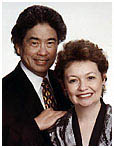
by Harry and Rosemary
Wong
February
2006
What Teachers
Have Accomplished
Each day, 150,000 children
come to your classrooms from a homeless situation.
Some 8,000 children are reported every day to public agencies
as having been abused or neglected. One child out of eight
is born each year to an unwed teenage mother. And one out
of five is born into poverty.
Yet, when they walk into your classrooms you do not ask if they
are in this country legally or illegally, if their parents beat
them the night before, if they had breakfast, or if they are homeless.
You welcome them. You nurture them; you love them;
and you teach them.

You teach them to acquire the knowledge and skills that will
make them productive citizens and will help them grow to their
fullest potential as human beings.
And because of what you do, this is what you have accomplished:
- More Children Are Attending Full-Day Kindergarten.
In 1983, just under one-third of kindergarteners went to school.
Now, more than 60 percent of kindergarteners attend for a full
day.
- Americans Are Becoming More Educated.
In 1945, the percentage of adults age 25 and older who had completed
high school was 24 percent and in 2004 it was 86 percent.
In the same time period, the proportion of adults who had attained
at least a bachelor’s degree increased from 4 percent
to 27 percent.
- High School Students Are Taking a More Challenging
Curriculum. The percentage of high school graduates
completing a core academic curriculum—including four years
of English and three years each of mathematics, science, and
social studies—quadrupled between 1982 and 2000,
from 14 percent to 57 percent.
- More High School Students Are Completing Advanced
Math and Science Courses. The percentage of high
school graduates completing advanced math courses (any course
more challenging than algebra II or geometry) climbed from 26
percent in 1982 to 45 percent in 2000 and the percentage completing
advanced science courses (any course more challenging than general
biology) rose from 35 percent to 63 percent.
- More High School Students Are Taking AP Courses and
Exams. Between school years 1983-84 and 2003-04,
the number of students taking AP exams rose from 177,000 to
more than 1.1 million and the number of AP exams taken grew
from almost 240,000 to 1.8 million.
- More Students with Disabilities Are Being Educated
in Regular Classrooms. Between school years 1985-86
and 2003-04, the percentage of students with disabilities educated
in regular classrooms for most of the school day with non-disabled
students grew from 26 percent to 50 percent.
- Student Achievement Has Gone Up in Math.
Both 9 and 13 year-olds scored significantly higher in 2004
on the long-term trend tests of the National Assessment of Educational
Progress (NAEP) than they had in 1982. Gains have been particularly
dramatic for 9 year-olds. The average scores jumped from
219 in 1982 to 241 in 2004. For 13 year-olds, average
scores rose from 269 in 1982 to 281 in 2004.
- Younger Students Are Showing Gains in Reading Achievement.
According to the long-term trend data of the NAEP, reading achievement
for 9 year-olds reached the highest score, 219, since NAEP began
testing reading in 1971 and most gains have occurred since 1999.
- In Other Academic Subjects, Achievement Has Improved
or Stayed the Same. Since the 1990s, NAEP scores
have gone up for students in grades 4 and 8 in writing, history,
and geography.
- Some Achievement Gaps Are Narrowing.
NAEP test score gaps in math and reading between Caucasian and
minority students have tapered to the smallest margins in three
decades. Data from the regular NAEP assessment in writing
also shows a reduction in the gap between Caucasians and African
Americans in average scale scores at grade 4, from 26 points
in 1998 to 21 points in 2000. Although scores have gone
up for Caucasian students, African American and Hispanic students
have gained at a somewhat faster rate.
- SAT Scores Have Gone Up, Even as Many More Students
Are Taking the Test. Scores on the SAT college
entrance exam are higher than they were 10 or 20 years ago.
The number of test takers has grown to more than 1.4 million
students in 2004. The group of SAT test takers has also
become more racially and ethnically diverse than it was 20 years
ago.
- ACT Test Scores Have Remained Stable, Even as the
Number of Test Takers Has Surged. The number
of test takers has grown from about 1 million in 1994 to 1.2
million in 2004.
- More Students Complete High School.
The United States is a world leader in high school completion.
Eighty-seven percent of 18 to 24 year-olds have completed high
school and more than two-thirds of 25 to 29 year-olds have completed
some college.
- Almost All U.S. Classrooms Have Internet Access.
Virtually all public schools (99 percent) have Internet access,
an increase from just 35 percent in 1994. The percentage
of instructional rooms with Internet access has climbed from
just 3 percent in 1994 to 93 percent in 2003.
- Students Are Safe at School. Rates
of crime and violence at school, or on the way to and from school,
fell by half during the past decade. During the past several
years, the percentage of students who carried a weapon on school
property, were involved in a physical fight at school, or felt
unsafe at school or traveling to or from school has also decreased
significantly. Children are safer at school than in the
community or at home.
- Parents Would Rather Reform the Current Public Education
System Than Find an Alternative System. The percentage
of public school parents who prefer to reform the existing system
has grown from 60 percent in 2000 to 72 percent in 2004.
Sixty-one percent of public school parents also gave the schools
in their community a grade of A or B—an increase over
the 52 percent who gave these grades in 1998.
- Public School Teachers Are Better Educated and More
Experienced Than Private School Teachers. In
school year 1999-2000, 47 percent of public school teachers
versus 35 percent of private school teachers held a master’s
degree or higher. Only 13 percent of public school teachers
have less than three years of experience, compared with almost
24 percent of private school teachers. Fifty-eight percent
of public school teachers have ten or more years of experience,
compared with 45 percent of private school teachers.
- Fewer High School Teachers Are Teaching Outside Their
Field of Preparation. Between 1987-99 and 1999-2000,
the percentage of high school students enrolled in classes taught
by an out-of-field teacher—one who lacked a major, minor,
or certification in the subject being taught—decreased
for most core academic subjects, including English.
- More Students Are Going to College.
The number of students enrolled in two and four year colleges
has climbed steadily over the past two decades from 10,618,000
students in 1984 to 14,257,000 in 2002. By 2003, 64 percent
of high school graduates went to college right out of high school,
a jump from about 55 percent in 1984. Fifty-five percent of
women high school graduates went to college in 1984, while 67
percent went in 2003.
- More Young Adults Are Completing Four Year College
Degrees. In 2002, 29 percent of young adults
ages 25 to 29 held a bachelor’s degree, compared with
22 percent in 1985. College completion rates have risen
steadily for Caucasian and African American youth but have fluctuated
for Hispanic youth.
- More Women Are Earning College and Graduate Degrees.
Since 1984, the percentage of college, graduate, and professional
degrees earned by women has risen steadily. The share
of degree holders who are women has increased in fields where
women were once seriously underrepresented, such as medicine,
dentistry, and law.
- You Bring Diverse People Together. The public
schools continue to be successful in bringing together the most
diverse population of students among the industrialized nations
and preparing large numbers of immigrants for life in America
and the world.
________________
Much of the above information has been excerpted from a document,
“Do You Know . . . The Latest Good News About American Education?”
Center on Education Policy. August 2005. Available at www.cep-dc.org/pubs/LatestGoodNews/LatestGoodNewsAug05.pdf.
The Promise of Education
Education for all is one of the defining promises of
our American democracy. No matter their religion,
social class, family income, special needs, or personal characteristics,
students are taught the knowledge and skills needed to succeed
as contributing adults. You also convey moral values, such
as integrity, individual responsibility, fairness, justice, patriotism,
respect for others, doing a good job, being on time, working well
with others, and being a good citizen.
Teachers Provide More Schooling
By 2015, 118 million young children in the world will still not
be able to attend a school and over 200 million young people will
have no secondary school to attend, a total of over 300 million.
Yet, in America schooling is provided for more people
for longer periods of time than any other country.
America is the world leader in high school completion rates,
with more Americans than ever before, across diverse backgrounds,
completing high school and earning a bachelor’s degree.
Teachers educate millions, improving social mobility among
individuals, and preparing immigrants to participate and succeed
in America and contribute to the world.
You teach common values and democratic principles and instill
a culture that supports America as a unified, dynamic, and flourishing
nation of diverse people.
You provide a wide range of services and special education programming
unparalleled by other nations.
You have played THE major role in imprinting equality and respect
for diversity as a value and practice among students of all races,
abilities, and genders.
America is the world’s super power because of what its
people know and can do. The country has succeeded not in
spite of education, but because of it.
__________________
For more details on the above, please see Michael J. Resnick,
“Public Education—An American Imperative: Why Public
Schools Are Vital to the Well-Being of Our Nation.” Policy
Research Brief. National School Boards Association. Spring/Summer
2004. Available at www.nsba.org/site/view.asp?CID=594&DID=34061.
What Teachers Need to Accomplish
Although you have accomplished much, there are still
challenges facing the profession, and we know you are up to these
challenges:
Six million students throughout America are currently at risk
of dropping out of school.
High school dropouts are unable to enter the workforce with the
necessary skills to meet the demands of our nation in the global
economy. By increasing the number of graduates with a quality
education, this will raise national revenues and will reduce billions
of dollars in public and private expenditures currently spent
on rectifying the shortcomings of a failed high school education.
By increasing minority students’ participation in college
to the same percentage as that of Caucasian students, this would
create an additional $231 billion in the country’s Gross
Domestic Product (GDP) and at least $80 billion in new tax revenues.
If literacy levels in the United States were the same as those
in Sweden, the U.S. GDP would rise by approximately $463 billion
and tax revenues would increase by approximately $162 billion.
The quality of instruction in reading, writing, and mathematics
needs to improve because American business currently spends more
than $60 billion each year on training, much of that on remedial
reading, writing, and mathematics.
In 2001, the National Association of Manufacturers reported that
80 percent of manufacturers continue to experience a moderate-to-serious
shortage of qualified job candidates.
More than 70 percent of both college professors and employers
said that recent high school graduates were unable to write clearly
and had only poor or fair grammar and spelling skills.
In 2000, the unemployment rate of African Americans twenty to
twenty-four years of age with less than a high school education
was 32 percent, compared to 6 percent for African Americans in
the same age group with a bachelor’s degree or higher.
Employment projections indicate that jobs requiring only a high
school degree will grow by just 9 percent by the year 2008, while
those requiring a bachelor’s degree will grow by 25 percent
and those requiring an associate’s degree will grow by 31
percent.
In 1973, 36 percent of Americans in skilled blue-collar and related
fields had not finished high school, while just 17 percent had
some college or a degree. By 1998, only 11 percent of Americans
in skilled blue-collar and related careers had not finished high
school, while 48 percent of such workers had some college or a
degree.
At Harvard, Lawrence F. Katz and Claudia Goldin found that the
increases in educational attainment in the labor force from 1915
to 1999 resulted in at least a 23 percent gain of the overall
growth in productivity, or around 10 percent of growth in gross
domestic product.
Today, more Americans attend college than ever before, but the
rest of the world is catching up. The once-large education
gap between the United States and other countries is closing—making
it increasingly important to understand what education is really
worth to a nation.
Education is not just part of the cost of maintaining a functioning
democracy, but a source of wealth creation for all. There
is a definite relationship between education and the economic
health of a nation!
___________________
For a fuller elaboration on the above statements, please read
“The Impact on Education on: The Economy.” Fact Sheet
November 2003. Alliance for Education. Available at www.all4ed.org/publications/Economy%20Factoids%20for%20Website.doc.
You ARE the Difference
Please read “The Miracle of Teachers.” (https://teachers.net/wong/JAN01)
Education is the most important business around.
Teachers are the landscapers of the human race.
Anna
Quindlen
What teachers do is nothing short of a miracle that humbles and
inspires us all.
For what you do, know that you are respected, indispensable,
and loved.
You don’t make a difference as much as you ARE the difference.
It only takes one person to make a difference and blessed to that
person who does.
Thank you for your energy, your dedication, your commitment,
and your love for children.
Most importantly, thank you for your passion to BE the difference.
 For a printable version of this article click
here.
For a printable version of this article click
here.
Harry & Rosemary Wong products: http://www.harrywong.com/product/
Email Harry Wong: harrywong@teachers.net
Gazette Articles by Harry & Rosemary Wong:
If you spot a link that appears to be out-of-date, please alert us at webmaster@teachers.net!
- A Grateful Goodbye After 15 Years (Jun 2015)
- Love, Marriage, and Babies, Oh My! (May 2015)
- Retention Rate Is 100 Percent (Apr 2015)
- Teacher Effectiveness and Human Capital (Mar 2015)
- Training Teachers to Be Effective (Feb 2015)
- Making Deals Is Ineffective (Dec 2014 / Jan 2015)
- Retrieving and Carrying Electronic Devices (Nov 2014)
- Sharing to Succeed (Oct 2014)
- How a University Prepares Its Students (Sep 2014)
- Effective Teaching (Aug 2014)
- Your Future Is in Your Hands (June/July 2014)
- The Classroom Management Book (May 2014)
- When Students Succeed; Teachers Succeed (April 2014)
- Teaching New Teachers How to Succeed (March 2014)
- Execute and Praise (February 2014)
- Shaping a Solid Foundation (Dec 2013 / Jan 2014)
- The Most Misunderstood Word (November 2013)
- How to Start Class Every Day (October 2013)
- Prevention: The Key to Solving Discipline Problems (September 2013)
- Planning, Planning, Planning (August 2013)
- Are You THE One? (June / July 2013)
- Practical Examples That Work (May 2013)
- A Disability Is Not a Handicap (Apr 2013)
- Totally Inexcusable (Mar 2013)
- Be Proud of Public Education (Feb 2013)
- Structure Will Motivate Students (Dec 2012 / Jan2013)
- Orchestrating the Classroom (Nov 2012)
- The Lasting Impact of Instructional Coaching (Oct 2012)
- Learning, Laughing, and Leaving a Legacy (Sep 2012)
- Twenty-two, First Year, and Legit (Aug 2012)
- A Master Teacher of Teachers (June/July 2012)
- Where Going to School Means Success (May 2012)
- A Nationally Celebrated High School (Apr 2012)
- The Highest Rated School in New York City, Part 2 (Mar 2012)
- The Highest Rated School in New York City, Part 1 (Feb 2012)
- The Importance of Culture (Dec 2011 / Jan 2012)
- You Can Teach Classroom Management (Nov 2011)
- Seamless, Transparent, and Consistent (Oct 2011)
- Coaching Teachers to Be Effective Instructors (Sep 2011)
- How a Principal Creates a Culture of Consistency (Aug 2011)
- Graduation Begins in Your Classroom (June/July 2011)
- The Inspiration of a Mother (May 2011)
- How to Be an Effective Leader (Apr 2011)
- Learning Objectives: The Heart of Every Lesson (Mar 2011)
- Even Shakespeare Had Structure (Feb 2011)
- Effectiveness Defined: It's Not a Mystery (Dec 2010 / Jan 2011)
- Surviving Without a Principal (Nov 2010)
- Achieving Greatness: Locke Elementary School, Part 2 (Oct 2010)
- Teaching Greatness: Locke Elementary School, Part 1 (Sep 2010)
- Effective from the Start (Aug 2010)
- Ten Year Summary of Articles, 2000 to 2010 (June/July 2010)
- The Success of a Culture of Consistency (May 2010)
- Training Teachers to Be Effective (Apr 2010)
- Learning to Teach, Teaching to Learn (Mar 2010)
- Turning Teaching Dreams into Reality (Feb 2010)
- Dreams and Wishes Can Come True (Dec 2009 / Jan 2010)
- Success in a State Controlled School (Nov 2009)
- Inner City Is Not An Excuse (Oct 2009)
- Exceeding All Expectations (Sep 2009)
- Teachers Are the Difference (Aug 2009)
- Nine Year Summary of Articles, 2000 to 2009 (Jun/Jul 2009)
- Teachers Are the Greatest Assets (May 2009)
- The Tools for Success (Apr 2009)
- Assessing for Student Learning (Mar 2009)
- To Be an Effective Teacher Simply Copy and Paste (Feb 2009)
- The Sounds of Students Learning and Performing (Dec 2008)
- A School That Achieves Greatness (Nov 2008)
- Boaz City Schools: Professional Learning Teams (Oct 2008)
- It Was Something Close to a Miracle (Sep 2008)
- A Computer Teacher Shows the Way (Aug 2008)
- Eight Year Summary of Articles, 2000 to 2008 (Jun/Jul 2008)
- An Amazing Kindergarten Teacher (May 2008)
- Schools That Beat the Academic Odds (Apr 2008)
- Academic Coaching Produces More Effective Teachers (Mar 2008)
- Coaches Are More Effective than Mentors (Feb 2008)
- Wrapping the Year with Rap! (Dec 2007/Jan 2008)
- The Floating Teacher (Nov 2007)
- Taking the Bite Out of Assessment—Using Scoring Guides (Oct 2007)
- Ten Timely Tools for Success on the First Days of School (Sep 2007)
- First Day of School Script - in Spanish, Too! (Aug 2007)
- Seven Year Summary of Articles, 2000 to 2007 (Jun 2007)
- Effective Teachers End the Year Successfully (May 2007)
- Training Gen Y Teachers for Maximum Effectiveness (Apr 2007)
- Classroom Management Applies to All Teachers (Mar 2007)
- Students Want a Sense of Direction (Feb 2007)
- Rubrics in Two College Classes (Dec 2006/Jan 2007)
- How to Write a Rubric (Nov 2006)
- Assessing Student Progress with a Rubric (Oct 2006)
- A 92 Percent Homework Turn-in Rate (Sep 2006)
- Effective Teachers Are Proactive (Aug 2006)
- Five Year Summary of Articles (Jun 2006)
- Hitting the Bulls Eye as a Beginning Teacher (May 2006)
- They're Eager to Do the Assignments (Apr 2006)
- The Success of Special Ed Teachers (Mar 2006)
- What Teachers Have Accomplished (Feb 2006)
- Fifty Years Ago, The Legacy (Dec 2005/Jan 2006)
- The Emergency Teacher (Nov 2005)
- Classroom Management Is Not Discipline (Oct 2005)
- A Successful First Day Is No Secret (Sep 2005)
- The Most Important Factor (Aug 2005)
- Four Year Summary of Articles (Jul 2005)
- Improving Student Achievement Is Very Simple (Part 2) (Jun 2005)
- Improving Student Achievement Is Very Simple (Part 1) (May 2005)
- Never Cease to Learn (Apr 2005)
- His Classroom Is a Real Life Office (Mar 2005)
- The Power of Procedures (Feb 2005)
- The First Ten Days of School (Jan 2005)
- PowerPoint Procedures (Nov/Dec 2004)
- The Saints of Education (Oct 2004)
- How Procedures Saved a Teacher's Life (Sep 2004)
- How to Help Students with Their Assignments (Aug 2004)
- Three Year Summary of Articles (Jun/Jul 2004)
- His Students are All Certified (May 2004)
- What to Do When They Complain (Apr 2004)
- A Well-Oiled Learning Machine (Mar 2004)
- The Effective Teacher Adapts (Feb 2004)
- How to Start a Lesson Plan (Aug 2003)
- Applying for a Teaching Job in a Tight Market - Part 2 (Jun/Jul 2003)
- Applying for a Teaching Job in a Tight Market (May 2003)
- The Effective Substitute Teacher (Apr 2003)
- A First Day of School Script (Mar 2003)
- How to Retain New Teachers (Feb 2003)
- No Problem With Hurricane Lili (Dec 2002)
- A Class Size of 500 (Nov 2002)
- Effective Practices Apply to All Teachers (Oct 2002)
- Dispensing Materials in Fifteen Seconds (Sept 2002)
- How To Start School Successfully (Aug 2002)
- Teaching Procedures Is Teaching Expectations (June - July 2002)
- $50,000 to Replace Each Teacher (May 2002)
- Even Superintendents Do It (Apr 2002)
- Impossible, No Job Openings? (Mar 2002)
- A Stress Free Teacher (Feb 2002)
- A Most Effective School (Jan 2002)
- Van Gogh in Nine Hours (Dec 2001)
- The Effective Teacher Thinks (Nov 2001)
- How a Good University Can Help You (Sep 2001)
- How to Motivate Your Students (May 2001)
- How to Recognize Where You Want to Be (Apr 2001)
- What Successful New Teachers Are Taught (Mar 2001)
- A Journey of the Heart (Feb 2001)
- The Miracle of Teachers (Jan 2001)
- It's Not the Students. It's the Teacher. (Dec 2000)
- The First Five Minutes Are Critical (Nov 2000)
- How to Start a Class Effectively (Oct 2000)
- The Problem Is Not Discipline (Sep 2000)
- There Is Only One First Day of School (Aug 2000)
- Applying for Your First Job (Jul 2000)
- Your First Day (Jun 2000)
Browse through the latest posts from the Classroom Management
Chatboard...
- introduce myself!, 2/05/26, by Innerpeaceful One | Study Timers & Sleep Music.
- intorduce myself, 2/05/26, by Innerpeaceful One | Study Timers & Sleep Music.
- classroom management resources, 2/05/26, by Innerpeaceful One | Study Timers & Sleep Music.
- Re: Learning by doing, 4/22/22, by WendyF.
- Re: Learning by doing, 4/22/22, by WendyF.
- Re: Learning by doing, 4/22/22, by WendyF.
- Re: Learning by doing, 4/22/22, by WendyF.
- Re: Learning by doing, 4/22/22, by WendyF.
- Re: Learning by doing, 4/22/22, by WendyF.
- Classroom Management and SRL, 2/08/21, by monh.
- Class Updates Application, 2/02/18, by edtechguru.
- Re: how do you manage the different learning styles?, 1/16/18, by Steven G.
- Re: Respectful and Responsible , 1/09/18, by Linda.
- Re: how do you manage the different learning styles?, 1/03/18, by Linda.
- how do you manage the different learning styles?, 12/28/17, by smgalbr810.
- Re: Why I'll Never Say "Don't Smile Until Christmas", 10/02/17, by CrystalB.
- Re: Positive Reinforcement, 10/02/17, by CrystalB.
- Re: Learning by doing, 10/01/17, by CrystalB.
- Re: Intrinsic Motivation - making sure we stay on task, 10/01/17, by CrystalB.
- Re: Intrinsic Motivation - making sure we stay on task, 10/01/17, by Heather S..
- Re: Is Positive Reinforcement Enough?, 10/01/17, by mollyh.
- Re: Is Positive Reinforcement Enough?, 10/01/17, by Heather S..
- Re: Is Positive Reinforcement Enough?, 9/30/17, by CrystalB.
- Re: Intrinsic Motivation - making sure we stay on task, 9/30/17, by CrystalB.
- Intrinsic Motivation - making sure we stay on task, 9/30/17, by CrystalB.
- Re: Respectful and Responsible , 9/30/17, by Alexandra Sletten.
- Re: Respectful and Responsible , 9/30/17, by Ines K.
- Is Positive Reinforcement Enough?, 9/30/17, by Heather S..
- Re: Respectful and Responsible , 9/29/17, by Anne R.
- Re: Respectful and Responsible , 9/28/17, by Samantha M.
- Re: Rewards, 9/28/17, by Samantha M.
- Re: Rewards, 9/28/17, by Kaylee H.
- Re: Respectful and Responsible , 9/28/17, by mollyh.
- Re: Rewards, 9/28/17, by mollyh.
- Re: Learning by doing, 9/28/17, by Heather S..
- Why I'll Never Say "Don't Smile Until Christmas", 9/27/17, by Bob R/CA.
|


 Chatboards
 Mailrings
 Classifieds
 Lessons
 Jobs
Jobs
 Projects