|  Effective
Teaching...
Effective
Teaching...
by Harry and Rosemary
Wong
June
2005
Improving Student
Achievement Is Very Simple (Part 2)
The Importance of Teachers
This we know! Teacher quality is the most critical
factor by which to improve student achievement or close the achievement
gap.
- Teacher. It is the teacher, what the
teacher knows and can do, that is the most important factor
in improving student achievement.
- Instruction. It is how the teacher
instructs, not the program, the size of the school or classroom,
or the demographics of the students that determines student
learning.
The success of your students depends on the success of your teachers.
- Differences in teacher effectiveness are the single largest
factor affecting academic growth of populations of students.
- A study of the Denver Public Schools found that teachers accounted
for more than twice the total variation in student test score
change than did the schools.
- Students who have several effective teachers in a row make
dramatic achievement gains, while those who have even two ineffective
teachers in a row lose significant ground.
- A student who is taught by an ineffective teacher for two
years in a row can never recover the learning lost during those
years.
- Based on research in Texas, the importance of having an effective
teacher instead of an average teacher for four or five years
in a row could essentially close the gap in math performance
between students from low-income and high-income households.
- The differences in impact for the most effective teachers,
the top one-sixth of teachers, can be nine months or more, essentially
a full year of learning.
- The ineffective teachers, the bottom one-sixth of teachers,
produce a negative impact on students over the year in their
relative achievement.
- As a teacher’s effectiveness increases, the first group
to benefit from this improvement is the lower achieving students.
Therefore, quality teaching is the
most critical means by which to improve student learning
and to close achievement gaps. You achieve student
success through teacher success.
Attention Administrators
Administrators. Prepare your next group of new
teachers to be effective teachers with a comprehensive induction
program.
Teach the teachers well and they will teach the students
well.
Everyone trains their new employees. Starbucks
trains their new coffee makers, called baristas, for one week.
An airline trains its pilots for the entire time they are with
the company.
Can you imagine an airline that does not train its pilots?
Instead, they give each new pilot a mentor and they are told to
contact their mentor for help if they are in trouble at 35,000
feet.
Mentors are important, just as the frosting on a cake is important.
But, there is more to a cake than the frosting, just as new teachers
need more than a mentor.
Mentoring teaches teachers how to
survive.
Induction teaches teachers how to thrive.
Studies have shown that mentoring does not teach for
teacher effectiveness; rather, it is designed to answer questions
of survival. For a teacher to be effective, the
teacher needs to go beyond the stage of survival and into a stage
of being a master teacher.
Ted Britton at WestEd reports that mentoring, in and of itself,
has no purpose, goal, or agenda for student learning. There
is no evidence that mentoring leads to improved student learning.
For student learning to take place, all beginning teachers must
- learn to teach to established standards,
- evaluate the effects of their instruction on student performance,
- use student achievement data for planning and curriculum,
- tailor instruction to address specific learning needs, and
- learn how to thrive in the culture of the school.
This kind of learning can only happen in a comprehensive
induction program.
Charlotte Neill, superintendent of the Carlsbad Municipal Schools
in New Mexico, says that in their New Teacher Induction Program,
“We teach our teachers how to teach the required benchmarks
and standards, manage the classroom environment, set appropriate
procedures, and maximize instructional time. We are a very
cohesive district and we want new staff to feel wanted, valued,
and respected by the way we support them through the induction
process.”
In the school year 2001-2002, Carlsbad hired 30 new teachers
and lost only one. The teachers are not only learning in
the induction program, they are staying in Carlsbad.
How Does McDonalds Do It?
It is imperative to keep teachers who have been effectively
trained. Remember, it takes four to six years to
train an effective teacher. When you have a school with
a turnover rate of 20 percent or more each year, which is common
in urban schools, you never have a staff of effective teachers.
Effective administrators are eager to collaborate with their
teachers and even teach them. They are active learners themselves,
cultivating their own professional growth throughout their careers.
Finally, they are role models, instilling a passion for learning
in their teachers. Read “Even Superintendents Do It”
(https://teachers.net/wong/APR02).
For the good people who keep preaching about mentors, reflect
on this: When you have a staff that turns over every three years,
who’s the mentor?
Now, reflect on this. The average employee stays at McDonald’s
for 2.5 months. Yet, every new employee knows what to do.
It doesn’t take much to reflect on how McDonald’s
does it.
Good administrators do not usurp their leadership role
by simply giving each new teacher a mentor without rigorous training
and monitoring.
For students to achieve academically,
administrators must have a clear idea of what kind of instructional
practice they want to produce, and then design a structure to
go with it.
That structure is a comprehensive induction program. Administrators,
staff developers, and teacher-leaders must have the knowledge
and skills to direct an induction process that creates and supports
a results-driven, team-focused, professional learning, and collaborative
culture that is part of every teacher’s work day with student
achievement as the focus.
What New Teachers Really Want
If what teachers know about teaching is learned on
the job, then why not systematically teach new teachers on the
job with a sustained induction program?
Effective induction programs not only retain highly qualified
new teachers, they also ensure that these teachers are teaching
effectively from the very first day of school.
The most compelling and successful way to keep good teachers
is with a structured and sustained induction program that typically
lasts three years. The purpose of induction is
to prepare and acculturate new teachers to teaching, insuring
their success from their very first day of teaching and introducing
them to the responsibilities, missions, and philosophies of their
schools and districts.
There are many components in an induction program. Two
of the most important and requested components are demonstration
classrooms and networking.
New teachers want more than a mentor.
New teachers tell us that after a month or two with a mentor,
what they want more than anything else is to
- watch other teacher’s teach and
- work with other teachers, new and veteran, in a network as
a team.
People crave connection. New teachers
want more than a job. They want hope. They want to
contribute to a group. They want to make a difference.
Induction programs provide that connection, because they
are structured around a Learning Community where new and veteran
teachers treat each other with respect and all contributions are
valued.
Induction is a group activity. As such, it fosters and
continues an integrated professional culture. New teachers
want to learn; they are eager to contribute; they are anxious
to help make a difference. Most importantly, they want to
belong to a community of learners.
New teachers want to observe others,
to be observed by others, and to be part of networks or study
groups where all teachers share together, grow together, learn
to respect each other's work, and collaboratively become leaders
together.
American education typically views teachers as independent operators,
encouraged to be creative, and expected to do a good job behind
closed doors. Collaboration is rare. Loneliness
and lack of support further exacerbate the problems of beginning
teachers.
Susan Moore Johnson says, “Our work suggests that schools
would do better to rely less on one-on-one mentoring and, instead,
develop schoolwide structures that promote the frequent exchange
of information and ideas among novice and veteran teachers.”
New teacher induction programs build a community of teachers,
bringing together beginning teachers, experienced teachers, and
school leaders in a collaborative setting where they can observe
each other teach and engage in a culture of cooperation and continuous
learning.
Only with a structured, sustained, multiyear induction
program will we create a professional culture in which
teachers thrive and grow throughout their careers – a critical
element in reducing the exceedingly high rate of teacher attrition,
resulting in quality teaching in all classrooms.
Attention New Teachers
Attention New Teachers: If you are a new teacher looking
for a teaching job, you need to ask if the district has an induction
program. Districts with an induction program care
that you succeed.
Please do not be so naïve to think that you can succeed
on your own without help.
When you interview for a job, there are ten questions
you need to ask. To see what these questions are,
go to “How to Recognize Where You Want to Be” (https://teachers.net/wong/APR01)
and “$50,000 to Replace Each Teacher” (https://teachers.net/wong/MAY02).
Three Successful Induction Programs
Student learning improves when students
are rigorously taught by HIGHLY TRAINED teachers who are effective.
The following three school districts have highly successful new
teacher induction programs.
Islip Public Schools. Linda Lippman is
the director of human resources and the director of the new teacher
induction program for this New York school district. She
has the responsibility of training the teachers she hires and
her efforts have paid off.
In the 1998-1999 school year before a formal induction program
was installed, Islip retained 29 of the 46 new teachers hired.
In the subsequent three school years from 1999 to 2002 when the
formal, three-year new teacher induction program was in place,
they retained 65 teachers out of 68 hired.
New teachers constantly work on team building and problem solving
techniques with model lessons and sharing sessions where they
“steal” from each other, networking and building respect
with each other, the veteran teachers, and the administration.
The skill-building activities are aligned to the standards required
by the district. The benefits to the teachers are evident,
because the Islip schools have seen a resulting improvement
in student achievement, which the central office views as resulting
from improved teacher performance. The difference
in student achievement is shown.
The New York Regents exams represent the gold standard in academic
achievement. To graduate with a prestigious Regents diploma,
students must pass five state exams with a score of 65 or better.
School Year
|
Induction Year
|
Regents Diplomas Earned |
1992-1993 |
Pre-induction |
34 percent |
1998-1999 |
Year 2 |
65 percent |
2002-2003 |
Year 6 |
73 percent |
2003-2004 |
Year 7 |
82 percent |
2004-2005 |
Year 8 |
GOAL – 93 percent |
The major focus of the Islip induction program is
to immerse new teachers in the district’s culture and
to unite them with everyone in the district as a cohesive, supportive
instructional team.
New teachers quickly become a part of the district’s
“family.” Induction fosters a sense of belonging among
teachers, which in turn fosters a sense of belonging among students.
Homewood-Flossmoor High School District
The Homewood-Flossmoor High School District in Flossmoor, Illinois,
has a lifelong professional development program called Homewood-Flossmoor
University.
The Homewood-Flossmoor High School District uses the North Central
Regional Educational Laboratory (NCREL) model, “Professional
Development: Learning from the Best” (Hassel, 2002), to
structure their induction and professional development program.
The model answers the question, “What do we need to do to
improve student learning?” To formulate a clear plan
of what kind of instructional practice they want to promote, they
design an induction and professional development structure with
the following plan for improving student learning:
What are our student educational
goals? |
- |
What are our actual student
performance? |
= |
What are our student learning
gaps? |
|
|
|
|
|
What staff skills are needed to close
student gaps? |
- |
What are our actual staff skills? |
= |
Our Professional Development Needs |
As stated before, effective induction programs have an
organized plan. In the case of the Homewood-Flossmoor
district, a formula is used to determine what professional development
plan is to be used to produce effective teachers for student learning.
When schools and school districts have an organized, coherent,
and sustained induction and professional development process,
they will most likely demonstrate improved teaching and student
learning.
The Homewood-Flossmoor High School District is a three-time distinguished
school award winner.
Flowing Wells Schools. The Flowing Wells
Schools are located in Tucson, Arizona, and they have what is
often called the “mother-of-all” induction programs.
They have had an induction program for 20 years and the program
is so comprehensive, coherent, and sustained that people flock
to their annual induction workshop every spring to learn about
how to structure an effective induction program.
The director of the induction program for all 20 years has been
Susie Heintz. Every teacher and administrator has been though
“Susie School.” The result is that the Flowing
Wells Schools have produced more teacher-of-the-year nominees
and winners than any other school district in Arizona.
In their eight-year (that’s correct) induction process,
teachers are taken through stages of development, from novice,
advanced beginner, competent, proficient, to expert teacher.
Information on their induction workshop can be obtained by contacting
Susie Heintz at heintzs@flowingwells.k12.az.us
or by fax at 520-690-2400.
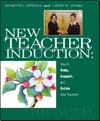
Full details on their induction process can be read in New
Teacher Induction: How to Train, Support, and Retain New Teachers,
by Breaux and Wong. A sample can be seen on www.NewTeacher.com,
Online Books.
The True Benefit of Induction
It’s so simple, yet so profound. Teachers
teach and students learn. Improve the teacher and you improve
the student.
Since it is the teacher who holds the key to student achievement,
a district must have an induction program that immediately focuses
the new teacher on a district’s mandate and goal of student
learning.
The induction program then is to flow seamlessly into
a lifelong professional development program. The
process of lifelong professional development must become a priority—for
the sake our students. The students deserve no less than
the very best.
For more information on new teacher induction, please
go to www.NewTeacher.com.
In particular, access
April 8, 2005
“New Teacher Induction: The Foundation for Comprehensive,
Coherent, and Sustained Professional Development”
February 1, 2005
"Significant Research and Readings on Comprehensive
Induction"
January 21, 2005
"What the World Can Teach Us About New Teacher Induction"
 For a printable version of this article click
here.
For a printable version of this article click
here.
Harry & Rosemary Wong products: http://www.harrywong.com/product/
Email Harry Wong: harrywong@teachers.net
Gazette Articles by Harry & Rosemary Wong:
If you spot a link that appears to be out-of-date, please alert us at webmaster@teachers.net!
- A Grateful Goodbye After 15 Years (Jun 2015)
- Love, Marriage, and Babies, Oh My! (May 2015)
- Retention Rate Is 100 Percent (Apr 2015)
- Teacher Effectiveness and Human Capital (Mar 2015)
- Training Teachers to Be Effective (Feb 2015)
- Making Deals Is Ineffective (Dec 2014 / Jan 2015)
- Retrieving and Carrying Electronic Devices (Nov 2014)
- Sharing to Succeed (Oct 2014)
- How a University Prepares Its Students (Sep 2014)
- Effective Teaching (Aug 2014)
- Your Future Is in Your Hands (June/July 2014)
- The Classroom Management Book (May 2014)
- When Students Succeed; Teachers Succeed (April 2014)
- Teaching New Teachers How to Succeed (March 2014)
- Execute and Praise (February 2014)
- Shaping a Solid Foundation (Dec 2013 / Jan 2014)
- The Most Misunderstood Word (November 2013)
- How to Start Class Every Day (October 2013)
- Prevention: The Key to Solving Discipline Problems (September 2013)
- Planning, Planning, Planning (August 2013)
- Are You THE One? (June / July 2013)
- Practical Examples That Work (May 2013)
- A Disability Is Not a Handicap (Apr 2013)
- Totally Inexcusable (Mar 2013)
- Be Proud of Public Education (Feb 2013)
- Structure Will Motivate Students (Dec 2012 / Jan2013)
- Orchestrating the Classroom (Nov 2012)
- The Lasting Impact of Instructional Coaching (Oct 2012)
- Learning, Laughing, and Leaving a Legacy (Sep 2012)
- Twenty-two, First Year, and Legit (Aug 2012)
- A Master Teacher of Teachers (June/July 2012)
- Where Going to School Means Success (May 2012)
- A Nationally Celebrated High School (Apr 2012)
- The Highest Rated School in New York City, Part 2 (Mar 2012)
- The Highest Rated School in New York City, Part 1 (Feb 2012)
- The Importance of Culture (Dec 2011 / Jan 2012)
- You Can Teach Classroom Management (Nov 2011)
- Seamless, Transparent, and Consistent (Oct 2011)
- Coaching Teachers to Be Effective Instructors (Sep 2011)
- How a Principal Creates a Culture of Consistency (Aug 2011)
- Graduation Begins in Your Classroom (June/July 2011)
- The Inspiration of a Mother (May 2011)
- How to Be an Effective Leader (Apr 2011)
- Learning Objectives: The Heart of Every Lesson (Mar 2011)
- Even Shakespeare Had Structure (Feb 2011)
- Effectiveness Defined: It's Not a Mystery (Dec 2010 / Jan 2011)
- Surviving Without a Principal (Nov 2010)
- Achieving Greatness: Locke Elementary School, Part 2 (Oct 2010)
- Teaching Greatness: Locke Elementary School, Part 1 (Sep 2010)
- Effective from the Start (Aug 2010)
- Ten Year Summary of Articles, 2000 to 2010 (June/July 2010)
- The Success of a Culture of Consistency (May 2010)
- Training Teachers to Be Effective (Apr 2010)
- Learning to Teach, Teaching to Learn (Mar 2010)
- Turning Teaching Dreams into Reality (Feb 2010)
- Dreams and Wishes Can Come True (Dec 2009 / Jan 2010)
- Success in a State Controlled School (Nov 2009)
- Inner City Is Not An Excuse (Oct 2009)
- Exceeding All Expectations (Sep 2009)
- Teachers Are the Difference (Aug 2009)
- Nine Year Summary of Articles, 2000 to 2009 (Jun/Jul 2009)
- Teachers Are the Greatest Assets (May 2009)
- The Tools for Success (Apr 2009)
- Assessing for Student Learning (Mar 2009)
- To Be an Effective Teacher Simply Copy and Paste (Feb 2009)
- The Sounds of Students Learning and Performing (Dec 2008)
- A School That Achieves Greatness (Nov 2008)
- Boaz City Schools: Professional Learning Teams (Oct 2008)
- It Was Something Close to a Miracle (Sep 2008)
- A Computer Teacher Shows the Way (Aug 2008)
- Eight Year Summary of Articles, 2000 to 2008 (Jun/Jul 2008)
- An Amazing Kindergarten Teacher (May 2008)
- Schools That Beat the Academic Odds (Apr 2008)
- Academic Coaching Produces More Effective Teachers (Mar 2008)
- Coaches Are More Effective than Mentors (Feb 2008)
- Wrapping the Year with Rap! (Dec 2007/Jan 2008)
- The Floating Teacher (Nov 2007)
- Taking the Bite Out of Assessment—Using Scoring Guides (Oct 2007)
- Ten Timely Tools for Success on the First Days of School (Sep 2007)
- First Day of School Script - in Spanish, Too! (Aug 2007)
- Seven Year Summary of Articles, 2000 to 2007 (Jun 2007)
- Effective Teachers End the Year Successfully (May 2007)
- Training Gen Y Teachers for Maximum Effectiveness (Apr 2007)
- Classroom Management Applies to All Teachers (Mar 2007)
- Students Want a Sense of Direction (Feb 2007)
- Rubrics in Two College Classes (Dec 2006/Jan 2007)
- How to Write a Rubric (Nov 2006)
- Assessing Student Progress with a Rubric (Oct 2006)
- A 92 Percent Homework Turn-in Rate (Sep 2006)
- Effective Teachers Are Proactive (Aug 2006)
- Five Year Summary of Articles (Jun 2006)
- Hitting the Bulls Eye as a Beginning Teacher (May 2006)
- They're Eager to Do the Assignments (Apr 2006)
- The Success of Special Ed Teachers (Mar 2006)
- What Teachers Have Accomplished (Feb 2006)
- Fifty Years Ago, The Legacy (Dec 2005/Jan 2006)
- The Emergency Teacher (Nov 2005)
- Classroom Management Is Not Discipline (Oct 2005)
- A Successful First Day Is No Secret (Sep 2005)
- The Most Important Factor (Aug 2005)
- Four Year Summary of Articles (Jul 2005)
- Improving Student Achievement Is Very Simple (Part 2) (Jun 2005)
- Improving Student Achievement Is Very Simple (Part 1) (May 2005)
- Never Cease to Learn (Apr 2005)
- His Classroom Is a Real Life Office (Mar 2005)
- The Power of Procedures (Feb 2005)
- The First Ten Days of School (Jan 2005)
- PowerPoint Procedures (Nov/Dec 2004)
- The Saints of Education (Oct 2004)
- How Procedures Saved a Teacher's Life (Sep 2004)
- How to Help Students with Their Assignments (Aug 2004)
- Three Year Summary of Articles (Jun/Jul 2004)
- His Students are All Certified (May 2004)
- What to Do When They Complain (Apr 2004)
- A Well-Oiled Learning Machine (Mar 2004)
- The Effective Teacher Adapts (Feb 2004)
- How to Start a Lesson Plan (Aug 2003)
- Applying for a Teaching Job in a Tight Market - Part 2 (Jun/Jul 2003)
- Applying for a Teaching Job in a Tight Market (May 2003)
- The Effective Substitute Teacher (Apr 2003)
- A First Day of School Script (Mar 2003)
- How to Retain New Teachers (Feb 2003)
- No Problem With Hurricane Lili (Dec 2002)
- A Class Size of 500 (Nov 2002)
- Effective Practices Apply to All Teachers (Oct 2002)
- Dispensing Materials in Fifteen Seconds (Sept 2002)
- How To Start School Successfully (Aug 2002)
- Teaching Procedures Is Teaching Expectations (June - July 2002)
- $50,000 to Replace Each Teacher (May 2002)
- Even Superintendents Do It (Apr 2002)
- Impossible, No Job Openings? (Mar 2002)
- A Stress Free Teacher (Feb 2002)
- A Most Effective School (Jan 2002)
- Van Gogh in Nine Hours (Dec 2001)
- The Effective Teacher Thinks (Nov 2001)
- How a Good University Can Help You (Sep 2001)
- How to Motivate Your Students (May 2001)
- How to Recognize Where You Want to Be (Apr 2001)
- What Successful New Teachers Are Taught (Mar 2001)
- A Journey of the Heart (Feb 2001)
- The Miracle of Teachers (Jan 2001)
- It's Not the Students. It's the Teacher. (Dec 2000)
- The First Five Minutes Are Critical (Nov 2000)
- How to Start a Class Effectively (Oct 2000)
- The Problem Is Not Discipline (Sep 2000)
- There Is Only One First Day of School (Aug 2000)
- Applying for Your First Job (Jul 2000)
- Your First Day (Jun 2000)
Browse through the latest posts from the Classroom Management
Chatboard...
|


 Chatboards
 Mailrings
 Classifieds
 Lessons
 Jobs
Jobs
 Projects