|  Effective
Teaching...
Effective
Teaching...
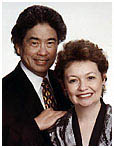
by Harry and Rosemary
Wong
March
2005
His Classroom
Is a Real Life Office
If I would have had procedures in place
and more importantly practiced them, leaving the teaching profession
would have never entered my mind.
Sitting at lunch in a charming Mexican restaurant in the Old
Town of Albuquerque, New Mexico, we had the delightful opportunity
to meet Ed Lucero and his wife Ruby.
Ruby is in the special education department of the Albuquerque
Public Schools and Ed teaches business, marketing, and finances
in a high school.
Ed shared a bit of his life with us and it was so powerful that
we asked him to tell us more in writing so that we could share
it with the thousands of teachers.net educators. Because
his story is best told in his own words, we’ve chosen to
leave it as a first person narrative.
Ed Lucero and His Defining Moment
As the first member of my family to graduate from college,
teaching was the furthest thing from my mind until I found I could
incorporate my business degree with my love of football.
When I was in high school, I told myself that I would never want
to become a school teacher because the pay was low and the lack
of respect teachers often received from many of the students.
When I graduated, I received a college scholarship and decided
to major in business administration with a concentration in accounting.
No low-paying job for me–that’s why people get a degree,
I thought! While in college, I earned extra money coaching
football as an assistant at my alma mater, Del Norte High School
in Albuquerque, New Mexico.
In my sophomore year of college, I lost my brother Vincent.
After a six month struggle with cancer, he lost his battle.
This was a very stressful time for me and my family. From
the loss of my brother, I had what I call a “Defining
Moment” in my life.
It made me reflect on the importance
of doing the right thing for myself because life can be so short.
I knew I wanted to continue to coach football and, ultimately,
teach young individuals about life through football. I continued
to coach part time after graduating from college in December of
1989.
I turned down a couple of business sector opportunities because
it conflicted with my coaching schedule at the high school.
As a temporary solution, I decided to substitute for the Albuquerque
Public Schools. This gave me a chance to gain a little experience
as a classroom teacher. I liked it so much that I decided
to become an Educational Assistant, helping in the classroom.
So for the next two years, I coached football, worked as an EA,
and studied for the CPA exam.
In 1993, I passed the CPA exam and began practicing accounting
full time. At the same time, I started working on my MBA.
I constantly questioned myself, however; if I was doing the right
thing. I truly missed working with young people.
Soon thereafter, I really felt like I could make a difference
in this world by teaching and coaching vs. working as an accountant.
So I left the MBA program and began taking education classes.
Approximately one year later, I completed the coursework for my
teaching certificate. The passion in my heart was
for teaching and coaching.
I Had No Structure in My Classroom
My first year as a teacher, I taught math and a work study program
called Industrial Cooperative Training. I thought I had
the best of both worlds. I assisted students in finding
jobs while teaching them job skills.
It wasn’t long before I began teaching Accounting and Computer
Application classes. At one time, I was teaching five different
classes with five different preps.
In addition, I served on several committees and continued to
coach football.
I eventually became the head football coach and shifted much
of my energy to coaching. At this point, I had become the
epitome of an over-extended teacher, having taken on too
much responsibility. This soon led to the inevitable
“teacher burnout”.
I was at a crossroads—was I to be a teacher or a coach?
Or was it still possible to do both and be effective?
Initially I thought the combination of teacher/coach was not
bad; however, I quickly began to think that I was more effective
as a coach than as a teacher.
In coaching, I got my players to perform on and off the
field by teaching them self-discipline, instilling a work ethic
in them, and having high expectations of all. There
were consequences both individually and for the team when players
failed to meet those expectations. I clearly explained the
reasoning behind the lesson(s) being taught.
In contrast, in the classroom, I failed
to clearly explain the need to learn, did not teach discipline,
did not instill a work ethic, and did not set expectations for
my students.
Unlike football practice, I had no structure in my classroom.
Rather than having consequences, I would merely avoid the problems
that caused me to become stressed and angry most
of the time.
Everyday was a challenge to keep my students on task. I
felt I was a “glorified baby sitter.”
I found myself in true survival mode day after day. As I
look back, I don’t know how I did it. I also realized
that I was not doing a very good job of teaching. Somehow,
the information I had learned in the education courses I took
years ago was not being used.
I eventually resigned as the Head Football Coach. There
were several reasons for my drastic action, but I decided that
I needed to become a better classroom teacher. I wanted
to develop that passion for teaching again.
I Thought About Leaving the Profession
Last year was my eleventh year of teaching. I was
miserable! Students weren’t paying attention.
I constantly repeated myself. Students would ignore my instructions
and at times talk back. Some students would attempt to call
me “bro.” instead of Mr. Lucero. I truly thought
about leaving the teaching profession.
I promised myself that I would not have another year like I did
last year. If the situation did not change, I would leave
teaching and practice public accounting again.
If I stayed, I knew I had to make some
radical changes.
My wife Ruby, who is a support teacher for the largest school
district in New Mexico, saw and felt my misery. She suggested
I read a book called The First Days of School: How
to Become an Effective Teacher by Harry and Rosemary
Wong. I spent the greater part of the summer reading the
book and researching its many ideas.
If I had not read the Wongs’ book this past summer, I am
sure I would not be teaching today. I was so distraught
that I had begun inquiring about jobs outside of the classroom.
I wanted to try one more time and apply the information that
I learned from The First Days of School.
My plan was to make my classes more business like. This
corresponded with the classes that I was teaching—Business,
Marketing, and Finance.
This idea took some advance preparation of materials such as
daily log sheets, work procedures and computer procedures, but
I was prepared the first day of classes.
After implementing many of the strategies and ideas from The
First Days of School, I am having the best year
of teaching—ever!
Implementing the First Day of School—The Most Important
Day of the Year
Preliminary Paperwork: As students enter
their office (classroom), I stand outside my door and greet every
student. As they respond, I hand them an Information Sheet
to complete when they get to their seats. The sheet asks
for their personal information such as contact names and numbers,
school schedule, interests, hobbies, extracurricular activities,
etc. Students enter the classroom and find their desks from
the seating chart posted on the wall.
Students not on my original “Employee List” are assigned
a seat, and proceed to complete the Information Sheet. The
Information Sheet provides me with important information on each
“employee” and can create a basis for additional communication;
I get to know my employees better in a very efficient manner.
A few students are surprised that a seating chart has already
been made up; thus not allowing them an opportunity to sit by
their friends. Just as in a real work situation, employees
are often unable to choose their work stations.
While students fill out the Information Sheet, I take roll, add
the new students to my roster, and update the seating chart.
Job Orientation: Approximately ten minutes
into class, I introduce myself and explain “work”
expectations, procedures, and attendance/tardy policies.
I also tell them that this is going to be one of the most
beneficial classes in high school because it is modeled
after “real life” work experience.
Thirty-five minute training: Once the
first day procedures are explained, the “training”
begins. We discuss and practice the procedures for beginning
each “work shift.” They include the following:
- Students pull their folder (time card) as
they enter their office. This indicates they have punched
in and are now on the clock to begin work.
- Students log their Daily Business Agenda sheet which includes
a “Business Smarts Activity,” the class objectives,
and assignments for the day.
- Students begin their Business Smarts Activity.
The Business Smarts Activity is a “small” job.
It could be reading a short business article, watching a small
segment from a video or simply taking notes regarding the day’s
task. (Readers of The First Days of School
refer to this as “Bell Work.”) This allows
me to take attendance and perform other necessary tasks before
we begin our core assignment (job).
- Students are briefed on the business tasks/work objectives
for the day.
- Upon completion of the jobs for the day, students must begin
working on additional “jobs” (assignments).
All students have a copy of an Additional Assignment
List. It contains ten possible assignments that
they can work on. This idea has worked effectively and
has helped eliminate wasted time in my classroom. As in
real life employment, employees will get reprimanded or penalized
if they are on the clock and doing nothing.
Students do get bonuses (extra points) for
completing these additional assignments. More importantly,
students better their business skills or keep up to date with
current events in the world of business. Surprisingly,
I also have learned a great deal from the additional assignments
students have submitted. It’s like having grad assistants
who perform research for me.
- Students understand that when they file their folder,
they have just punched out and can go to break before they go
to their next job and supervisor. However, they can only
punch out after they have completed their fifty-six minute shift.
All students have a hard copy of my class procedures. It
is a six-page “Employee Handbook” that explains how
to do things during my “work shift” (class).
Click here to
view Ed’s Handbook.
Teaching Gets Better Each Day
I no longer have to repeat myself or answer redundant questions
from students. Instead, I ask them, “What’s
the procedure?” Periodically, we revisit
and practice a procedure to remind those who may have forgotten
it.
Implementing these procedures the first day of school is most
important. It really does set the tempo for the entire school
year. Students learn what is expected of them from day one.
Although I have been successful as a teacher in the eleven years
that I have taught, last year was a real challenge and almost
led me to leave the teaching profession.
I wish that I had read the Wongs’ book before my first
year of teaching.
If I would only have had procedures
in place and practiced them, leaving the classroom
and teaching would never have entered my mind.
I’m sure I would have minimized the stress and burnout
in my teaching. The reality of becoming an effective teacher
leads me to once again consider including the other passion I
have—coaching.
My school year has been great. I feel
good that students are utilizing every minute of class productively.
I am so glad that my wife, Ruby, introduced me to The
First Days of School. I continue to get more
and more ideas each time I pick up the book, and I have begun
to share the ideas and strategies with many of my colleagues.
I never knew that teaching could get better
with time!
Tax Help in New Mexico
From Ed’s story, it certainly appears that his passion
for working with young people has been rejuvenated. In
fact, teaching is going so well for Ed Lucero that he is able
to contribute to the community.
He and a colleague, Judie Dwyer, teach a tax class to high school
students. This class is offered by the Albuquerque Technical
Vocational Institute and is coordinated by Fred Gordon.
In this program, they recruit high school students to take a college
class at the high school. Through the class, students earn
concurrent credit with the Vocational Institute and Albuquerque
Public Schools. This program trains students to prepare
basic income tax returns for low income, disadvantaged, and elderly
people in the community.
Students must pass a rigorous IRS Certification Exam before they
can prepare and e-file a tax return.
Last year, the students processed over 300 tax returns
and refunded more than $250,000 back to the community.
Information on this program can be found at http://www.tvi.cc.nm.us/taxhelp.
The students at Ed’s high school, Del Norte, were mentioned
in the Congressional Record in the U.S. Senate for their work
in the community.
Success Has No Boundaries
As Ed set up a real life experience for his students to follow
while in his classroom, he also found a way for the students to
use their knowledge and take it out and use it in the real world.
The chain of success for Ed Lucero extends beyond his
dream. This successful teacher instilled in his
students the passion to use their skills to help others.
The successful students helped less fortunate people in the community
file their taxes. The community people got much needed refunds
to help sustain their livelihood.
Ed Lucero prepares his students for the real world—and
you can, too. We firmly believe you can make anything
happen in your classroom, as long as you have procedures in place
for the students to follow. With this structure you are
free to create and live your dream of TEACHING and making a difference
in the lives of students—and so many others.
And remember, Ed Lucero wanted to be an accountant. It
looks like, through teaching, Ed is finally an accountant, many
times over.
While the road to Ed’s success was circuitous, he is on
track and living his passion each day. Follow his example.
Seek help for the problems, and reinvent yourself
if necessary. The rewards are immeasurable.
 For a printable version of this article click
here.
For a printable version of this article click
here.
Harry & Rosemary Wong products: http://www.harrywong.com/product/
Email Harry Wong: harrywong@teachers.net
Gazette Articles by Harry & Rosemary Wong:
If you spot a link that appears to be out-of-date, please alert us at webmaster@teachers.net!
- A Grateful Goodbye After 15 Years (Jun 2015)
- Love, Marriage, and Babies, Oh My! (May 2015)
- Retention Rate Is 100 Percent (Apr 2015)
- Teacher Effectiveness and Human Capital (Mar 2015)
- Training Teachers to Be Effective (Feb 2015)
- Making Deals Is Ineffective (Dec 2014 / Jan 2015)
- Retrieving and Carrying Electronic Devices (Nov 2014)
- Sharing to Succeed (Oct 2014)
- How a University Prepares Its Students (Sep 2014)
- Effective Teaching (Aug 2014)
- Your Future Is in Your Hands (June/July 2014)
- The Classroom Management Book (May 2014)
- When Students Succeed; Teachers Succeed (April 2014)
- Teaching New Teachers How to Succeed (March 2014)
- Execute and Praise (February 2014)
- Shaping a Solid Foundation (Dec 2013 / Jan 2014)
- The Most Misunderstood Word (November 2013)
- How to Start Class Every Day (October 2013)
- Prevention: The Key to Solving Discipline Problems (September 2013)
- Planning, Planning, Planning (August 2013)
- Are You THE One? (June / July 2013)
- Practical Examples That Work (May 2013)
- A Disability Is Not a Handicap (Apr 2013)
- Totally Inexcusable (Mar 2013)
- Be Proud of Public Education (Feb 2013)
- Structure Will Motivate Students (Dec 2012 / Jan2013)
- Orchestrating the Classroom (Nov 2012)
- The Lasting Impact of Instructional Coaching (Oct 2012)
- Learning, Laughing, and Leaving a Legacy (Sep 2012)
- Twenty-two, First Year, and Legit (Aug 2012)
- A Master Teacher of Teachers (June/July 2012)
- Where Going to School Means Success (May 2012)
- A Nationally Celebrated High School (Apr 2012)
- The Highest Rated School in New York City, Part 2 (Mar 2012)
- The Highest Rated School in New York City, Part 1 (Feb 2012)
- The Importance of Culture (Dec 2011 / Jan 2012)
- You Can Teach Classroom Management (Nov 2011)
- Seamless, Transparent, and Consistent (Oct 2011)
- Coaching Teachers to Be Effective Instructors (Sep 2011)
- How a Principal Creates a Culture of Consistency (Aug 2011)
- Graduation Begins in Your Classroom (June/July 2011)
- The Inspiration of a Mother (May 2011)
- How to Be an Effective Leader (Apr 2011)
- Learning Objectives: The Heart of Every Lesson (Mar 2011)
- Even Shakespeare Had Structure (Feb 2011)
- Effectiveness Defined: It's Not a Mystery (Dec 2010 / Jan 2011)
- Surviving Without a Principal (Nov 2010)
- Achieving Greatness: Locke Elementary School, Part 2 (Oct 2010)
- Teaching Greatness: Locke Elementary School, Part 1 (Sep 2010)
- Effective from the Start (Aug 2010)
- Ten Year Summary of Articles, 2000 to 2010 (June/July 2010)
- The Success of a Culture of Consistency (May 2010)
- Training Teachers to Be Effective (Apr 2010)
- Learning to Teach, Teaching to Learn (Mar 2010)
- Turning Teaching Dreams into Reality (Feb 2010)
- Dreams and Wishes Can Come True (Dec 2009 / Jan 2010)
- Success in a State Controlled School (Nov 2009)
- Inner City Is Not An Excuse (Oct 2009)
- Exceeding All Expectations (Sep 2009)
- Teachers Are the Difference (Aug 2009)
- Nine Year Summary of Articles, 2000 to 2009 (Jun/Jul 2009)
- Teachers Are the Greatest Assets (May 2009)
- The Tools for Success (Apr 2009)
- Assessing for Student Learning (Mar 2009)
- To Be an Effective Teacher Simply Copy and Paste (Feb 2009)
- The Sounds of Students Learning and Performing (Dec 2008)
- A School That Achieves Greatness (Nov 2008)
- Boaz City Schools: Professional Learning Teams (Oct 2008)
- It Was Something Close to a Miracle (Sep 2008)
- A Computer Teacher Shows the Way (Aug 2008)
- Eight Year Summary of Articles, 2000 to 2008 (Jun/Jul 2008)
- An Amazing Kindergarten Teacher (May 2008)
- Schools That Beat the Academic Odds (Apr 2008)
- Academic Coaching Produces More Effective Teachers (Mar 2008)
- Coaches Are More Effective than Mentors (Feb 2008)
- Wrapping the Year with Rap! (Dec 2007/Jan 2008)
- The Floating Teacher (Nov 2007)
- Taking the Bite Out of Assessment—Using Scoring Guides (Oct 2007)
- Ten Timely Tools for Success on the First Days of School (Sep 2007)
- First Day of School Script - in Spanish, Too! (Aug 2007)
- Seven Year Summary of Articles, 2000 to 2007 (Jun 2007)
- Effective Teachers End the Year Successfully (May 2007)
- Training Gen Y Teachers for Maximum Effectiveness (Apr 2007)
- Classroom Management Applies to All Teachers (Mar 2007)
- Students Want a Sense of Direction (Feb 2007)
- Rubrics in Two College Classes (Dec 2006/Jan 2007)
- How to Write a Rubric (Nov 2006)
- Assessing Student Progress with a Rubric (Oct 2006)
- A 92 Percent Homework Turn-in Rate (Sep 2006)
- Effective Teachers Are Proactive (Aug 2006)
- Five Year Summary of Articles (Jun 2006)
- Hitting the Bulls Eye as a Beginning Teacher (May 2006)
- They're Eager to Do the Assignments (Apr 2006)
- The Success of Special Ed Teachers (Mar 2006)
- What Teachers Have Accomplished (Feb 2006)
- Fifty Years Ago, The Legacy (Dec 2005/Jan 2006)
- The Emergency Teacher (Nov 2005)
- Classroom Management Is Not Discipline (Oct 2005)
- A Successful First Day Is No Secret (Sep 2005)
- The Most Important Factor (Aug 2005)
- Four Year Summary of Articles (Jul 2005)
- Improving Student Achievement Is Very Simple (Part 2) (Jun 2005)
- Improving Student Achievement Is Very Simple (Part 1) (May 2005)
- Never Cease to Learn (Apr 2005)
- His Classroom Is a Real Life Office (Mar 2005)
- The Power of Procedures (Feb 2005)
- The First Ten Days of School (Jan 2005)
- PowerPoint Procedures (Nov/Dec 2004)
- The Saints of Education (Oct 2004)
- How Procedures Saved a Teacher's Life (Sep 2004)
- How to Help Students with Their Assignments (Aug 2004)
- Three Year Summary of Articles (Jun/Jul 2004)
- His Students are All Certified (May 2004)
- What to Do When They Complain (Apr 2004)
- A Well-Oiled Learning Machine (Mar 2004)
- The Effective Teacher Adapts (Feb 2004)
- How to Start a Lesson Plan (Aug 2003)
- Applying for a Teaching Job in a Tight Market - Part 2 (Jun/Jul 2003)
- Applying for a Teaching Job in a Tight Market (May 2003)
- The Effective Substitute Teacher (Apr 2003)
- A First Day of School Script (Mar 2003)
- How to Retain New Teachers (Feb 2003)
- No Problem With Hurricane Lili (Dec 2002)
- A Class Size of 500 (Nov 2002)
- Effective Practices Apply to All Teachers (Oct 2002)
- Dispensing Materials in Fifteen Seconds (Sept 2002)
- How To Start School Successfully (Aug 2002)
- Teaching Procedures Is Teaching Expectations (June - July 2002)
- $50,000 to Replace Each Teacher (May 2002)
- Even Superintendents Do It (Apr 2002)
- Impossible, No Job Openings? (Mar 2002)
- A Stress Free Teacher (Feb 2002)
- A Most Effective School (Jan 2002)
- Van Gogh in Nine Hours (Dec 2001)
- The Effective Teacher Thinks (Nov 2001)
- How a Good University Can Help You (Sep 2001)
- How to Motivate Your Students (May 2001)
- How to Recognize Where You Want to Be (Apr 2001)
- What Successful New Teachers Are Taught (Mar 2001)
- A Journey of the Heart (Feb 2001)
- The Miracle of Teachers (Jan 2001)
- It's Not the Students. It's the Teacher. (Dec 2000)
- The First Five Minutes Are Critical (Nov 2000)
- How to Start a Class Effectively (Oct 2000)
- The Problem Is Not Discipline (Sep 2000)
- There Is Only One First Day of School (Aug 2000)
- Applying for Your First Job (Jul 2000)
- Your First Day (Jun 2000)
Browse through the latest posts from the Classroom Management
Chatboard...
- introduce myself!, 2/05/26, by Innerpeaceful One | Study Timers & Sleep Music.
- intorduce myself, 2/05/26, by Innerpeaceful One | Study Timers & Sleep Music.
- classroom management resources, 2/05/26, by Innerpeaceful One | Study Timers & Sleep Music.
- Re: Learning by doing, 4/22/22, by WendyF.
- Re: Learning by doing, 4/22/22, by WendyF.
- Re: Learning by doing, 4/22/22, by WendyF.
- Re: Learning by doing, 4/22/22, by WendyF.
- Re: Learning by doing, 4/22/22, by WendyF.
- Re: Learning by doing, 4/22/22, by WendyF.
- Classroom Management and SRL, 2/08/21, by monh.
- Class Updates Application, 2/02/18, by edtechguru.
- Re: how do you manage the different learning styles?, 1/16/18, by Steven G.
- Re: Respectful and Responsible , 1/09/18, by Linda.
- Re: how do you manage the different learning styles?, 1/03/18, by Linda.
- how do you manage the different learning styles?, 12/28/17, by smgalbr810.
- Re: Why I'll Never Say "Don't Smile Until Christmas", 10/02/17, by CrystalB.
- Re: Positive Reinforcement, 10/02/17, by CrystalB.
- Re: Learning by doing, 10/01/17, by CrystalB.
- Re: Intrinsic Motivation - making sure we stay on task, 10/01/17, by CrystalB.
- Re: Intrinsic Motivation - making sure we stay on task, 10/01/17, by Heather S..
- Re: Is Positive Reinforcement Enough?, 10/01/17, by mollyh.
- Re: Is Positive Reinforcement Enough?, 10/01/17, by Heather S..
- Re: Is Positive Reinforcement Enough?, 9/30/17, by CrystalB.
- Re: Intrinsic Motivation - making sure we stay on task, 9/30/17, by CrystalB.
- Intrinsic Motivation - making sure we stay on task, 9/30/17, by CrystalB.
- Re: Respectful and Responsible , 9/30/17, by Alexandra Sletten.
- Re: Respectful and Responsible , 9/30/17, by Ines K.
- Is Positive Reinforcement Enough?, 9/30/17, by Heather S..
- Re: Respectful and Responsible , 9/29/17, by Anne R.
- Re: Respectful and Responsible , 9/28/17, by Samantha M.
- Re: Rewards, 9/28/17, by Samantha M.
- Re: Rewards, 9/28/17, by Kaylee H.
- Re: Respectful and Responsible , 9/28/17, by mollyh.
- Re: Rewards, 9/28/17, by mollyh.
- Re: Learning by doing, 9/28/17, by Heather S..
- Why I'll Never Say "Don't Smile Until Christmas", 9/27/17, by Bob R/CA.
|


 Chatboards
 Mailrings
 Classifieds
 Lessons
 Jobs
Jobs
 Projects