| 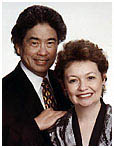 Effective
Teaching...
Effective
Teaching...
by Harry and Rosemary
Wong
March
2006
The Success
of Special Ed Teachers
The demands on the teachers
of special education students are enormous and the rewards are
equally enormous. These are the wonderful teachers
who have the skill to bring order and structure to the lives of
their students and who have the kind and understanding hearts
to see all children as capable and worthy. These are the
teachers we called “The Saints of Education” in our
October 2004 column. (https://teachers.net/wong/OCT04/)
In this column, we will revisit with the teacher we featured
in our October 2004 column, Robin Zarzour, now Robin Barlak.
(Our best wishes to Robin!)
In addition, we will share the techniques used by Charlotte
Empringham, who teaches special education in the Thames
Valley School District in London, Ontario, Canada.

Finally, we’ll close with the strategies and wisdom of
Dan Seufert, who recently retired after years
of teaching special education in North Carolina.
Robin Barlak and Her Nurses’ Procedures
Robin Barlak works with children who have a
variety of disabilities—autism, speech and language delays,
ADHD, and severe behavior, physical, and developmental handicaps.
“Miss Robin,” as the students call her, teaches special
education at First Step Preschool in Ohio’s
Parma City Schools.
Her classroom assistant and right-hand helper is Lois Preston,
"Miss Lois" to the students. Lois is in the classroom
each day, all day long assisting with small groups, snacks, attendance,
record keeping, art, and anywhere else she is needed.
Robin says, “After reading The First Days of
School, I constantly think of procedures, because
special education students can be put in an at-risk situation
if there is not a consistent set of procedures. They like
a consistent set of routines every day as it makes life familiar
and friendly.”
The consistency helps Robin because she has a student with medical
complications who needs a nurse with him while he is at school.
There are three nurses and five therapists in and out
of Robin’s classroom each week for this one child.
At the beginning of the school year she simply typed up the schedule
and procedures of the day. These were given to each nurse
and therapist when they first came to her classroom. This
way each professional knows the daily routine, and therapies can
be scheduled according to the prevailing schedule, such as Physical
Therapy during gym time.
Robin Barlak’s Daily Schedule
Morning Class (repeated for the afternoon class)
| 8:20-9:15 |
Free Play
During Free Play, the children can go to the bathroom and
all go to the Art table to do an art/craft project with “Miss
Lois.” Some of the children do TEACCH. TEACCH is a program
used for autistic children developed by the University of
North Carolina. It helps children who need to complete
work and who need a schedule and structure to do so (www.teacch.com).
Others can practice speech therapy cards, if applicable. |
| |
|
| 9:15 |
Clean up |
| |
|
| 9:17-9:30 |
Circle Time
During Circle Time the children do the calendar, the weather,
a game, a song, the story of the week, the word of the week,
and a social skill (Listening, Using Nice Talk, Sharing, etc).
|
| |
|
| 9:30-9:50 |
Gym
On Thursdays the children have Musical Gym, a structured gym
time with movement and music. Musical Gym was developed
with a colleague of Robin’s, Sandy Krems. Sandy
shares gym time with Robin. They each plan Musical
Gym activities for two weeks and then they rotate.
At the end of the year, the students put on a Musical Gym
show for the parents.
|
| |
|
| 9:50-10:00 |
Wash hands and have a snack. |
| |
|
| 10:00-10:05 |
Look at books on carpet. |
| |
|
| 10:05-10:20 |
Circle Time
Another story of the week and music, movement, rhythm, two
songs, or finger plays. |
| |
|
| 10:20-10:45 |
Small groups
Three students are on the computer with “Miss Lois”
Four students are with “Miss Robin” playing a
game (Lotto game/number game, etc.)
Four students are playing on their own in the sand box/role
play/Play Dough, etc.
The groups switch every 7-10 minutes |
| |
|
| 10:45-10:50 |
Dismissal |
Robin says, “With a schedule, it has been working
great because we are all are on the same page and I don’t
have to repeat myself and take class time to discuss my classroom
schedule and procedures. All the nurses and therapists are
very grateful as well."
Charlotte Empringham and Personal Fulfillment
Charlotte Empringham is a Special Education
Specialist who has been teaching Developmental Education for ten
years. Her classes consist of ten students with various
learning differences and special needs. The students may
be in her classroom for three or four years and then move onto
a high school setting.
Her program is based on academics developed through a Provincial
(state or district) Curriculum which she modifies to suit her
students’ abilities. She says, “My classroom
setting is structured to take advantage of teachable moments.
Communication skills, daily living skills, and learning strategies
are integrated into our programming.”
Charlotte teaches grade 5-8 students with developmental challenges.
Here’s how Charlotte describes her class:
Mission Statement |
| I believe students with developmental disabilities must
participate in educational programs designed to assist them
in reaching the levels of independence in daily living, gaining
responsibility for self and others, and attaining personal
fulfilment as determined by potential. This education
must take place in a safe and accepting environment. |
| |
Mission Strategies |
| I will strive to |
- provide a safe learning environment.
- create a positive atmosphere in the classroom.
- promote a sense of caring among staff and students.
- encourage independence in the school environment.
- design individualized programs to maximize potential.
- encourage the development of responsible attitudes towards
self, others, and the environment.
- provide age-, interest-, and skill-appropriate opportunities
for integration.
- maintain open lines of communication among school staff,
parents/guardians, and community-based personnel.
|
Charlotte’s classroom consists of ten developmentally challenged
students with various learning differences. One student
has Downs Syndrome, two students are hearing impaired using wireless
FM systems, and one student communicates with American Sign Language.
There are two Educational Assistants in the classroom who help
students with their living skills, academics, and social skills.
Her classroom is structured with procedures and routines
taught at the beginning of the year and re-taught several times
throughout the school year. The classroom is a
visual learning environment with charts and posters available
on the walls so that students can access information to enable
them to complete their assignments.
As they enter the school every morning, each student
is personally greeted by at least one of the adults in the classroom.
Every effort is made to notice and acknowledge good behavior,
kindness to others, and those who are following the procedures
and routines with verbal praise and/or rewards—such as tickets
for our weekly draw or a ‘star’ certificate, which
is a schoolwide incentive program.
| Students follow these routines and procedures: |
- Bring communication book (daily communication between
teacher and parent), planner, pencil case, and any other
items needed for classes into the classroom.
- Students deposit communication books in a blue bucket.
- Students work in their cursive writing books while waiting
and listening to announcements.
- Students are given a ticket if they have put their communication
books and planners into the blue basket and are working
quietly.
- Another ticket is given if students remembered to have
parents sign their communication books.
- At the signal of announcements (buzz on the PA system)
students immediately stand beside their desks facing the
teacher and sign and sing O Canada.
- At the end of announcements a student collects the writing
books and puts them into the ‘blue marking basket’
as students take out their daybooks to begin the daily
morning routine.
- As students complete their daybook activities, their
daybooks are placed in the ‘blue marking basket’
and they immediately take out their spelling books.
Students have been trained on the procedure to use with
the worksheets for their individual spelling lists.
No two students have the same list, but all students use
the same procedures for learning their words.
- SALAME is called at 10 a.m. to instruct students to
clear off their desks in order to have their snacks delivered.
SALAME - Stop And Look At Me (from the
video series The Effective Teacher,
Part 4)
|
- The teacher, educational assistant, or co-operative
education student (a high school student placed
in the classroom) can put up a hand and call
SALAME for the attention of the students at
any time.
- Students should respond by putting up their
hand without saying a word and looking at the
person in order to hear the next instruction.
- Students who respond correctly get a ticket.
|
- When the bell rings for recess, students remain
in their seats until the ‘superhelper’
has been told to line up at the door. The
bell does not dismiss them!
- When students return to the classroom after a
recess there is a procedure to follow which is the
same every day:
|
- Cursive writing after morning recess
- Mad minute math after lunch recess
- Write tomorrow’s messages into their
planners after afternoon recess
|
- All students are responsible for a job in the
classroom, such as pencil sharpening, handing out
books, collecting books, putting out the thermometer,
checking the weather forecast on the computer, assisting
with snack program, wiping off charts, etc.
Jobs are assigned according to abilities and interests
and remain their responsibility all year.
|
Incentive Charts
and Stamp Charts |
- All students have an incentive chart on their
desk
- When a student is disruptive, gets out of his
or her seat without permission, or has been warned
about a behavior and continues, a stamp is put on
the student’s incentive chart. The staff
member says nothing; the chart is stamped without
interrupting the flow of the activity in progress.
Students can receive up to five stamps per day.
- For every blank space on their chart at the end
of the day, they receive a ticket for the Mickey
Mouse Draw.
- If a student receives no stamps all day and has
had a good day, a sticker is put on the chart on
the wall.
- At the end of the month, the sticker chart is
checked and if the students have the correct number
of stickers or more, they receive a ticket for the
monthly draw of a tuck (sweet) shop token.
- A student who has a perfect month—a sticker
for every day of the month—receives a tuck
shop token.
|
Mickey Mouse Good
Box |
- Students receive tickets for positive behavior,
e.g., communication books put into blue basket in
the morning, having all supplies, beginning work
on time, staying on task, finishing on time, good
work, manners, helping others, etc.
- Every Friday a name is drawn from the Mickey Mouse
Good Box and that student chooses a treat from the
Mickey Mouse Treat Box.
- All tickets are tallied and the top three students
also choose a treat from the Mickey Mouse Treat
Box.
|
|
In addition to teaching special education, Charlotte Empringham
for the past twelve years has been involved with the organization
and running of the annual Special Olympics, a track and field
event for special needs students. Charlotte Empringham
is another reason why we call special education teachers the “Saints
of Education.”
Dan Seufert Stands Tall
Dan Seufert is not a traditional teacher by a long shot!
Dan immersed himself in teaching his students turning his classroom
into an Early American hands-on museum where the special education
students serve as docents to regular classroom students.
Dan was also known for his pirate character that prowled the school.
Dan retired from teaching special education in North Carolina
and moved to South Carolina where he now teaches in the Lancaster
County School District. He is the special education teacher at
Indian Land Elementary/Middle School. He feels he has a
good grasp on what it takes to bring about change in special needs
students as a result of the self-contained, behaviorally-emotionally
disabled classes he taught for fourteen years.
He says that his ideas center on recognizing the potential
of these students. They center on recognizing the
positive spirit of these students.
They center on celebrating and encouraging the "thinking
out of the box" that these students are so good at doing,
just as all great leaders and discoverers are capable of doing.
Dan shared, sadly, how often he watched teachers try to break
the spirits of these children, make them feel worthless, or set
them up for failure. He feels there is no need to come crashing
down on students for bad behavior and miss the golden opportunity
to teach a new behavior.
He says, “We don't need to break their spirits. What
we need to do is re-direct their spirits and
then watch their spirits and abilities and "differentness"
carry them to new heights!”
Dan delighted in the years of opportunity he has had to teach
important life lessons to his students, lessons such as real men
know how to shed a tear and are not afraid to do so; the real
man is one who reaches out to help others, not belittle or hurt
others.
Like Robin and Charlotte, Dan Seufert’s classrooms have
structure and consistency. Dan’s classes,
however, go beyond structure and consistency.
Dan wisely says we should not assume structure and consistency
alone will solve the many behavior problems these students have.
Structure and consistency only delays the appearance of behavior
problems for a little while, and when the structure is removed,
the behaviors will return.
Students need to be taught alternatives to unacceptable
behaviors. It means that positive behaviors have
to be taught. Replacement behaviors have to be taught.
| Beyond the recitation of the rules and procedures, they
have to know |
what those rules and procedures mean;
why those rules and procedures are in place;
what they should be doing to show they are following those
rules and procedures; and what the benefits are of replacing
old behaviors with new behaviors.
|
Rules and procedures should have meaning and relevance to the
students.
Dan says he often sat with the students (sometimes after each
activity) and processed with them what he liked about their behaviors,
recognized exemplary behaviors, talked about behaviors that he
saw and/or students think should be changed, and taught them alternative
behaviors.
He says, “When a student misbehaved in my classroom and
it was necessary to utilize a time-out procedure, before he/she
could return to the general class population I would ask them:
- Can you tell me what happened?
- What could you have done differently to have kept this from
being a problem?
- What can you do differently to keep it from being a problem
next time?
- Is there anything you think needs to be done now to resolve
this problem (e.g., letter of apology, apologizing in person,
picking up the books that were knocked over)?”
“I would also incorporate the use of group processing time,
where the entire class looks at a problem situation and offers
possible solutions. This technique worked great in settling
a problem between students.”
Dan believes and knows that beyond the personal strife
or the need for attention, many children demonstrate inappropriate
behaviors because they do not know alternative behaviors when
they are in certain situations. What works for
them in the home or in the "hood" is oftentimes unacceptable
behaviors in school, but they are the only behaviors they know.
To bring about new behaviors we have to give them new tools for
dealing with life and problem situations. We have to teach
them responsibility for their actions and what steps to take to
develop and show acceptable behaviors.
Beyond behavior, Dan shared his viewpoints about expectations
with us.
He says, “I think the biggest injustice we do to children
is setting our expectations too low. I especially see this
with children in special education. I have found that children
will give you what you expect. I expect 100 percent from
my students and 100 percent of the behaviors I know they are capable
of giving me. I do expect a lot!
“I then go about setting up the procedures and
techniques and methods to make it happen. Ah, the joy on
their faces when they realize they can reach 100 percent, when
they see they can be the best!”
Dan did not accept what was “good enough.”
As a self-contained teacher of children with severe emotional
and behaviors difficulties, Dan said, “It was not good enough
for my students to just have behaviors that were as good as students
in a regular classroom. Before I would consider mainstreaming
my students into the regular classroom, their behavior had to
be the best, much better than the other students they would encounter
in the regular classroom. I found out that if I only expect
their behavior to be ‘as good as’ the behavior of
students in the regular classroom, when their behaviors began
to slip they would quickly find themselves back to the behaviors
that landed them in my self-contained classroom.
“However, if I expected their behavior to be better than
the other students, then a slight slippage of behavior still gave
them room to pull themselves up to acceptable behaviors.
I taught them what they needed to do when their behavior began
to slip. We role-played it in the self-contained classroom;
we talked about possible situations that might lead to behavior
slippage and what they could do about it.”
Stand Tall
We met Dan Seufert over fifteen years ago and he shared his personal
quote with us:
"Ours is not the business of producing doctors
or lawyers or teachers or nurses or factory workers or sales
associates. Ours is the business of putting smiles on
young faces, hope in young hearts, and dreams in young minds.
The rest will take care of itself."
In his classroom hangs a sign that reads,
"A man is never so tall as when he stoops
to help a child."
In his career, we are sure that many of his students found Dan
Seufert one of the tallest men they ever met!
Reaching New Heights
The lessons learned from Robin, Charlotte, and Dan are not just
for dealing with special needs students, but they can be applied
to all children.
We encourage you to start going beyond the expected and reach
for the extraordinary.
- Select three children in your classroom, in your school,
or in your community.
- Interact with each of these children in one of the following
ways:
|
- Say something that will bring a smile to their young
faces.
- Express a thought that will bring hope to their youthful
hearts.
- Plant a dream in their adolescent minds that they
will recall for the rest of their lives.
|
Do this and you’ll join the ranks of those who make a difference
in the lives of children.
 For a printable version of this article click
here.
For a printable version of this article click
here.
Harry & Rosemary Wong products: http://www.harrywong.com/product/
Email Harry Wong: harrywong@teachers.net
Gazette Articles by Harry & Rosemary Wong:
If you spot a link that appears to be out-of-date, please alert us at webmaster@teachers.net!
- A Grateful Goodbye After 15 Years (Jun 2015)
- Love, Marriage, and Babies, Oh My! (May 2015)
- Retention Rate Is 100 Percent (Apr 2015)
- Teacher Effectiveness and Human Capital (Mar 2015)
- Training Teachers to Be Effective (Feb 2015)
- Making Deals Is Ineffective (Dec 2014 / Jan 2015)
- Retrieving and Carrying Electronic Devices (Nov 2014)
- Sharing to Succeed (Oct 2014)
- How a University Prepares Its Students (Sep 2014)
- Effective Teaching (Aug 2014)
- Your Future Is in Your Hands (June/July 2014)
- The Classroom Management Book (May 2014)
- When Students Succeed; Teachers Succeed (April 2014)
- Teaching New Teachers How to Succeed (March 2014)
- Execute and Praise (February 2014)
- Shaping a Solid Foundation (Dec 2013 / Jan 2014)
- The Most Misunderstood Word (November 2013)
- How to Start Class Every Day (October 2013)
- Prevention: The Key to Solving Discipline Problems (September 2013)
- Planning, Planning, Planning (August 2013)
- Are You THE One? (June / July 2013)
- Practical Examples That Work (May 2013)
- A Disability Is Not a Handicap (Apr 2013)
- Totally Inexcusable (Mar 2013)
- Be Proud of Public Education (Feb 2013)
- Structure Will Motivate Students (Dec 2012 / Jan2013)
- Orchestrating the Classroom (Nov 2012)
- The Lasting Impact of Instructional Coaching (Oct 2012)
- Learning, Laughing, and Leaving a Legacy (Sep 2012)
- Twenty-two, First Year, and Legit (Aug 2012)
- A Master Teacher of Teachers (June/July 2012)
- Where Going to School Means Success (May 2012)
- A Nationally Celebrated High School (Apr 2012)
- The Highest Rated School in New York City, Part 2 (Mar 2012)
- The Highest Rated School in New York City, Part 1 (Feb 2012)
- The Importance of Culture (Dec 2011 / Jan 2012)
- You Can Teach Classroom Management (Nov 2011)
- Seamless, Transparent, and Consistent (Oct 2011)
- Coaching Teachers to Be Effective Instructors (Sep 2011)
- How a Principal Creates a Culture of Consistency (Aug 2011)
- Graduation Begins in Your Classroom (June/July 2011)
- The Inspiration of a Mother (May 2011)
- How to Be an Effective Leader (Apr 2011)
- Learning Objectives: The Heart of Every Lesson (Mar 2011)
- Even Shakespeare Had Structure (Feb 2011)
- Effectiveness Defined: It's Not a Mystery (Dec 2010 / Jan 2011)
- Surviving Without a Principal (Nov 2010)
- Achieving Greatness: Locke Elementary School, Part 2 (Oct 2010)
- Teaching Greatness: Locke Elementary School, Part 1 (Sep 2010)
- Effective from the Start (Aug 2010)
- Ten Year Summary of Articles, 2000 to 2010 (June/July 2010)
- The Success of a Culture of Consistency (May 2010)
- Training Teachers to Be Effective (Apr 2010)
- Learning to Teach, Teaching to Learn (Mar 2010)
- Turning Teaching Dreams into Reality (Feb 2010)
- Dreams and Wishes Can Come True (Dec 2009 / Jan 2010)
- Success in a State Controlled School (Nov 2009)
- Inner City Is Not An Excuse (Oct 2009)
- Exceeding All Expectations (Sep 2009)
- Teachers Are the Difference (Aug 2009)
- Nine Year Summary of Articles, 2000 to 2009 (Jun/Jul 2009)
- Teachers Are the Greatest Assets (May 2009)
- The Tools for Success (Apr 2009)
- Assessing for Student Learning (Mar 2009)
- To Be an Effective Teacher Simply Copy and Paste (Feb 2009)
- The Sounds of Students Learning and Performing (Dec 2008)
- A School That Achieves Greatness (Nov 2008)
- Boaz City Schools: Professional Learning Teams (Oct 2008)
- It Was Something Close to a Miracle (Sep 2008)
- A Computer Teacher Shows the Way (Aug 2008)
- Eight Year Summary of Articles, 2000 to 2008 (Jun/Jul 2008)
- An Amazing Kindergarten Teacher (May 2008)
- Schools That Beat the Academic Odds (Apr 2008)
- Academic Coaching Produces More Effective Teachers (Mar 2008)
- Coaches Are More Effective than Mentors (Feb 2008)
- Wrapping the Year with Rap! (Dec 2007/Jan 2008)
- The Floating Teacher (Nov 2007)
- Taking the Bite Out of Assessment—Using Scoring Guides (Oct 2007)
- Ten Timely Tools for Success on the First Days of School (Sep 2007)
- First Day of School Script - in Spanish, Too! (Aug 2007)
- Seven Year Summary of Articles, 2000 to 2007 (Jun 2007)
- Effective Teachers End the Year Successfully (May 2007)
- Training Gen Y Teachers for Maximum Effectiveness (Apr 2007)
- Classroom Management Applies to All Teachers (Mar 2007)
- Students Want a Sense of Direction (Feb 2007)
- Rubrics in Two College Classes (Dec 2006/Jan 2007)
- How to Write a Rubric (Nov 2006)
- Assessing Student Progress with a Rubric (Oct 2006)
- A 92 Percent Homework Turn-in Rate (Sep 2006)
- Effective Teachers Are Proactive (Aug 2006)
- Five Year Summary of Articles (Jun 2006)
- Hitting the Bulls Eye as a Beginning Teacher (May 2006)
- They're Eager to Do the Assignments (Apr 2006)
- The Success of Special Ed Teachers (Mar 2006)
- What Teachers Have Accomplished (Feb 2006)
- Fifty Years Ago, The Legacy (Dec 2005/Jan 2006)
- The Emergency Teacher (Nov 2005)
- Classroom Management Is Not Discipline (Oct 2005)
- A Successful First Day Is No Secret (Sep 2005)
- The Most Important Factor (Aug 2005)
- Four Year Summary of Articles (Jul 2005)
- Improving Student Achievement Is Very Simple (Part 2) (Jun 2005)
- Improving Student Achievement Is Very Simple (Part 1) (May 2005)
- Never Cease to Learn (Apr 2005)
- His Classroom Is a Real Life Office (Mar 2005)
- The Power of Procedures (Feb 2005)
- The First Ten Days of School (Jan 2005)
- PowerPoint Procedures (Nov/Dec 2004)
- The Saints of Education (Oct 2004)
- How Procedures Saved a Teacher's Life (Sep 2004)
- How to Help Students with Their Assignments (Aug 2004)
- Three Year Summary of Articles (Jun/Jul 2004)
- His Students are All Certified (May 2004)
- What to Do When They Complain (Apr 2004)
- A Well-Oiled Learning Machine (Mar 2004)
- The Effective Teacher Adapts (Feb 2004)
- How to Start a Lesson Plan (Aug 2003)
- Applying for a Teaching Job in a Tight Market - Part 2 (Jun/Jul 2003)
- Applying for a Teaching Job in a Tight Market (May 2003)
- The Effective Substitute Teacher (Apr 2003)
- A First Day of School Script (Mar 2003)
- How to Retain New Teachers (Feb 2003)
- No Problem With Hurricane Lili (Dec 2002)
- A Class Size of 500 (Nov 2002)
- Effective Practices Apply to All Teachers (Oct 2002)
- Dispensing Materials in Fifteen Seconds (Sept 2002)
- How To Start School Successfully (Aug 2002)
- Teaching Procedures Is Teaching Expectations (June - July 2002)
- $50,000 to Replace Each Teacher (May 2002)
- Even Superintendents Do It (Apr 2002)
- Impossible, No Job Openings? (Mar 2002)
- A Stress Free Teacher (Feb 2002)
- A Most Effective School (Jan 2002)
- Van Gogh in Nine Hours (Dec 2001)
- The Effective Teacher Thinks (Nov 2001)
- How a Good University Can Help You (Sep 2001)
- How to Motivate Your Students (May 2001)
- How to Recognize Where You Want to Be (Apr 2001)
- What Successful New Teachers Are Taught (Mar 2001)
- A Journey of the Heart (Feb 2001)
- The Miracle of Teachers (Jan 2001)
- It's Not the Students. It's the Teacher. (Dec 2000)
- The First Five Minutes Are Critical (Nov 2000)
- How to Start a Class Effectively (Oct 2000)
- The Problem Is Not Discipline (Sep 2000)
- There Is Only One First Day of School (Aug 2000)
- Applying for Your First Job (Jul 2000)
- Your First Day (Jun 2000)
Browse through the latest posts from the Classroom Management
Chatboard...
- introduce myself!, 2/05/26, by Innerpeaceful One | Study Timers & Sleep Music.
- intorduce myself, 2/05/26, by Innerpeaceful One | Study Timers & Sleep Music.
- classroom management resources, 2/05/26, by Innerpeaceful One | Study Timers & Sleep Music.
- Re: Learning by doing, 4/22/22, by WendyF.
- Re: Learning by doing, 4/22/22, by WendyF.
- Re: Learning by doing, 4/22/22, by WendyF.
- Re: Learning by doing, 4/22/22, by WendyF.
- Re: Learning by doing, 4/22/22, by WendyF.
- Re: Learning by doing, 4/22/22, by WendyF.
- Classroom Management and SRL, 2/08/21, by monh.
- Class Updates Application, 2/02/18, by edtechguru.
- Re: how do you manage the different learning styles?, 1/16/18, by Steven G.
- Re: Respectful and Responsible , 1/09/18, by Linda.
- Re: how do you manage the different learning styles?, 1/03/18, by Linda.
- how do you manage the different learning styles?, 12/28/17, by smgalbr810.
- Re: Why I'll Never Say "Don't Smile Until Christmas", 10/02/17, by CrystalB.
- Re: Positive Reinforcement, 10/02/17, by CrystalB.
- Re: Learning by doing, 10/01/17, by CrystalB.
- Re: Intrinsic Motivation - making sure we stay on task, 10/01/17, by CrystalB.
- Re: Intrinsic Motivation - making sure we stay on task, 10/01/17, by Heather S..
- Re: Is Positive Reinforcement Enough?, 10/01/17, by mollyh.
- Re: Is Positive Reinforcement Enough?, 10/01/17, by Heather S..
- Re: Is Positive Reinforcement Enough?, 9/30/17, by CrystalB.
- Re: Intrinsic Motivation - making sure we stay on task, 9/30/17, by CrystalB.
- Intrinsic Motivation - making sure we stay on task, 9/30/17, by CrystalB.
- Re: Respectful and Responsible , 9/30/17, by Alexandra Sletten.
- Re: Respectful and Responsible , 9/30/17, by Ines K.
- Is Positive Reinforcement Enough?, 9/30/17, by Heather S..
- Re: Respectful and Responsible , 9/29/17, by Anne R.
- Re: Respectful and Responsible , 9/28/17, by Samantha M.
- Re: Rewards, 9/28/17, by Samantha M.
- Re: Rewards, 9/28/17, by Kaylee H.
- Re: Respectful and Responsible , 9/28/17, by mollyh.
- Re: Rewards, 9/28/17, by mollyh.
- Re: Learning by doing, 9/28/17, by Heather S..
- Why I'll Never Say "Don't Smile Until Christmas", 9/27/17, by Bob R/CA.
|


 Chatboards
 Mailrings
 Classifieds
 Lessons
 Jobs
Jobs
 Projects