|  Effective
Teaching...
Effective
Teaching...
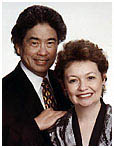
by Harry and Rosemary Wong
May
2004
His Students are All
Certified
This month we focus on a successful welding teacher and the classes
he inspires.
Wait; please don’t stop reading just yet. We know you’re
saying, but I teach reading and math. How can I relate to
a welding teacher’s experience? Read on. You’ll
be glad you invested the time.
Jeff Smith teaches welding at a Career Tech Center in Pryor,
Oklahoma, and in his four years of teaching, he has gone
from almost being fired for his poor classroom management skills
to being recognized as the best welding instructor in the state.
He writes to us and says, “You saved my job, and someday
I want to help other beginning teachers just like you helped me.”
So, this is his chance to share what he did to turn
his career around.

Jeff currently has 37 students enrolled in his welding class, which
is a record number for any such class in the state. His classes
hold the record in the state of Oklahoma for the most career tech
students certified under an industry standard welding certification
(Section 9/State Steam Card Certification) in one day. His
record is an awe inspiring 33 students!
In his five years, all 85 students have passed the Section 9/State
Steam Card Certification test. In addition, many of his students
gave up athletics to be in his class and to be able to save up the
$75 to take the Section 9/Steam Card Certification test at the end
of the school year.
The Department of Career Tech told Jeff in his fifth-year evaluation
that his former students had the highest pay average for high school
graduates in the state. He says, “Not bad for someone
who they wanted to can a few years ago!”
But, Jeff was like so many beginning teachers. He knew his
subject matter, but was clueless when it came to classroom management.
Each day was a struggle until he did something that changed
his teaching career—he listened to one of our tapes and then
made a choice to be successful.
Becoming a successful teacher is really
just a matter of choice.
Ninety percent of being a successful teacher is attitude. The
right attitude breeds the right behaviors, and the right behaviors
breed success.
Successful Teachers Come in All Subjects
Successful teachers are innovative planners, exceptional classroom
managers, adept critical thinkers, and competent problem-solvers.
(https://teachers.net/wong/NOV01)
You see them standing at the classroom door waiting eagerly for
students to arrive on the first day of school. They set procedures
and establish routines that ensure student success. They model appropriate
behaviors and interactions. They have well-developed discipline
plans, but rarely need to use them. (https://teachers.net/wong/OCT00)
They work collaboratively with others to develop new lessons and
materials that will capture the attention of the students. You
can find successful teachers at every level of education, and in
every educational setting, teaching every conceivable subject.
A successful teacher is a PROFESSIONAL. He
or she dresses for success, wearing a uniform of professional pride
Just as a phys ed teacher wears tennis shoes and clothes that allow
freedom of movement for teaching sports or related subject matter,
a classroom teacher dresses for success by wearing professional
attire appropriate to a classroom learning environment. When the
teacher starts to model appropriate dress, the students soon see
what is acceptable in the classroom.
Smith is a successful teacher. We know this
because he practices professionalism, adhering to the codes of dress
and conduct accepted by the welding industry.
He is a leader in welding education, integrating certification
requirements in his lessons. His students are the
most accomplished junior welders in the state.
He models the behaviors of success for his students—and
his students are successful. In addition to all of his students
becoming certified, his second-year students have also become certified
in advanced welding concepts such as Exotic Metals and Boiler and
Pressure Vessel Certification.
Successful Teachers Plan Their Lessons
A successful teacher sets students up for success by using
solid lesson planning, organization, and management skills.
(https://teachers.net/wong/AUG03)
Like any successful teacher, Smith begins every school year ready
for success. He sets goals, plans lessons, and reviews his
discipline plan with his administrator. He follows the routines
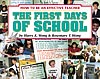
and procedures outlined in Chapter 20 of The First Days
of School. He prepares his students for success.
There is absolutely no research correlation
between success and family background, race, national origin,
financial status, or even educational accomplishments. There is
but one correlation with success, and that is attitude.
Jeff Smith expects nothing but the best of his students, and the
students rise and perform to his expectations. Jeff prepares his
students for success by modeling behaviors and establishing goals
for his students to work towards accomplishing.
Goals for Success in Welding Technology
- Show up on time everyday; if you are going to be late or absent
for any reason, call me. It is unacceptable in the real
world not to call, and we are training for the real world.
- We will dress and conduct ourselves like professionals in our
trade, at all times. Our trade will afford to us a successful
livelihood; and we will treat it with respect at all times.
- To become an accomplished welder it takes 200 pounds of welding
rod. Each of us will use this much before May 14, 2004.
- May 14, 2004 we will take and pass our Section 9/State Steam
Card Certification of the American Welding Society Weld Code.
- We are recognized as the very best Instructional Welding School
in this state. We are the very best class on this campus.
If for any reason you feel that you will be unable to be
a part of this fantastic team, please see me after class today.
Jeff establishes goals of professional behavior for his students.
The goals follow industry expectations, so that students learn the
behaviors and attitudes of success that they will need to succeed
in the real world.
Jeff also gives his students examples to live by.
He leads by example, modeling the very behaviors, mode of
dress, and attitudes he expects from his students.
If you model behaviors you expect students
to perform, students will perform to your expectations.
Jeff shared an anecdote that illustrates how he modeled appropriate
behaviors in terms that his students could relate to.
My
new students were still bringing me welds with the slag left on
them wanting me to critique their work. To each student, I would
say clean off your work before you show me your weld. Please take
pride and remove the slag. Each time it would be the same story;
they would continue to bring me welds with the slag not completely
cleaned off!
So, Tuesday after school
I ordered a very large and beautiful chocolate cake, with the
most-lovely icing that you have ever seen. And on my way to school
yesterday, I picked up plates. I was set.
After my students were
seated I told them the truth; that they had made progress--further
along and quicker than any other class that I ever had. I also
told them how proud I was of them, and to celebrate we were going
to have cake for breakfast. Each student raised his hand in eager
anticipation.
Then I did the unthinkable;
I took my hand, grabbed up a scoop of cake, slopped it on a plate,
and served one to each of my students.
"AHHHHHH. What
are you doing Mr. Smith?"
"I'm serving you
what you try to serve me each day! You see gentlemen, the cake
is beautiful, but the way in which I CHOSE to serve it is very
poor and unprofessional. You bring me welds in the same condition
as this ruined cake!"
Then, I had each of
them dump their cake. I got out another equally beautiful cake,
and served it like a professional. As I was serving, I asked them
what the differences between the first and second times were.
It was a great day,
and all the welds turned into me thereafter were very clean and
neatly done.
By using the chocolate cake as a metaphor for the welds, Jeff was
able to connect to the students and show them what they were doing
incorrectly with their welds and then show them how to correct their
inappropriate technique. His modeling produced the desired outcome—no
more substandard work.
Successful Teachers Plan Their Procedures
Jeff admits that he learned what he knows from other master teachers.
He begins each day with the same routines and continues his
class using the same procedures—reinforcing the good work
habits he has instilled in his students.
Procedure for Entering the Classroom
There are procedures for entering the classroom and students know
exactly what to expect when they come to class.
His procedures are
- Enter class quietly;
- Go to your seats;
- Sit and converse quietly with a neighbor until the teacher signals
that he is going to start class;
- When the teacher begins his lesson, students stop talking;
- Face the teacher and listen.
Jeff begins his lessons consistently in the same way each
day. He works on building rapport with this students
by asking them about their day. He then reviews the class’
progress on the previous day’s assignment; discussing any
issues that arose, and asking the students to participate in problem
solving.
He speaks enthusiastically and varies his voice to keep students
interested and engaged. He compares himself to a drill instructor—speaking
loudly and clearly, so that the students can hear him over the noises
in the shop. He also uses a whistle to get the class’ attention
if he has something to show them.
Smith regularly stops the class to celebrate student successes.
He allows students to view excellent work by others in the class,
calling their attention to examples of truly great welds. This
allows students to enjoy the weld before it is cut out and tested,
and it also reinforces student motivation.
Teaching - Learning Procedures
Procedures are also used to teach the content of the
class. His “show and do” procedures are
- Students get into groups of four.
- Students are shown how to do a particular weld.
- The teacher explains how and why he is doing things.
- Students can ask questions if they need further explanation.
- Students return to their seats and recreate the weld.
Small group size in needed for all of the students to get a good,
close look at how the weld is done and to hear the instructions
and reasons why things are done a certain way.
Giving students examples of “A” work helps them to
understand the expectations of the task—and if they know what
the teacher expects, they will work to meet that expectation.
Jeff does not sit down on the job. Rather, he
is on his feet the entire class teaching, guiding, and showing students
examples of great welds created by classmates. He stays in
shape and continues to practice welding to stay proficient at what
he does, and he expects students to do the same. The level
of commitment Jeff shows to his teaching is the same level of commitment
he expects from his students in their learning behaviors.
A professional welder works for an average of ten hours a day.
The students have to work two hours and fifty minutes, and he requires
them to be on task, working on their welding projects the entire
time, unless he calls their attention to a lesson or to another
student’s weld.
While waiting for instructions, Smith has his students practice
different hand manipulations—a behavior needed to do a proper
weld. And no on task time is lost in Jeff’s class as
the students are expected to practice these hand manipulations even
what waiting in line to sharpen their pencils!
Signs of Success
Even though all of his students have experienced failures
of some kind before they came to him, Jeff’s encouragement
and guidance have made a success out of every one of his students.
His students are successful because he sets them up for success.
Jeff has no discipline problems in his class. The
students are a team, working together to help one another succeed.
He instills the value of teamwork in his students—a
value highly regarded in the welding industry.
Student success is evident in other ways as well. The students
respect one another, their teacher, and the work they do. They
take pride in their accomplishments and strive to succeed. By
year end, the students have constructed a 50 foot pipeline in the
classroom. What a monument to their success!
Effective Teachers Can Adapt Ideas from Other Teachers
Jeff’s classroom practices are not unique. They can be seen
in classrooms of other successful teachers. You may not see it happening
in a welding classroom, but you will see the concepts being practiced
by a multitude of teachers in a variety of settings. Recall that
Jeff said he adapted work from The First Days of School
to help him formulate his successful strategies. Bear in mind that
how to teach welding is not mentioned in The First Days
of School!
Successful teachers identify ideas and techniques that
work and adapt them for use in their own classrooms.
In the beginning of this article we said that success is a matter
of choice. If you choose to be a successful teacher you are
an inspiration to your students, a leader among your peers, and
a professional in education.
We all have the power to be successful; we make choices that lead
to success or failure everyday, all day. Choose to be a success,
and share your successes with others.
Education is a sharing profession. What better way to give back
to the profession than to share with other educators so they can
choose to grow and learn from you.
Your impact is sure to go beyond your realm of understanding and
knowledge. Your technique inspires another teacher’s
technique that impacts the life of children. In a way, this
is the perfect weld. And to Jeff Smith, thank you for inspiring
us to think beyond the traditional 3 Rs, and realize that all children
are capable of success if we choose to expect it of them.
 For a printable version of this article click
here.
For a printable version of this article click
here.
Harry & Rosemary Wong products: http://www.harrywong.com/product/
Email Harry Wong: harrywong@teachers.net
Gazette Articles by Harry & Rosemary Wong:
If you spot a link that appears to be out-of-date, please alert us at webmaster@teachers.net!
- A Grateful Goodbye After 15 Years (Jun 2015)
- Love, Marriage, and Babies, Oh My! (May 2015)
- Retention Rate Is 100 Percent (Apr 2015)
- Teacher Effectiveness and Human Capital (Mar 2015)
- Training Teachers to Be Effective (Feb 2015)
- Making Deals Is Ineffective (Dec 2014 / Jan 2015)
- Retrieving and Carrying Electronic Devices (Nov 2014)
- Sharing to Succeed (Oct 2014)
- How a University Prepares Its Students (Sep 2014)
- Effective Teaching (Aug 2014)
- Your Future Is in Your Hands (June/July 2014)
- The Classroom Management Book (May 2014)
- When Students Succeed; Teachers Succeed (April 2014)
- Teaching New Teachers How to Succeed (March 2014)
- Execute and Praise (February 2014)
- Shaping a Solid Foundation (Dec 2013 / Jan 2014)
- The Most Misunderstood Word (November 2013)
- How to Start Class Every Day (October 2013)
- Prevention: The Key to Solving Discipline Problems (September 2013)
- Planning, Planning, Planning (August 2013)
- Are You THE One? (June / July 2013)
- Practical Examples That Work (May 2013)
- A Disability Is Not a Handicap (Apr 2013)
- Totally Inexcusable (Mar 2013)
- Be Proud of Public Education (Feb 2013)
- Structure Will Motivate Students (Dec 2012 / Jan2013)
- Orchestrating the Classroom (Nov 2012)
- The Lasting Impact of Instructional Coaching (Oct 2012)
- Learning, Laughing, and Leaving a Legacy (Sep 2012)
- Twenty-two, First Year, and Legit (Aug 2012)
- A Master Teacher of Teachers (June/July 2012)
- Where Going to School Means Success (May 2012)
- A Nationally Celebrated High School (Apr 2012)
- The Highest Rated School in New York City, Part 2 (Mar 2012)
- The Highest Rated School in New York City, Part 1 (Feb 2012)
- The Importance of Culture (Dec 2011 / Jan 2012)
- You Can Teach Classroom Management (Nov 2011)
- Seamless, Transparent, and Consistent (Oct 2011)
- Coaching Teachers to Be Effective Instructors (Sep 2011)
- How a Principal Creates a Culture of Consistency (Aug 2011)
- Graduation Begins in Your Classroom (June/July 2011)
- The Inspiration of a Mother (May 2011)
- How to Be an Effective Leader (Apr 2011)
- Learning Objectives: The Heart of Every Lesson (Mar 2011)
- Even Shakespeare Had Structure (Feb 2011)
- Effectiveness Defined: It's Not a Mystery (Dec 2010 / Jan 2011)
- Surviving Without a Principal (Nov 2010)
- Achieving Greatness: Locke Elementary School, Part 2 (Oct 2010)
- Teaching Greatness: Locke Elementary School, Part 1 (Sep 2010)
- Effective from the Start (Aug 2010)
- Ten Year Summary of Articles, 2000 to 2010 (June/July 2010)
- The Success of a Culture of Consistency (May 2010)
- Training Teachers to Be Effective (Apr 2010)
- Learning to Teach, Teaching to Learn (Mar 2010)
- Turning Teaching Dreams into Reality (Feb 2010)
- Dreams and Wishes Can Come True (Dec 2009 / Jan 2010)
- Success in a State Controlled School (Nov 2009)
- Inner City Is Not An Excuse (Oct 2009)
- Exceeding All Expectations (Sep 2009)
- Teachers Are the Difference (Aug 2009)
- Nine Year Summary of Articles, 2000 to 2009 (Jun/Jul 2009)
- Teachers Are the Greatest Assets (May 2009)
- The Tools for Success (Apr 2009)
- Assessing for Student Learning (Mar 2009)
- To Be an Effective Teacher Simply Copy and Paste (Feb 2009)
- The Sounds of Students Learning and Performing (Dec 2008)
- A School That Achieves Greatness (Nov 2008)
- Boaz City Schools: Professional Learning Teams (Oct 2008)
- It Was Something Close to a Miracle (Sep 2008)
- A Computer Teacher Shows the Way (Aug 2008)
- Eight Year Summary of Articles, 2000 to 2008 (Jun/Jul 2008)
- An Amazing Kindergarten Teacher (May 2008)
- Schools That Beat the Academic Odds (Apr 2008)
- Academic Coaching Produces More Effective Teachers (Mar 2008)
- Coaches Are More Effective than Mentors (Feb 2008)
- Wrapping the Year with Rap! (Dec 2007/Jan 2008)
- The Floating Teacher (Nov 2007)
- Taking the Bite Out of Assessment—Using Scoring Guides (Oct 2007)
- Ten Timely Tools for Success on the First Days of School (Sep 2007)
- First Day of School Script - in Spanish, Too! (Aug 2007)
- Seven Year Summary of Articles, 2000 to 2007 (Jun 2007)
- Effective Teachers End the Year Successfully (May 2007)
- Training Gen Y Teachers for Maximum Effectiveness (Apr 2007)
- Classroom Management Applies to All Teachers (Mar 2007)
- Students Want a Sense of Direction (Feb 2007)
- Rubrics in Two College Classes (Dec 2006/Jan 2007)
- How to Write a Rubric (Nov 2006)
- Assessing Student Progress with a Rubric (Oct 2006)
- A 92 Percent Homework Turn-in Rate (Sep 2006)
- Effective Teachers Are Proactive (Aug 2006)
- Five Year Summary of Articles (Jun 2006)
- Hitting the Bulls Eye as a Beginning Teacher (May 2006)
- They're Eager to Do the Assignments (Apr 2006)
- The Success of Special Ed Teachers (Mar 2006)
- What Teachers Have Accomplished (Feb 2006)
- Fifty Years Ago, The Legacy (Dec 2005/Jan 2006)
- The Emergency Teacher (Nov 2005)
- Classroom Management Is Not Discipline (Oct 2005)
- A Successful First Day Is No Secret (Sep 2005)
- The Most Important Factor (Aug 2005)
- Four Year Summary of Articles (Jul 2005)
- Improving Student Achievement Is Very Simple (Part 2) (Jun 2005)
- Improving Student Achievement Is Very Simple (Part 1) (May 2005)
- Never Cease to Learn (Apr 2005)
- His Classroom Is a Real Life Office (Mar 2005)
- The Power of Procedures (Feb 2005)
- The First Ten Days of School (Jan 2005)
- PowerPoint Procedures (Nov/Dec 2004)
- The Saints of Education (Oct 2004)
- How Procedures Saved a Teacher's Life (Sep 2004)
- How to Help Students with Their Assignments (Aug 2004)
- Three Year Summary of Articles (Jun/Jul 2004)
- His Students are All Certified (May 2004)
- What to Do When They Complain (Apr 2004)
- A Well-Oiled Learning Machine (Mar 2004)
- The Effective Teacher Adapts (Feb 2004)
- How to Start a Lesson Plan (Aug 2003)
- Applying for a Teaching Job in a Tight Market - Part 2 (Jun/Jul 2003)
- Applying for a Teaching Job in a Tight Market (May 2003)
- The Effective Substitute Teacher (Apr 2003)
- A First Day of School Script (Mar 2003)
- How to Retain New Teachers (Feb 2003)
- No Problem With Hurricane Lili (Dec 2002)
- A Class Size of 500 (Nov 2002)
- Effective Practices Apply to All Teachers (Oct 2002)
- Dispensing Materials in Fifteen Seconds (Sept 2002)
- How To Start School Successfully (Aug 2002)
- Teaching Procedures Is Teaching Expectations (June - July 2002)
- $50,000 to Replace Each Teacher (May 2002)
- Even Superintendents Do It (Apr 2002)
- Impossible, No Job Openings? (Mar 2002)
- A Stress Free Teacher (Feb 2002)
- A Most Effective School (Jan 2002)
- Van Gogh in Nine Hours (Dec 2001)
- The Effective Teacher Thinks (Nov 2001)
- How a Good University Can Help You (Sep 2001)
- How to Motivate Your Students (May 2001)
- How to Recognize Where You Want to Be (Apr 2001)
- What Successful New Teachers Are Taught (Mar 2001)
- A Journey of the Heart (Feb 2001)
- The Miracle of Teachers (Jan 2001)
- It's Not the Students. It's the Teacher. (Dec 2000)
- The First Five Minutes Are Critical (Nov 2000)
- How to Start a Class Effectively (Oct 2000)
- The Problem Is Not Discipline (Sep 2000)
- There Is Only One First Day of School (Aug 2000)
- Applying for Your First Job (Jul 2000)
- Your First Day (Jun 2000)
Browse through the latest posts from the Classroom Management Chatboard...
|


 Chatboards
 Mailrings
 Classifieds
 Lessons
 Jobs
Jobs
 Projects