|  Effective
Teaching...
Effective
Teaching...
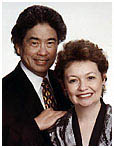
by Harry and Rosemary
Wong
November
2006
How to Write
a Rubric
Oretha Ferguson
teaches sophomore English in Fort Smith, Arkansas, and she is
proud to share that her students have achieved so much success
that they believe they can conquer any poem.
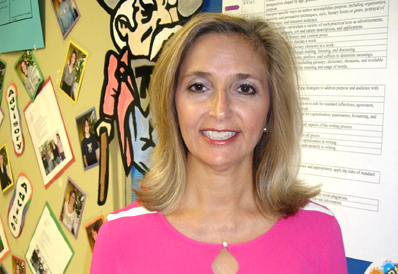
She had her students write sonnets and poems. Thirteen
of her students were interested in having their poetry published
and submitted their poems to a national poetry competition.
Eight of the thirteen entries were accepted for publication
and printed! Two students later wrote poems that
were submitted to a summer poetry competition, both of which were
accepted for publication.
She attributes her students’ success to the foundation
and interest created from her prose poetry unit.
The purpose of Oretha’s prose poetry unit is to transition
sophomore students from reading prose to reading poetry and to
help students gain an interest in and an appreciation for poetry.
To prepare her students for the unit on prose poetry, she uses
a PowerPoint presentation.
Click here
to see this prose poetry PowerPoint presentation in a separate
browser window. (Important Note: Use Internet
Explorer for best result. Click on Slide
Show button in the lower right corner to view
full screen with audio efffects. Use space bar
to advance slides.)
The first eight slides of the PowerPoint presentation introduce
students to a brief explanation of prose poetry and the use of
figurative language to create striking images.
After the eighth slide and a brief introduction of the author,
students follow along in their text books while listening to the
audio of “A Storm in the Mountains” by Aleksandr Solzhenitsyn.
In response to the audio, students share their personal, unique
encounters with nature, such as if they have gone camping, fishing,
or hiking. For example, one student shared her experience
with an unexpected thunderstorm while camping in the woods.
Another student related his experience of hiking in the mountains
during an unexpected torrential downpour. Another student
talked about a raging fire she witnessed, while another told about
his close encounter with a tornado. In response to the audio,
students connected their “personal encounter with nature”
to the prose poem. This engages the students.
Before showing the PowerPoint slide “Compare and Contrast,”
students brainstorm ideas of how “A Storm in the Mountains”
compares and contrasts to short stories. The objective for
comparing prose poetry with short stories is to help students
discover the unique imagery found in prose poetry. A Venn
diagram is perfect for leading students to find this striking
difference.
After proceeding in the PowerPoint to the “Quickwrite”
slide, students are given the Quickwrite worksheet that serves
as a prewriting for their personal prose poem.
Click here
for a copy of the Quickwrite worksheet (Note:
Acrobat Reader is required for viewing the file).
Before leaving class, students have a strong foundation with
which to successfully write their own prose poem, and write they
do! Students are now ready to read poems by Baca, Cummings,
Dickinson, and Shakespeare.
Assessing Student Progress with a Rubric
The purpose of designing a lesson is not simply to ensure
that students are taught, but to ensure that they learn.
That is, it is one thing to teach a lesson, but it’s another
thing to ensure that the students learn the objectives of the
lesson. Teaching does not mean to lecture.
Teaching means to find the methods necessary to utilize
your genius and creativity to deliver a lesson so that the students
learn what you want them to learn. The opposite
of this would be a teacher who says,
“I covered it. If they don’t want to learn
it, it’s not my fault.”
Sorry, but if they do not learn it, you haven’t taught
it well enough.
To help students learn, begin every lesson with a set of objectives.
To review what this means, please read our April 2006 column,
“They're Eager to Do the Assignments.” (https://teachers.net/wong/APR06).
In this column, we shared how a teacher, Julie Johnson, structures
a lesson.
- She decides what her students are
to learn (objectives).
- She shows them what they are to learn
(demonstrates and teaches).
- They practice or do the assignment
on what they are to learn (guided and independent practice).
- They are tested on what they know
they are to learn (assessment).
Julie says, “There is no secret as to what is expected
of them. When I do this they all succeed.”
Also, please read Chapter 22 in The First Days of
School. This chapter talks about how to structure
an assignment for student understanding. We make
the statement that if the students know what they are to learn,
you increase the chances that they will learn (page 214).
| Likewise, in 1993, the National Association of Secondary
School Principals said that students will learn more if they
know |
- what they are to learn,
- how they are to learn it,
- how they are to demonstrate what they have learned,
and
- how the quality of their learning will be evaluated
(rubrics).
|
Prose Poetry Rubric
Andrew Erikson, who was a student in Oretha Ferguson’s
class last year, says,
“Having the rubric was like having the poem in front
of me. The rubric guided me through the process of writing
the poem, when otherwise I would have been clueless."
On page 209 in The First Days of School,
we say that
- The greater the structure of a lesson and the more precise
the directions on what is to be accomplished, the higher the
achievement rate.
- Learning has nothing to do with what the teacher covers.
Learning has to do with what the student accomplishes.
To structure a lesson so that the students know beforehand
what they are to accomplish, give the students a scoring guide,
or rubric, before each writing assignment. To review
what a rubric is, please review our October 2006 column, “Assessing
Student Progress with a Rubric.” (https://teachers.net/wong/OCT06)
Rubrics give students a beginning focus point and a sense of
direction for their writing. Oretha not only uses the poetry
rubric to evaluate students for grading, but also to evaluate
students’ learning. It also evaluates how well she
created her lesson.
To write a rubric, you first decide what factors you
are looking for that will tell you if students have learned what
you want them to learn. For Oretha’s lesson,
she decided that five factors were important to measure student
ability. They are as follows:
- Ideas: How well can the student develop focus,
interest, and involvement?
- Organization: How logical and organized are
the ideas?
- Sensory Images: How vivid, detailed, and
intense are the images?
- Use of Language: Are the choice of words
rich and imaginative?
- Presentation: Does the presentation enhance
and go beyond the assignment?
She then took each factor and divided it into four levels
of competency, giving each a point value.
Students are graded and student learning is assessed on the following
domains on a scale of one to four, with four being the highest
level of achievement.
Prose Poetry Rubric
IDEAS
Advanced ideas that captivate and involve the reader deeply (4)
Proficient ideas that are well focused and interest reader throughout
(3)
Basic ideas that have some focus but lack continuity (2)
Basic ideas that are unfocused and author seems unsure of direction
(1)
ORGANIZATION
Advanced ideas that use a logical, effective organizational strategy
(4)
Proficient organization where sequencing is logical and the poetry
form has been followed with few errors (3)
Basic organization that shows some sequencing but is not evident
throughout the poem (2)
Below basic organization where sequencing is illogical or not
evident (1)
SENSORY IMAGES
Advanced sensory images that are vivid, detailed, and intensely
felt (4)
Proficient sensory images that are clear and portray ideas or
emotions (3)
Basic sensory images that express thoughts marginally (2)
Below basic sensory images that are difficult to visualize and
do not express emotion (1)
USE OF LANGUAGE
Advanced use of language that expresses rich and imaginative language
(4)
Proficient use of language that states appropriate choice of language
(3)
Basic language that only uses thoughts marginally (2)
Below basic use of language that is imprecise or shows an inappropriate
choice of words (1)
PRESENTATION
Advanced use of presentation that exhibits features beyond the
assigned requirements which enhance meaning. Presentation is neat
and legible (4)
Proficient presentation that demonstrates assigned format is followed
and presentation is neat and legible. (3)
Basic presentation that shows a limited quality of appearance.
The assigned format is not followed throughout. (2)
Below basic presentation where no quality of appearance is visible.
The format is not followed. (1)
Rubrics or scoring guides come in many forms. They can be presented
in a list as shared above. The same information can easily be
turned into a chart or spreadsheet. Ease of understanding should
drive your format choice.
To see such a rubric, click here.
Remember, as we explained in last month’s column,
the purpose of a rubric is to provide meaningful feedback that
will help teachers modify their instruction and will help students
to improve their learning.
To help a teacher modify instruction, we say on page 238 of The
First Days of School:
- If the student MASTERS an objective, give the student enrichment
(not more) work or ask the student to help other students in
a supportive mode.
- If the student DOES NOT MASTER an objective, give the student
remediation or corrective help.
Effective Teachers Have Structured Classrooms
Oretha Ferguson’s success goes way beyond just
a single lesson. Her classroom is structured and
organized from Day 1.
- There is structure at Oretha’s school. The staff has
agreed on five school wide rules. These are part of a PowerPoint
presentation and you can see it by clicking here.
(Note: Images can take a while to load.)
- She distributes a tri-fold that lists her classroom procedures
and rules. The students are required to keep the brochure in
their English notebook for reference throughout the year. The
parents also get this tri-fold. To see this tri-fold, click
here.
- She also has a Welcome Back Newsletter. Click here
to see this.
Her class runs so smoothly that if a student forgets what to
do, such as throwing away trash properly or sharpening a pencil,
all she has to say is,
"What is the procedure, please?"
Oretha explains that the reason there is so much familiar material
in her tri-fold is because her procedures are based on The
First Days of School that the district gave to all
new teacher inductees during New Teacher Induction.
Students Learn What Gets Taught
The most effective schools and teachers are organized
and structured for learning. If you would like
to learn how to organize a well-managed classroom, please go to
www.ClassroomManagement.com.
The ineffective teacher stumbles from day-to-day, wondering what
to do next and has no structure to the classroom. This is
why students ask, “Why are we doing this?” or “I’m
bored.” When this happens, no learning takes place and behavior
problems start to escalate.
The effective teacher has a well-managed classroom where
more teaching and more learning takes place.
In a study it was discovered why one teacher was so much more
successful with his students. He taught 28 times as much
science as the teacher down the hall, but no one knew this until
the researchers came and observed a set of teachers, because in
most schools teachers teach in isolation.
It should be common sense that if you do not teach it, they won’t
learn it. Just as, if a sales person does not sell the product,
the customers are not going to buy it. If the quarterback
does not throw the ball, the end will have nothing to catch.
And, if you don’t throw a party, the guests are not going
to come!
The research is very specific about student achievement.
- Mike Schmoker says, “Lay out a sound set of standards
and then actually teach these standards and we will get a rise
in levels of achievement immensely.”
- Robert Marzano did a study of what affects student achievement
and says, “It is what gets taught!”
- Andrew Porter of Vanderbilt University says, “What gets
taught is the strongest possible predictor of gains in achievement.”
In Oretha Ferguson’s classroom, the students know
what they are to learn and Oretha knows what she is to teach.
Rubric for How to Write a Rubric
If you use rubrics in your teaching, take the test below to check
for your understanding. Give yourself the points shown in
the parentheses.
IDEAS
Advanced ideas on how to incorporate rubrics in your lesson (3)
Proficient ideas that are well focused and guide the students
throughout the assignment (2)
Simple ideas that have some focus but lack depth and direction
(1)
ORGANIZATION
Advanced ideas that provide a clear path for student success (3)
Proficient sequencing of criteria for evaluating the lesson (2)
Basic organization that shows some sequencing but is not evident
throughout the lesson (1)
USE OF OBJECTIVES
Clear alignment of tasks and scoring to objectives of the lesson
(3)
Acceptable use of most of the lesson objectives in evaluating
student performance (2)
Marginal use of the lesson objectives in evaluating student performance
(1)
PRESENTATION
Expectations and scoring criteria are written in simple language
and presented for maximum understanding (3)
Expectations and scoring criteria are confusing and not presented
in an organized fashion (2)
Expectations and scoring criteria are written but never shared
with the students (1)
If you scored a 12, you are on target for student success.
Congratulations, for we know you and your students are working
hard and accomplishing much in the classroom.
If you scored fewer than 12 points, watch for our December/January
column where we will “reteach” rubrics and give you
more concrete examples of how they are written. Then try
your hand at using a rubric and come back to this column and evaluate
yourself once more.
Best wishes as you work to achieve maximum student success in
your classroom!
 For a printable version of this article click
here.
For a printable version of this article click
here.
Harry & Rosemary Wong products: http://www.harrywong.com/product/
Email Harry Wong: harrywong@teachers.net
Gazette Articles by Harry & Rosemary Wong:
If you spot a link that appears to be out-of-date, please alert us at webmaster@teachers.net!
- A Grateful Goodbye After 15 Years (Jun 2015)
- Love, Marriage, and Babies, Oh My! (May 2015)
- Retention Rate Is 100 Percent (Apr 2015)
- Teacher Effectiveness and Human Capital (Mar 2015)
- Training Teachers to Be Effective (Feb 2015)
- Making Deals Is Ineffective (Dec 2014 / Jan 2015)
- Retrieving and Carrying Electronic Devices (Nov 2014)
- Sharing to Succeed (Oct 2014)
- How a University Prepares Its Students (Sep 2014)
- Effective Teaching (Aug 2014)
- Your Future Is in Your Hands (June/July 2014)
- The Classroom Management Book (May 2014)
- When Students Succeed; Teachers Succeed (April 2014)
- Teaching New Teachers How to Succeed (March 2014)
- Execute and Praise (February 2014)
- Shaping a Solid Foundation (Dec 2013 / Jan 2014)
- The Most Misunderstood Word (November 2013)
- How to Start Class Every Day (October 2013)
- Prevention: The Key to Solving Discipline Problems (September 2013)
- Planning, Planning, Planning (August 2013)
- Are You THE One? (June / July 2013)
- Practical Examples That Work (May 2013)
- A Disability Is Not a Handicap (Apr 2013)
- Totally Inexcusable (Mar 2013)
- Be Proud of Public Education (Feb 2013)
- Structure Will Motivate Students (Dec 2012 / Jan2013)
- Orchestrating the Classroom (Nov 2012)
- The Lasting Impact of Instructional Coaching (Oct 2012)
- Learning, Laughing, and Leaving a Legacy (Sep 2012)
- Twenty-two, First Year, and Legit (Aug 2012)
- A Master Teacher of Teachers (June/July 2012)
- Where Going to School Means Success (May 2012)
- A Nationally Celebrated High School (Apr 2012)
- The Highest Rated School in New York City, Part 2 (Mar 2012)
- The Highest Rated School in New York City, Part 1 (Feb 2012)
- The Importance of Culture (Dec 2011 / Jan 2012)
- You Can Teach Classroom Management (Nov 2011)
- Seamless, Transparent, and Consistent (Oct 2011)
- Coaching Teachers to Be Effective Instructors (Sep 2011)
- How a Principal Creates a Culture of Consistency (Aug 2011)
- Graduation Begins in Your Classroom (June/July 2011)
- The Inspiration of a Mother (May 2011)
- How to Be an Effective Leader (Apr 2011)
- Learning Objectives: The Heart of Every Lesson (Mar 2011)
- Even Shakespeare Had Structure (Feb 2011)
- Effectiveness Defined: It's Not a Mystery (Dec 2010 / Jan 2011)
- Surviving Without a Principal (Nov 2010)
- Achieving Greatness: Locke Elementary School, Part 2 (Oct 2010)
- Teaching Greatness: Locke Elementary School, Part 1 (Sep 2010)
- Effective from the Start (Aug 2010)
- Ten Year Summary of Articles, 2000 to 2010 (June/July 2010)
- The Success of a Culture of Consistency (May 2010)
- Training Teachers to Be Effective (Apr 2010)
- Learning to Teach, Teaching to Learn (Mar 2010)
- Turning Teaching Dreams into Reality (Feb 2010)
- Dreams and Wishes Can Come True (Dec 2009 / Jan 2010)
- Success in a State Controlled School (Nov 2009)
- Inner City Is Not An Excuse (Oct 2009)
- Exceeding All Expectations (Sep 2009)
- Teachers Are the Difference (Aug 2009)
- Nine Year Summary of Articles, 2000 to 2009 (Jun/Jul 2009)
- Teachers Are the Greatest Assets (May 2009)
- The Tools for Success (Apr 2009)
- Assessing for Student Learning (Mar 2009)
- To Be an Effective Teacher Simply Copy and Paste (Feb 2009)
- The Sounds of Students Learning and Performing (Dec 2008)
- A School That Achieves Greatness (Nov 2008)
- Boaz City Schools: Professional Learning Teams (Oct 2008)
- It Was Something Close to a Miracle (Sep 2008)
- A Computer Teacher Shows the Way (Aug 2008)
- Eight Year Summary of Articles, 2000 to 2008 (Jun/Jul 2008)
- An Amazing Kindergarten Teacher (May 2008)
- Schools That Beat the Academic Odds (Apr 2008)
- Academic Coaching Produces More Effective Teachers (Mar 2008)
- Coaches Are More Effective than Mentors (Feb 2008)
- Wrapping the Year with Rap! (Dec 2007/Jan 2008)
- The Floating Teacher (Nov 2007)
- Taking the Bite Out of Assessment—Using Scoring Guides (Oct 2007)
- Ten Timely Tools for Success on the First Days of School (Sep 2007)
- First Day of School Script - in Spanish, Too! (Aug 2007)
- Seven Year Summary of Articles, 2000 to 2007 (Jun 2007)
- Effective Teachers End the Year Successfully (May 2007)
- Training Gen Y Teachers for Maximum Effectiveness (Apr 2007)
- Classroom Management Applies to All Teachers (Mar 2007)
- Students Want a Sense of Direction (Feb 2007)
- Rubrics in Two College Classes (Dec 2006/Jan 2007)
- How to Write a Rubric (Nov 2006)
- Assessing Student Progress with a Rubric (Oct 2006)
- A 92 Percent Homework Turn-in Rate (Sep 2006)
- Effective Teachers Are Proactive (Aug 2006)
- Five Year Summary of Articles (Jun 2006)
- Hitting the Bulls Eye as a Beginning Teacher (May 2006)
- They're Eager to Do the Assignments (Apr 2006)
- The Success of Special Ed Teachers (Mar 2006)
- What Teachers Have Accomplished (Feb 2006)
- Fifty Years Ago, The Legacy (Dec 2005/Jan 2006)
- The Emergency Teacher (Nov 2005)
- Classroom Management Is Not Discipline (Oct 2005)
- A Successful First Day Is No Secret (Sep 2005)
- The Most Important Factor (Aug 2005)
- Four Year Summary of Articles (Jul 2005)
- Improving Student Achievement Is Very Simple (Part 2) (Jun 2005)
- Improving Student Achievement Is Very Simple (Part 1) (May 2005)
- Never Cease to Learn (Apr 2005)
- His Classroom Is a Real Life Office (Mar 2005)
- The Power of Procedures (Feb 2005)
- The First Ten Days of School (Jan 2005)
- PowerPoint Procedures (Nov/Dec 2004)
- The Saints of Education (Oct 2004)
- How Procedures Saved a Teacher's Life (Sep 2004)
- How to Help Students with Their Assignments (Aug 2004)
- Three Year Summary of Articles (Jun/Jul 2004)
- His Students are All Certified (May 2004)
- What to Do When They Complain (Apr 2004)
- A Well-Oiled Learning Machine (Mar 2004)
- The Effective Teacher Adapts (Feb 2004)
- How to Start a Lesson Plan (Aug 2003)
- Applying for a Teaching Job in a Tight Market - Part 2 (Jun/Jul 2003)
- Applying for a Teaching Job in a Tight Market (May 2003)
- The Effective Substitute Teacher (Apr 2003)
- A First Day of School Script (Mar 2003)
- How to Retain New Teachers (Feb 2003)
- No Problem With Hurricane Lili (Dec 2002)
- A Class Size of 500 (Nov 2002)
- Effective Practices Apply to All Teachers (Oct 2002)
- Dispensing Materials in Fifteen Seconds (Sept 2002)
- How To Start School Successfully (Aug 2002)
- Teaching Procedures Is Teaching Expectations (June - July 2002)
- $50,000 to Replace Each Teacher (May 2002)
- Even Superintendents Do It (Apr 2002)
- Impossible, No Job Openings? (Mar 2002)
- A Stress Free Teacher (Feb 2002)
- A Most Effective School (Jan 2002)
- Van Gogh in Nine Hours (Dec 2001)
- The Effective Teacher Thinks (Nov 2001)
- How a Good University Can Help You (Sep 2001)
- How to Motivate Your Students (May 2001)
- How to Recognize Where You Want to Be (Apr 2001)
- What Successful New Teachers Are Taught (Mar 2001)
- A Journey of the Heart (Feb 2001)
- The Miracle of Teachers (Jan 2001)
- It's Not the Students. It's the Teacher. (Dec 2000)
- The First Five Minutes Are Critical (Nov 2000)
- How to Start a Class Effectively (Oct 2000)
- The Problem Is Not Discipline (Sep 2000)
- There Is Only One First Day of School (Aug 2000)
- Applying for Your First Job (Jul 2000)
- Your First Day (Jun 2000)
Browse through the latest posts from the Classroom Management
Chatboard...
- introduce myself!, 2/05/26, by Innerpeaceful One | Study Timers & Sleep Music.
- intorduce myself, 2/05/26, by Innerpeaceful One | Study Timers & Sleep Music.
- classroom management resources, 2/05/26, by Innerpeaceful One | Study Timers & Sleep Music.
- Re: Learning by doing, 4/22/22, by WendyF.
- Re: Learning by doing, 4/22/22, by WendyF.
- Re: Learning by doing, 4/22/22, by WendyF.
- Re: Learning by doing, 4/22/22, by WendyF.
- Re: Learning by doing, 4/22/22, by WendyF.
- Re: Learning by doing, 4/22/22, by WendyF.
- Classroom Management and SRL, 2/08/21, by monh.
- Class Updates Application, 2/02/18, by edtechguru.
- Re: how do you manage the different learning styles?, 1/16/18, by Steven G.
- Re: Respectful and Responsible , 1/09/18, by Linda.
- Re: how do you manage the different learning styles?, 1/03/18, by Linda.
- how do you manage the different learning styles?, 12/28/17, by smgalbr810.
- Re: Why I'll Never Say "Don't Smile Until Christmas", 10/02/17, by CrystalB.
- Re: Positive Reinforcement, 10/02/17, by CrystalB.
- Re: Learning by doing, 10/01/17, by CrystalB.
- Re: Intrinsic Motivation - making sure we stay on task, 10/01/17, by CrystalB.
- Re: Intrinsic Motivation - making sure we stay on task, 10/01/17, by Heather S..
- Re: Is Positive Reinforcement Enough?, 10/01/17, by mollyh.
- Re: Is Positive Reinforcement Enough?, 10/01/17, by Heather S..
- Re: Is Positive Reinforcement Enough?, 9/30/17, by CrystalB.
- Re: Intrinsic Motivation - making sure we stay on task, 9/30/17, by CrystalB.
- Intrinsic Motivation - making sure we stay on task, 9/30/17, by CrystalB.
- Re: Respectful and Responsible , 9/30/17, by Alexandra Sletten.
- Re: Respectful and Responsible , 9/30/17, by Ines K.
- Is Positive Reinforcement Enough?, 9/30/17, by Heather S..
- Re: Respectful and Responsible , 9/29/17, by Anne R.
- Re: Respectful and Responsible , 9/28/17, by Samantha M.
- Re: Rewards, 9/28/17, by Samantha M.
- Re: Rewards, 9/28/17, by Kaylee H.
- Re: Respectful and Responsible , 9/28/17, by mollyh.
- Re: Rewards, 9/28/17, by mollyh.
- Re: Learning by doing, 9/28/17, by Heather S..
- Why I'll Never Say "Don't Smile Until Christmas", 9/27/17, by Bob R/CA.
|


 Chatboards
 Mailrings
 Classifieds
 Lessons
 Jobs
Jobs
 Projects