|  Effective
Teaching...
Effective
Teaching...
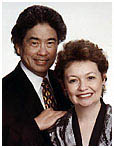
by Harry and Rosemary
Wong
October
2005
Classroom Management
Is Not Discipline
You can tell the neophyte teachers
who have moved from the stage of fantasy to survival. They
are asking these questions:
What do I do if I still have students registering in my classroom?
What do I do if I have to move from room to room?
What do I do with all the misbehaving?
What do I do if I did not start the school with a classroom
management plan?
What do I do if I do not even know what a procedure is?
What do I do if I go home exhausted each day?
What do I do if I don’t think I’ll make it to the
end of the school year?
One or two months have gone by since school began and
it’s obvious that many new teachers are floundering.
All one has to do is log on to the two www.teachers.net
chatboards: “Classroom Management” and “Classroom
Discipline.”
Note the number of pleas for help concerning student behavior
under the Classroom Management category. “Oh, what
do I do with this student or that student?” “How do
I stop them from blurting out or leaving their seats?” “What
consequence can I use to stop this misbehavior?”
Therein lies the problem— and the problem is not the students.
The problem lies with teachers not knowing the difference
between classroom management and classroom discipline.
When you go shopping, you expect the store to be well managed.
If it is not, you’re likely to say, “Does anyone around
here know what they are doing? I could run this place better.”
Shopping in a well run store means you expect the place to have
a pleasant ambiance conducive to shopping. The temperature
is perfect, the aisles are clean, the merchandise is well organized,
and the personnel are inviting.
An effective shopkeeper does not manage the store by posting
a sign outside the front door with the store’s policy telling
you how you are to behave inside the store. And then the
shopkeeper runs around the store and takes away privileges from
those customers who do not behave and gives perks to those customers
who do follow the rules and behave.
No restaurant, office, cruise ship, or church is managed in this
manner, yet this is how some teachers “manage” their
classrooms—with consequences and rewards.
The First of Two Different Chatboards: Classroom
Discipline
On the cover page of www.teachers.net,
Classroom Discipline and Classroom Management are listed under
chatboards. These are two distinct and different chatboards.
Look at the items under Classroom Management and all too often
the items listed have nothing to do with management. They
have to do with student behavior, which should have been posted
under Classroom Discipline.
We sympathize with the frustration facing some teachers,
but this may explain why some teachers have problems in their
classrooms. They are consumed with trying to find
ways to handle the behavior problems of their students and spend
no time structuring a classroom management plan to prevent the
problems from occurring. An ounce of prevention is worth
a pound of cure!
Discipline has to do with how students behave. Management
has to do with procedures and these procedures govern how students
go about doing their work in the classroom.
The ineffective teacher who does not know how to manage a classroom
will resort to discipline tactics to achieve control and compliance.
Classroom management is different because it has nothing
to do with control and compliance.
Classroom management has to do with organizing and structuring
the classroom with procedures. Procedures
teach responsibility. For instance, should the
teacher not be in the room or there is an emergency (“How
Procedures Saved a Teacher's Life.” https://teachers.net/wong/SEP04/
), the students know what to do.
The vast majority of the behavior problems in
the classroom
are caused by the failure of students
to follow procedures and routines,
which in turn are caused
by teachers who do not have procedures and routines.
Good behavior is highly desirable and if discipline is your concern,
then two excellent plans that teach responsible behavior can be
found on pages 163 and 164 in The First Days of School.
One is Jane Slovensky’s plan where she recognizes students
who are good self-managers and the other is Marv Marshall’s
plan where students are taught to be responsible for their own
actions.
The Second Chatboard: Classroom Management
Understand that behavior and classroom management are
two different subjects. Behavior has to do with
discipline and classroom management has to do with procedures
and routines.
Effective teachers MANAGE their classrooms with procedures
and routines.
Ineffective teachers DISCIPLINE their classrooms with threats
and punishments.
Learning only takes place when the students are on task
and doing their work, producing the lesson outcomes the teacher
expects. To do this, effective teachers manage
their classrooms with procedures and routines.
PROCEDURE: What the teacher wants done.
ROUTINE: What the students do automatically.
Please do not call a procedure a rule.
Rules fall under the category of discipline and if a rule is broken,
there must be a consequence. Whereas, procedures do not
have consequences or rewards.
Students do not learn when discipline is imposed upon
a classroom. The teacher only stops deviant behavior,
albeit temporarily, but it must be done.
Ineffective teachers discipline their classrooms with
consequences and punishments. Some of these disciplining
(not management) techniques are as follows:
- pulling cards for infractions,
- credit or reward systems for sugar treats,
- incentive pads,
- stickers,
- imposing consequences,
- demerits,
- turning off a student’s computer,
- taking away privileges, and
- dozens and dozens more of these gimmicks that are posted almost
daily incorrectly on the www.teachers.net
Classroom Management chatboard.
The point is none of them work as a management technique,
because they are behavior tecahniques. Nothing
is accomplished, other than creating more stress and high-blood
pressure for yourself, by continuing to say, “I’ve
tried this and I’ve tried that but I just don’t know
what else I can do to these kids!”
The frustration is sensed, but you do not DO anything to anyone.
You would not like it if someone DID something to you, so please
stop trying to DO things TO the students.
This is the key: The only way to have responsible
students is to have procedures and routines for which the students
can be responsible to.
Effective classrooms are managed with procedures and routines.
Students readily accept a uniform set of classroom procedures
because it simplifies their task in succeeding in school.
Efficient and workable procedures allow many activities to take
place with a minimum of confusion and wasted time. Procedures
help a teacher to structure and organize a classroom for maximum
engaged learning time.
Go back to last month’s column, September 2005. It
is about Sarah Jondahl, a teacher who was successful on her very
first day as a first year teacher. She began with a classroom
management action plan that resulted in her success from her very
first minute of her teaching career. She says, “My
classroom management plan is based on established procedures.
Having these procedures in place from day one and teaching my
students about these procedures make the education experience
in my classroom extremely effective.”
An Alternative Certification Teacher’s First Day
SCRIPT
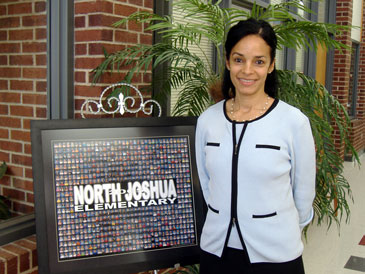
This past June, Diana Greenhouse was at the “Harry Wong”
inservice meeting for a thousand alternative certification teachers
in Fort Worth as part of The Education Career Alternatives Program
(ECAP), www.ecapteach.com.
Diana had a substitute and paraprofessional background and her
experience made her head-over-heals about wanting to teach, which
led to her enrolling in the ECAP program.
She heard about having a script ready before her first day of
school. Based on what she heard and saw on the June 2000
column, “Your First Day,” and March 2003 column, “A
First Day of School Script,” (https://teachers.net/wong/JUN00
and https://teachers.net/wong/MAR03)
she produced her own first day of school script. And we’d
like to share it with you.
Morning Procedures
- Place student desks placed in pods of five and in a u-shape,
making it four groups of five.
- Ask the students to take turns reading their journal entries
within their groups with the reader taking center stage in the
u-shape.
- Walk around and listen to the students read.
- Organize supply boxes and skim through the textbooks.
- Share myself with students with poster of pictures and facts.
Use as a sample for student activity the second day of school.
- Do activity “Stand Up, Pair Up.”
- Introducte classroom rules and procedures with a PowerPoint
presentation.
- Role play and practice the rules and procedures.
- Tour of campus and playground.
- Read story and break for lunch.
Afternoon Procedures
- Introduce teacher who will be team teaching the class.
- Read “The True Story of the Three Little Pigs.”
- Introduce dismissal procedures.
- Discuss importance of safe and orderly dismissal.
- Class dismissed.
With her classroom management procedures in place, Diana created
and put into action her dream of teaching. The school designated
themes for the hallways of the school and her hallway’s
theme was New York City. The hallway walls were covered
with skyscrapers and each classroom was a different place in the
Big Apple. They had the Statue of Liberty, Central Park
Zoo, Yankee Stadium, New York ASPCA (American Society for the
Prevention of Cruelty to Animals), South Street Seaport, a Travel
Agency, and Bank of New York. Grand Central Station was the restroom
area, and Diana’s classroom was Broadway.
The entrance to the hallway has a huge marquee that read “Like
New York City Our Learning Never Sleeps”. The students
enjoyed walking down the hall preparing for the start of school.
Diana’s anticipation for the first day of school was almost
as great as her students! She said, “I just couldn’t
help myself!”
With her morning and afternoon procedures in place, Diana said,
“I could not wait until Monday, my first day of school!”
Diana had a PowerPoint presentation with her procedures,
which were based upon the ones she saw in some of our previous
articles. (https://teachers.net/wong/NOV04/
and https://teachers.net/wong/FEB05/).
To see Diana Greenhouse’s PowerPoint presentation, click
here. (Note: Please use Microsoft Internet
Explorer to view the presentation, as other browsers are known
for not displaying PowerPoint slides correctly. For full
screen viewing, click "Slide Show" button. To
go to next slide, press the space bar on your keyboard.)
The Success of Her First Day of School
Diana reports, “My first day of school script helped me
tremendously! I was able to maintain a very calm demeanor
amidst all the excitement and jitters of the first day of school
by referring back to my script which I kept close by on my clipboard.
“The use of technology in the classroom through my PowerPoint
presentation was wonderful for my students! And it was a
very effective way to present rules and procedures. My students
truly enjoyed discussing rules and procedures, and even asked
to go over them again!!
“I knew I really reached my students when on the playground
I simply stood up, raised my hand in the air, and watched as the
students quickly understood that recess was over. They ran
towards me and quickly lined up in front of me with their little
hands in the air!
“It was an awesome sight. And I never even had to
say a word.
“I’m looking forward to tomorrow and I THANK YOU
from the bottom of my heart for touching the lives of those that
touch lives in our classrooms.”
The Questions Everyone Asks
What if they enter class tardy?
What if I have to move from room to room?
What if they are still registering?
We receive variations of these questions all the time and they
can be answered with the same answer.
First, we tell the person we would love to help, but before we
can to please send us their classroom management plan.
We never hear from the person again.
Many teachers operate without any hardcopy or PowerPoint structure
or organization to a classroom.
If you don’t have a plan,
then you are planning to fail.
TARDY. The problem may not be the student but the
teacher who starts the class late. For instance,
what good is it to have everyone in class on time when the teacher
wastes five to ten minutes at the beginning of every class period
taking the attendance, reading announcements, answering questions,
and returning papers—while everyone sits looking bored,
restless, and irritated at the disorganization and utter waste
of precious learning time. Then, the teacher becomes irritated
too because it takes extra effort and increased blood-pressure
to quiet the class down and become engaged in learning.
We hear from people who tell us or we read on the chatboard of
what consequences teachers have used to reduce tardiness.
As we said previously, these teachers are always trying to DO
things to or punish kids to get them to behave.
Rather than take such a negative approach, have an assignment
ready or posted so that learning begins the moment the students
enter the classroom. Rehearse and rehearse this procedure
so that students know they are responsible for beginning the school
day and that what they are to do is clearly laid out for them.
Then teach the students how to DO things or become responsible
for themselves. For details, please read Chapter 15, “Your
First Priority When Class Starts,” in The First Days of
School.
Also, read to these two past columns, “How to Start a Class
Effectively,” October 2000, and “The First Five Minutes
Are Critical,” November 2000. (https://teachers.net/wong/OCT00
and https://teachers.net/wong/NOV00).
Even the student who is tardy knows what to do, without
disturbing the class. For the teacher, simply mark
the student tardy and do not interrupt the lesson or activity
in progress. Move on. You’ll be surprised how
fast the class catches on to the culture of the room.
And that’s the key. Does your classroom have
a culture, a culture of consistent procedures?
Notice all the examples that we post most every month. Go
to the July 2005 column for a list of teachers and schools with
excellent examples of classrooms that are structured and organized
so that there is a culture of consistency. In such
a classroom tardiness is reduced and no one asks, “What
are we doing today?” They know!
For instance, on page 131 in The First Days of School,
read how Ed Hockenberry does not waste a second with students
who are absent or tardy. There is a consistent
procedure for anyone who is absent or tardy. They go to
an appropriate place in the room and pick up their work, which
has already been placed there by a monitor. The class moves
right along without missing a beat. Most importantly, those
who are tardy do not disturb or penalize those who arrived in
class on time.
The number one problem in our schools
and classrooms is
not discipline; it is the lack of procedures and routines.
MOVING FROM ROOM TO ROOM. If you must move from
room to room as an itinerant teacher, have an opening assignment
that the students are to consistently do when they walk into the
classroom.
In the early grades the most common assignment is to select a
book and read quietly. In the upper grades some teachers
have a year’s supply of sponge work or “bellwork”
assignments on transparencies in a binder ready to use.
Selected students are responsible for displaying them on the screen
before the teacher arrives.
If no procedures are established, much time will be wasted
organizing each activity. Students will have to guess what
to do and undesirable work habits could develop resulting in squandered
learning time.
Steve Geiman, a high school physical education teacher in Virginia,
created “instant activities.” When the students
come to the gym, they check the white board for the assignment,
get dressed, and come out and start the activity immediately.
He says, “They know that they are responsible
for starting to work and that the teacher does not start class.”
To read about Steve Geiman, please go to “The Effective
Teacher Thinks,” November 2001. (https://teachers.net/wong/NOV01)
Here you will learn how he meets the students at the gym door
every day for the first two weeks and reminds them of the instant
activity. He says, “After a week, the repetition
takes effect and the procedure becomes an automatic routine.”
Last month, at Spaulding High School in Rochester, New Hampshire,
the Physical Education staff made a large poster at the doors
to the gym which says,
“Welcome! Please get dressed and start walking.”
It’s a very simple message, but friendly and effective...and
Everyone walks! It’s a great warm-up and it has a
very positive effect on the students.
Bob Pedersen, principal of Spaulding High School says, “Some
of the kids who had P. E. last year have been heard saying, ‘Hey,
how come we didn't start class that way last year when we had
PE.’ It’s nice to see classroom management
in action!”
In other words, you don’t even have to be in the
classroom or the gym and the students know what to do to get started
with the school period or day.
Substitute teachers benefit greatly if you have this
plan in place. As students arrive, there is work
to do while the substitute teacher reviews plans for the day.
The students are usually so rehearsed in the procedure that many
times they end up telling the substitute teacher how the school
day starts in their classroom.
Another group to benefit is the itinerant teacher.
Imagine moving from room to room and having the students waiting
for you to start the day. Establishing the procedure of
coming in, getting seated, and beginning the posted bellwork gives
the traveling teacher time to prepare for the class.
It may be a surprise to American and Canadian teachers that in
many foreign countries, especially Asian countries, it is the
teacher who moves from room to room and the students have opening
procedures that are understood, while they await the teacher.
STILL REGISTERING. And, as for those students
who register after the school year begins, be kind and understanding.
Family situations, or a hurricane, may have caused the student
to uproot and move. Make the transition into your classroom
a warm and loving experience and tell the student how happy you
are to have him or her in the classroom. Share that
the procedures will make the class predictable and comfortable
for him or her.
Give the student a hardcopy of your classroom procedures and
explain that you and the students will brief him or her on the
procedures.
Or, that may not even be necessary. For instance, Nathan,
a new student pops up when the class bell rings to signify the
end of the class period and notices that no one else stands up.
He sits down and waits until the teacher dismisses the class.
He just learned the procedure and it was painless—because
the teacher had a procedure in place and not a consequence.
Cheryl Ralston, a fifth grade teacher in Redlands, California,
has a weekly “hospitality” leader as one of her classroom
responsibilities for students. Other job categories include:
Girls line leader, Boys line leader, Sharpener, Gardener, Messenger,
Librarian, and Phone Assistant. The hospitality
leader’s job is to host, orient, and teach classroom
rules and procedures to any new student who enters the classroom.
It’s October. What If You Don’t Have
a Classroom Management Plan Yet?
It’s not too late to salvage your classroom.
Start with one procedure! Teach one procedure. One
at a time.
The following week, teach another procedure and one thereafter
and you will be amazed how your class will become a learning environment
within a month. Save these procedures so that you can start
next semester or school year with an organized plan.
There Is a Procedure for Teaching Procedures
The Three-Step Approach to Teaching
Classroom Procedures
Explain. State, explain, model, and
demonstrate the procedure.
Rehearse. Rehearse and practice the
procedure under your supervision.
Reinforce. Reteach, rehearse, practice,
and reinforce the procedure until it becomes a student habit
or routine.
The reason that many teachers cannot get students to do things
is that they just tell the students what to do. All
procedures must be rehearsed and reinforced.
As you teach each procedure, understand the importance of why
you are doing what you are doing.
- An effective teacher knows how to organize and structure
a classroom for maximum engaged time for learning.
- The teacher is responsible for organizing a well-managed
classroom where students can learn in a task-oriented environment.
- The most important thing a teacher must provide is CONSISTENCY.
Classroom practices and procedures must be predictable and consistent.
- A smooth-running classroom develops when the teacher has the
ability to teach procedures.
What If You Don’t Even Know What a Procedure Is?
First, if you do not organize and structure your classroom, the
students will organize and structure the classroom for you.
Second, a study that spanned 50 years and looked at 11,000 pieces
of research determined that the number one factor governing student
learning is classroom management.
Therefore, if pilots have flight plans, and
Coaches have game plans, and
Executives have business plans, then
Effective teachers must have a Classroom Management Action Plan.
To learn how to have a classroom management plan and learn how
to teach procedures, consult the following resources:
- See our September to December 2000 columns right here on www.teachers.net,
- Read Chapter 20 in The First Days of School,
- Take the eLearning course offered at www.ClassroomManagement.com.
Ask your administrator for funds to allow you to take this course.
What If the Students Do Not Follow the Procedures?
Understand the following:
Behavior is caused.
Discipline is learned.
Most discipline problems in the classroom have nothing
to do with discipline. They have to do with the
failure of students to do what they were supposed to do because
the teacher never taught the procedure to the classroom.
The teacher then incorrectly calls this misbehavior. It’s
the failure to teach the procedure that caused the behavior problem
to occur.
Discipline is a very positive word. People
who are disciplined stick to their diet, their exercise program,
and their piano rehearsal. Successful students have good,
disciplined study habits.
So, what do you do if someone does not follow a procedure—or
what a teacher incorrectly calls misbehavior?
Stand in front of a mirror and practice over and over again,
with a firm, but loving voice,
And what’s the procedure, please?
And what’s the procedure, please?
And what’s the procedure, please?
The next time you see someone not doing what should be done,
very calmly walk up to the student and say,
And what’s the procedure, please?
Discipline yourself to do this the next time you see something
that needs to be done.
You Can Succeed in Your First Year!
Go to the end of this column and click on these past columns.
Diana Greenhouse, October 2005
Chelonnda Seroyer, February 2005
Sarah Jondahl, September 2005
Nathan Gibbs, March 2004
Heather Chambers, September 2004
John Schmidt, March 2003
Melissa Pantoja, June 2000
These first year teachers were all successful or succeeded
on the first day of their teaching career because they had a plan
for managing the classroom for academic learning.
Review what they did and implement their management strategies
for your classroom.
These teachers spent little or no time in the survival mode of
teaching. They are all practicing their craft in the highest
form—that of being an effective teacher.
We’ve given you the tools to break out of your survival
rut. It’s OK to return to fantasy, but for now you’ll
have the tools and procedures you need to sustain you and be the
best teacher you can be for your students.
With procedures firmly in place, you’ll have time
to devote to the art of teaching and become the effective teacher
your students need and deserve.
 For a printable version of this article click
here.
For a printable version of this article click
here.
Harry & Rosemary Wong products: http://www.harrywong.com/product/
Email Harry Wong: harrywong@teachers.net
Gazette Articles by Harry & Rosemary Wong:
If you spot a link that appears to be out-of-date, please alert us at webmaster@teachers.net!
- A Grateful Goodbye After 15 Years (Jun 2015)
- Love, Marriage, and Babies, Oh My! (May 2015)
- Retention Rate Is 100 Percent (Apr 2015)
- Teacher Effectiveness and Human Capital (Mar 2015)
- Training Teachers to Be Effective (Feb 2015)
- Making Deals Is Ineffective (Dec 2014 / Jan 2015)
- Retrieving and Carrying Electronic Devices (Nov 2014)
- Sharing to Succeed (Oct 2014)
- How a University Prepares Its Students (Sep 2014)
- Effective Teaching (Aug 2014)
- Your Future Is in Your Hands (June/July 2014)
- The Classroom Management Book (May 2014)
- When Students Succeed; Teachers Succeed (April 2014)
- Teaching New Teachers How to Succeed (March 2014)
- Execute and Praise (February 2014)
- Shaping a Solid Foundation (Dec 2013 / Jan 2014)
- The Most Misunderstood Word (November 2013)
- How to Start Class Every Day (October 2013)
- Prevention: The Key to Solving Discipline Problems (September 2013)
- Planning, Planning, Planning (August 2013)
- Are You THE One? (June / July 2013)
- Practical Examples That Work (May 2013)
- A Disability Is Not a Handicap (Apr 2013)
- Totally Inexcusable (Mar 2013)
- Be Proud of Public Education (Feb 2013)
- Structure Will Motivate Students (Dec 2012 / Jan2013)
- Orchestrating the Classroom (Nov 2012)
- The Lasting Impact of Instructional Coaching (Oct 2012)
- Learning, Laughing, and Leaving a Legacy (Sep 2012)
- Twenty-two, First Year, and Legit (Aug 2012)
- A Master Teacher of Teachers (June/July 2012)
- Where Going to School Means Success (May 2012)
- A Nationally Celebrated High School (Apr 2012)
- The Highest Rated School in New York City, Part 2 (Mar 2012)
- The Highest Rated School in New York City, Part 1 (Feb 2012)
- The Importance of Culture (Dec 2011 / Jan 2012)
- You Can Teach Classroom Management (Nov 2011)
- Seamless, Transparent, and Consistent (Oct 2011)
- Coaching Teachers to Be Effective Instructors (Sep 2011)
- How a Principal Creates a Culture of Consistency (Aug 2011)
- Graduation Begins in Your Classroom (June/July 2011)
- The Inspiration of a Mother (May 2011)
- How to Be an Effective Leader (Apr 2011)
- Learning Objectives: The Heart of Every Lesson (Mar 2011)
- Even Shakespeare Had Structure (Feb 2011)
- Effectiveness Defined: It's Not a Mystery (Dec 2010 / Jan 2011)
- Surviving Without a Principal (Nov 2010)
- Achieving Greatness: Locke Elementary School, Part 2 (Oct 2010)
- Teaching Greatness: Locke Elementary School, Part 1 (Sep 2010)
- Effective from the Start (Aug 2010)
- Ten Year Summary of Articles, 2000 to 2010 (June/July 2010)
- The Success of a Culture of Consistency (May 2010)
- Training Teachers to Be Effective (Apr 2010)
- Learning to Teach, Teaching to Learn (Mar 2010)
- Turning Teaching Dreams into Reality (Feb 2010)
- Dreams and Wishes Can Come True (Dec 2009 / Jan 2010)
- Success in a State Controlled School (Nov 2009)
- Inner City Is Not An Excuse (Oct 2009)
- Exceeding All Expectations (Sep 2009)
- Teachers Are the Difference (Aug 2009)
- Nine Year Summary of Articles, 2000 to 2009 (Jun/Jul 2009)
- Teachers Are the Greatest Assets (May 2009)
- The Tools for Success (Apr 2009)
- Assessing for Student Learning (Mar 2009)
- To Be an Effective Teacher Simply Copy and Paste (Feb 2009)
- The Sounds of Students Learning and Performing (Dec 2008)
- A School That Achieves Greatness (Nov 2008)
- Boaz City Schools: Professional Learning Teams (Oct 2008)
- It Was Something Close to a Miracle (Sep 2008)
- A Computer Teacher Shows the Way (Aug 2008)
- Eight Year Summary of Articles, 2000 to 2008 (Jun/Jul 2008)
- An Amazing Kindergarten Teacher (May 2008)
- Schools That Beat the Academic Odds (Apr 2008)
- Academic Coaching Produces More Effective Teachers (Mar 2008)
- Coaches Are More Effective than Mentors (Feb 2008)
- Wrapping the Year with Rap! (Dec 2007/Jan 2008)
- The Floating Teacher (Nov 2007)
- Taking the Bite Out of Assessment—Using Scoring Guides (Oct 2007)
- Ten Timely Tools for Success on the First Days of School (Sep 2007)
- First Day of School Script - in Spanish, Too! (Aug 2007)
- Seven Year Summary of Articles, 2000 to 2007 (Jun 2007)
- Effective Teachers End the Year Successfully (May 2007)
- Training Gen Y Teachers for Maximum Effectiveness (Apr 2007)
- Classroom Management Applies to All Teachers (Mar 2007)
- Students Want a Sense of Direction (Feb 2007)
- Rubrics in Two College Classes (Dec 2006/Jan 2007)
- How to Write a Rubric (Nov 2006)
- Assessing Student Progress with a Rubric (Oct 2006)
- A 92 Percent Homework Turn-in Rate (Sep 2006)
- Effective Teachers Are Proactive (Aug 2006)
- Five Year Summary of Articles (Jun 2006)
- Hitting the Bulls Eye as a Beginning Teacher (May 2006)
- They're Eager to Do the Assignments (Apr 2006)
- The Success of Special Ed Teachers (Mar 2006)
- What Teachers Have Accomplished (Feb 2006)
- Fifty Years Ago, The Legacy (Dec 2005/Jan 2006)
- The Emergency Teacher (Nov 2005)
- Classroom Management Is Not Discipline (Oct 2005)
- A Successful First Day Is No Secret (Sep 2005)
- The Most Important Factor (Aug 2005)
- Four Year Summary of Articles (Jul 2005)
- Improving Student Achievement Is Very Simple (Part 2) (Jun 2005)
- Improving Student Achievement Is Very Simple (Part 1) (May 2005)
- Never Cease to Learn (Apr 2005)
- His Classroom Is a Real Life Office (Mar 2005)
- The Power of Procedures (Feb 2005)
- The First Ten Days of School (Jan 2005)
- PowerPoint Procedures (Nov/Dec 2004)
- The Saints of Education (Oct 2004)
- How Procedures Saved a Teacher's Life (Sep 2004)
- How to Help Students with Their Assignments (Aug 2004)
- Three Year Summary of Articles (Jun/Jul 2004)
- His Students are All Certified (May 2004)
- What to Do When They Complain (Apr 2004)
- A Well-Oiled Learning Machine (Mar 2004)
- The Effective Teacher Adapts (Feb 2004)
- How to Start a Lesson Plan (Aug 2003)
- Applying for a Teaching Job in a Tight Market - Part 2 (Jun/Jul 2003)
- Applying for a Teaching Job in a Tight Market (May 2003)
- The Effective Substitute Teacher (Apr 2003)
- A First Day of School Script (Mar 2003)
- How to Retain New Teachers (Feb 2003)
- No Problem With Hurricane Lili (Dec 2002)
- A Class Size of 500 (Nov 2002)
- Effective Practices Apply to All Teachers (Oct 2002)
- Dispensing Materials in Fifteen Seconds (Sept 2002)
- How To Start School Successfully (Aug 2002)
- Teaching Procedures Is Teaching Expectations (June - July 2002)
- $50,000 to Replace Each Teacher (May 2002)
- Even Superintendents Do It (Apr 2002)
- Impossible, No Job Openings? (Mar 2002)
- A Stress Free Teacher (Feb 2002)
- A Most Effective School (Jan 2002)
- Van Gogh in Nine Hours (Dec 2001)
- The Effective Teacher Thinks (Nov 2001)
- How a Good University Can Help You (Sep 2001)
- How to Motivate Your Students (May 2001)
- How to Recognize Where You Want to Be (Apr 2001)
- What Successful New Teachers Are Taught (Mar 2001)
- A Journey of the Heart (Feb 2001)
- The Miracle of Teachers (Jan 2001)
- It's Not the Students. It's the Teacher. (Dec 2000)
- The First Five Minutes Are Critical (Nov 2000)
- How to Start a Class Effectively (Oct 2000)
- The Problem Is Not Discipline (Sep 2000)
- There Is Only One First Day of School (Aug 2000)
- Applying for Your First Job (Jul 2000)
- Your First Day (Jun 2000)
Browse through the latest posts from the Classroom Management
Chatboard...
- introduce myself!, 2/05/26, by Innerpeaceful One | Study Timers & Sleep Music.
- intorduce myself, 2/05/26, by Innerpeaceful One | Study Timers & Sleep Music.
- classroom management resources, 2/05/26, by Innerpeaceful One | Study Timers & Sleep Music.
- Re: Learning by doing, 4/22/22, by WendyF.
- Re: Learning by doing, 4/22/22, by WendyF.
- Re: Learning by doing, 4/22/22, by WendyF.
- Re: Learning by doing, 4/22/22, by WendyF.
- Re: Learning by doing, 4/22/22, by WendyF.
- Re: Learning by doing, 4/22/22, by WendyF.
- Classroom Management and SRL, 2/08/21, by monh.
- Class Updates Application, 2/02/18, by edtechguru.
- Re: how do you manage the different learning styles?, 1/16/18, by Steven G.
- Re: Respectful and Responsible , 1/09/18, by Linda.
- Re: how do you manage the different learning styles?, 1/03/18, by Linda.
- how do you manage the different learning styles?, 12/28/17, by smgalbr810.
- Re: Why I'll Never Say "Don't Smile Until Christmas", 10/02/17, by CrystalB.
- Re: Positive Reinforcement, 10/02/17, by CrystalB.
- Re: Learning by doing, 10/01/17, by CrystalB.
- Re: Intrinsic Motivation - making sure we stay on task, 10/01/17, by CrystalB.
- Re: Intrinsic Motivation - making sure we stay on task, 10/01/17, by Heather S..
- Re: Is Positive Reinforcement Enough?, 10/01/17, by mollyh.
- Re: Is Positive Reinforcement Enough?, 10/01/17, by Heather S..
- Re: Is Positive Reinforcement Enough?, 9/30/17, by CrystalB.
- Re: Intrinsic Motivation - making sure we stay on task, 9/30/17, by CrystalB.
- Intrinsic Motivation - making sure we stay on task, 9/30/17, by CrystalB.
- Re: Respectful and Responsible , 9/30/17, by Alexandra Sletten.
- Re: Respectful and Responsible , 9/30/17, by Ines K.
- Is Positive Reinforcement Enough?, 9/30/17, by Heather S..
- Re: Respectful and Responsible , 9/29/17, by Anne R.
- Re: Respectful and Responsible , 9/28/17, by Samantha M.
- Re: Rewards, 9/28/17, by Samantha M.
- Re: Rewards, 9/28/17, by Kaylee H.
- Re: Respectful and Responsible , 9/28/17, by mollyh.
- Re: Rewards, 9/28/17, by mollyh.
- Re: Learning by doing, 9/28/17, by Heather S..
- Why I'll Never Say "Don't Smile Until Christmas", 9/27/17, by Bob R/CA.
|


 Chatboards
 Mailrings
 Classifieds
 Lessons
 Jobs
Jobs
 Projects