|  Effective
Teaching...
Effective
Teaching...
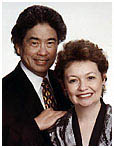
by Harry and Rosemary
Wong
October
2006
Assessing Student
Progress with a Rubric
Colette Cornatzer, a student in Norm Dannen’s class at
Southern Regional High School in Manahawkin, New Jersey, says,
“A rubric is a scale that teachers may use to grade an article
of writing from their students. Because the student knows
the stipulations of the rubric, the student knows how to write
the paper. I like rubrics because they make the student
aware of exactly how to answer the questions or write the assigned
article, and it plots a very fair and easy–to-understand
grading system. A rubric creates a backbone for your paper.”

We began the story of Norm Dannen in our May 2006 column, “Hitting
the Bulls Eye as a Beginning Teacher.”
In that column, we focused on how Norm Dannen used objectives
to communicate to his students what they are to learn. In
this column, we will share with you how Norm Dannen assesses and
tests his students on that learning.
Students get more done when they see where they are going
and what they are doing.
Just think what would happen to student
learning if the students knew
what they were to learn and thus knew they could not fail.
To do this, effective teachers have objectives for each lesson.
These objectives govern what the students are to learn and what
the teacher, concomitantly, is to teach.
Objectives are classroom learning targets. The
students know what they are aiming for, thus, they know what they
are responsible for learning.
Thus, when both the student and teacher are moving towards the
same goal, that’s when learning takes place.
Telling a student to read a chapter, story, or book involves
no learning, because the student does not know what he or she
is to accomplish by the reading. The teacher, likewise,
does not know what he or she is to teach; the teacher is merely
filling time and covering the material.
The students must be given a set of objectives
at the beginning
of their assignment telling them what they
are responsible for accomplishing.
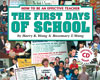
(The First Days of School, p. 229)
Assessment for Learning
Students like to have lesson objectives because it tells
them what they are to learn. They also like objectives because
they know how they will be evaluated, because the test is aligned
to the objectives.
Thus, effective teachers give their students a scoring guide
that spells out how they can earn points or a grade for accomplishing
a lesson. A scoring guide helps a student to determine what
is expected of an assignment.
Sometimes these scoring guides are called scoring rubrics or
just plain rubric.
Don’t worry if you do not know what a rubric is, even though
you hear it bantered around in educational circles. Don’t
bother looking it up in the dictionary either as the dictionary’s
definition has nothing to do with what educators call a rubric.
The word was coined in 2001 by a group called the Assessment Reform
Group in England, but that does not make it correct.
Some educators delight in picking up words and making a cottage
industry out of them, never realizing that the educator in the
trench has no clue as to the invented word.
What’s interesting is that if you go to the Assessment
Reform Group’s web site, you never see the word “rubric”
used. Rather, the group advocates “Assessment for
Learning,” which they define as the process of seeking and
interpreting evidence for use by learners and their teachers to
decide where the learners are in their learning, where they need
to go, and how best to get there.
To help students reach the highest possible
level of achievement, the
effective teacher is constantly assessing for student learning
to help students go where they need to go and help them to best
get there.
This is done by assessing student work and comparing it with
the scoring guide or rubric.
Give the Students a Scoring Guide
There is no need to confuse the students with jargon. At
the beginning of a lesson, give the students a scoring guide and
call it a “scoring guide.” A scoring guide
is a clear, simple, understandable term as it tells the students
what is expected of them and how they can earn a score.
But, amongst us educators, let’s agree that a scoring guide,
a scoring rubric, and a rubric are all the same and move on.
Look at a rubric in the same way as scoring guides that are used
in gymnastics and ice skating. The judges are not grading
the contestants. Rather, they have a predetermined guide
that governs how points are earned when skaters complete certain
spins, jumps, turns, and steps. The skaters know the scoring
format and practice and practice to improve their scoring.
Helping Students Make Progress to Improve
If you wonder how ice skaters perfect their jumps and spins,
there is a system of cables and pulleys installed in the ice rink.
The cable is attached to the ice skater with a harness (with butt
buds and crash pads to cushion the falls).
The coach pulls the cable to control the lifts while assessing
and teaching at the same time—over and over again, working
towards PROGESS and ACCOMPLISHMENT.
Likewise, when the students are given a scoring guide or rubric
ahead of time, they can see how they will be scored and can earn
better scores by doing better work. All the while, the teacher
is involved in helping the student progress and improve his or
her score.
The role of a teacher is not to grade
a student. The teacher’s main
role is to help every student reach the highest possible level
of achievement.
(The First Days of School, p. 237)
The purpose of giving a student a test is not necessarily to
grade a student. The purpose of a test should be
to assess what the student has learned so that further learning
can be planned.
And that’s the purpose of education, to make sure the student
is making progress toward some predetermined learning
goal.
For instance, when a doctor runs a test on you, such as a blood
test, a blood pressure test, a mammogram, or a colonoscopy (ouch),
the purpose is not to grade you. Rather, the doctor assesses
the results of the test so that he or she can prescribe the proper
medicine or treatment to progress toward the goal of enhancing
your health.
And, should you ever visit a family member or friend in a hospital,
you may ask the doctor how the patient is doing. What you
want to hear is, “The patient is making progress.”
Similarly, that’s the purpose of education, to make sure
the student is making progress.
To do this, there must be constant assessment
for learning.
The Great Gatsby
In our May 2006 column we shared how Norm Dannen created a lesson
to teach the New Jersey reading standard:
All students will understand and apply the knowledge
of sounds, letters, and words in written English to become independent
and fluent readers, and will read a variety of materials and
texts with fluency and comprehension.
He created a lesson to teach this standard using the novel, The
Great Gatsby.
The Great Gatsby was published in 1925
and is regarded as one of the foremost pieces of American literature.
It was written by F. Scott Fitzgerald, or Francis Scott Key Fitzgerald—yes—a
direct descendent of the Francis Scott Key who wrote The Star-Spangled
Banner.
The setting of the book was a period in America called the Roaring
Twenties, a period of great wealth. The theme of the book
is how unbridled materialism was threatening to destroy the great
American dream. Sound familiar today?
The novel centers on a man, Jay Gatsby, his friend, and his girlfriend,
Daisy Buchanan.
In 1974 Hollywood made a movie of the novel and Robert Redford
played Jay Gatsby and Mia Farrow played Daisy Buchanan.
The Great Gatsby Rubric
At the end of the lesson, Norm used a scoring guide or rubric
to assess his students for their learning.
Click here to see his Great
Gatsby Rubric (in PDF).
You might want to print off our May
2006 column and have it readily available as we explain his
rubric.
Note that the rubric or scoring guide consists of a series of
columns and rows, yes, like a spreadsheet.
The rows each represent a characteristic, such as reading, compare
and contrast, and research/resource skills.
The columns are each headed with a point value that the students
can earn, such as 4, 3, 2, 1, and 0 or NS (no score).
Each box represents the intersection of a characteristic and
a point value, just as you would have two points meet on a graph.
Look at the first box after “reading” and under “4”
and follow along under 3, 2, 1, and 0.
| 4 |
The student can earn four points by easily relating
Fitzgerald’s idea of “The American Dream”
to Jay Gatsby’s actions and give three specific written
or verbal examples. |
| 3 |
The student can earn three points by relating Fitzgerald’s
idea of “The American Dream” to Jay Gatsby’s
actions and give two specific written or verbal examples. |
| 2 |
The student can earn two points by relating Fitzgerald’s
idea of “The American Dream” to Jay Gatsby’s
actions, but has trouble giving written or verbal examples. |
| 1 |
The student can earn one point but has trouble relating
Fitzgerald’s idea of “The American Dream”
to Jay Gatsby’s actions and cannot give any examples.
|
| 0 |
The student earns no points by being unable to relate Fitzgerald’s
idea of “The American Dream” to Jay Gatsby’s
actions or give any examples of same. |
Engaging Students
Just as the word, “rubric” is bantered around today,
the other currently fashionable word is “engaged.”
Thirty years ago the same term was “relevance.” That
is, make the lesson related to the student’s own life.
Thus, students learn best when they can make connections
between the lesson and their interest and life experiences.
That’s how we “engage” students.
Norm engages his students by asking them to compare their life
today to the life of the people who lived during the time of Jay
Gatsby, in the 1920s.
To do this, Norm began with the following objective:
Draw parallels between their own lives in the context of the
Jazz Age,
the Lost Generation, Prohibition, and the Great Depression.
You can use a rubric in your classroom as a formative or a summative
instrument. For a complete explanation of these two terms,
please read pages 240 to 242 in The First Days of
School.
Very simply, formative tells you what the student IS
learning and summative tells you what the student HAS learned.
Helping a Student Who Does Not Score Well
Using The Great Gatsby rubric as a formative
instrument, let’s say you have a student who earns
a zero. That is, the student cannot relate his or her life
to the lives of the people who lived in the 1920s.
This does not mean the student is dumb, lazy, or failing.
It just means the student cannot see the relationship of life
today and life that existed over 80 years ago. Maybe your
great Aunt Mabel can, but that can be difficult for a young person
who is 15 years old and hasn’t even figured out life today.
So, that’s what makes life challenging and exciting for
teachers.
To illustrate, we (Harry and Rosemary) went to an Off-Broadway
show in New York City of Jacques Brel Is Alive and
Well and Living in Paris. You see, most of
you can’t relate already.
Jacques Brel was a Belgian song writer and troubadour who wrote
about life in Belgium and France of his time, the 1940s to 1960s.
He sang his own songs and was quite popular in New York’s
Greenwich Village where he sang until the mid-1960s.
The show, Jacques Brel Is Alive and Well and Living
in Paris, consists of 34 songs, no dialogue (no
explanation), and sung one after another by a cast of four people.
Sitting very close to us was a young lady easily in her early
20s. At the end of the show, we overheard her say to one
of the cast members, “I don’t get it.” Does
she get a zero or an “F” on the rubric? Not
really, if you are using the rubric as a formative instrument.
It’s very possible that this young lady had no context
of life in the 1940s to 1960s in Europe. If so, this would
make it difficult for her to relate her life of today to the life
of the people who lived over 50 years ago in Belgium and France.
We wanted to get a hold of her and do our teacher thing on her
and say, “Young lady, please sit down. Let’s
take one of Jacques Brel’s songs and read it line by line
for meaning,”—just as you would do with Shakespeare.
In time she would say, “Oh, I see what he was talking about.”
We would then say, “Now, name or describe something that
is happening in your life today that is similar to what was happening
to the people who lived during the 1940s to 1960s.”
To help a student see what life was like in America in the 1920s,
go to the Library of Congress web site, www.loc.gov.
There are over 10 million digital images that you can download
showing life in the 1920s, such as pictures of the great jazz
singers.
With an approach of assessment for learning,
we can help students who have scored NS/0 on the scoring guide
to score higher and make progress.
Our Role as Teachers
Our major role as teachers is to help students to learn
the subject of the lesson or the course we are teaching.
Objectives are classroom learning targets. The students
know what they are aiming for, thus, they know what they are responsible
for learning.
The students must be given a set of objectives at the beginning
of their assignment telling them what they are responsible for
accomplishing.
Students like to have lesson objectives because it tells them
what they are to learn. They also like objectives because
they know how they will be evaluated, because the test is aligned
to the objectives.
The purpose of giving a student a test is not necessarily to
grade a student. The purpose of a test should be
to assess what the student has learned so that further learning
can be planned.
It’s as Simple as 1-2-3
The May teachers.net column focused on how Norm Dannen uses objectives
to communicate to his students WHAT they are
to learn. This column focuses on HOW he
assesses for the WHAT.
Unless you know where you are going, you will never hit
the bull’s eye with your students.
As you develop your lessons for the year, always ask WHAT and
HOW. But don’t stop there. The most important
part of the entire process is sharing the WHAT and HOW with your
students. Education is not trickery and clever tactics to
stump students. Our goal is to open the wonderment of the
world and help students discover the joy and fulfillment associated
with learning.
Learning is a definable process and one that all students can
experience. It is our charge to articulate that process
to students in very concrete terms.
Look at the lesson you are going to deliver tomorrow and ask
yourself these three questions:
- Do the students know WHAT they are to learn
as a result of experiencing the lesson?
- Do you know HOW you are going to help the
students accomplish the goal of the lesson?
- Do the students know HOW you are going to assess
their learning of the lesson?
If you cannot clearly answer these questions, you are not ready
to teach your lesson. You will only frustrate the students
as well as yourself in trying to figure out what went wrong.
The tone of your classroom will change when the students
see that you are there to help them progress through the year.
Parents can see the direction and accomplishment of their children
as well.
Hitting the bull’s eye is not difficult, but it does require
skill and dedication to clearly understanding the WHATs and HOWs
of learning and communicating that to your students. The
more practice you get at the skill, the greater your precision
will be in delivering a lesson to your students that is right
on target.
Start practicing the process and become a Grand Master Archer.
Your students will be the ultimate winners!
 For a printable version of this article click
here.
For a printable version of this article click
here.
Harry & Rosemary Wong products: http://www.harrywong.com/product/
Email Harry Wong: harrywong@teachers.net
Gazette Articles by Harry & Rosemary Wong:
If you spot a link that appears to be out-of-date, please alert us at webmaster@teachers.net!
- A Grateful Goodbye After 15 Years (Jun 2015)
- Love, Marriage, and Babies, Oh My! (May 2015)
- Retention Rate Is 100 Percent (Apr 2015)
- Teacher Effectiveness and Human Capital (Mar 2015)
- Training Teachers to Be Effective (Feb 2015)
- Making Deals Is Ineffective (Dec 2014 / Jan 2015)
- Retrieving and Carrying Electronic Devices (Nov 2014)
- Sharing to Succeed (Oct 2014)
- How a University Prepares Its Students (Sep 2014)
- Effective Teaching (Aug 2014)
- Your Future Is in Your Hands (June/July 2014)
- The Classroom Management Book (May 2014)
- When Students Succeed; Teachers Succeed (April 2014)
- Teaching New Teachers How to Succeed (March 2014)
- Execute and Praise (February 2014)
- Shaping a Solid Foundation (Dec 2013 / Jan 2014)
- The Most Misunderstood Word (November 2013)
- How to Start Class Every Day (October 2013)
- Prevention: The Key to Solving Discipline Problems (September 2013)
- Planning, Planning, Planning (August 2013)
- Are You THE One? (June / July 2013)
- Practical Examples That Work (May 2013)
- A Disability Is Not a Handicap (Apr 2013)
- Totally Inexcusable (Mar 2013)
- Be Proud of Public Education (Feb 2013)
- Structure Will Motivate Students (Dec 2012 / Jan2013)
- Orchestrating the Classroom (Nov 2012)
- The Lasting Impact of Instructional Coaching (Oct 2012)
- Learning, Laughing, and Leaving a Legacy (Sep 2012)
- Twenty-two, First Year, and Legit (Aug 2012)
- A Master Teacher of Teachers (June/July 2012)
- Where Going to School Means Success (May 2012)
- A Nationally Celebrated High School (Apr 2012)
- The Highest Rated School in New York City, Part 2 (Mar 2012)
- The Highest Rated School in New York City, Part 1 (Feb 2012)
- The Importance of Culture (Dec 2011 / Jan 2012)
- You Can Teach Classroom Management (Nov 2011)
- Seamless, Transparent, and Consistent (Oct 2011)
- Coaching Teachers to Be Effective Instructors (Sep 2011)
- How a Principal Creates a Culture of Consistency (Aug 2011)
- Graduation Begins in Your Classroom (June/July 2011)
- The Inspiration of a Mother (May 2011)
- How to Be an Effective Leader (Apr 2011)
- Learning Objectives: The Heart of Every Lesson (Mar 2011)
- Even Shakespeare Had Structure (Feb 2011)
- Effectiveness Defined: It's Not a Mystery (Dec 2010 / Jan 2011)
- Surviving Without a Principal (Nov 2010)
- Achieving Greatness: Locke Elementary School, Part 2 (Oct 2010)
- Teaching Greatness: Locke Elementary School, Part 1 (Sep 2010)
- Effective from the Start (Aug 2010)
- Ten Year Summary of Articles, 2000 to 2010 (June/July 2010)
- The Success of a Culture of Consistency (May 2010)
- Training Teachers to Be Effective (Apr 2010)
- Learning to Teach, Teaching to Learn (Mar 2010)
- Turning Teaching Dreams into Reality (Feb 2010)
- Dreams and Wishes Can Come True (Dec 2009 / Jan 2010)
- Success in a State Controlled School (Nov 2009)
- Inner City Is Not An Excuse (Oct 2009)
- Exceeding All Expectations (Sep 2009)
- Teachers Are the Difference (Aug 2009)
- Nine Year Summary of Articles, 2000 to 2009 (Jun/Jul 2009)
- Teachers Are the Greatest Assets (May 2009)
- The Tools for Success (Apr 2009)
- Assessing for Student Learning (Mar 2009)
- To Be an Effective Teacher Simply Copy and Paste (Feb 2009)
- The Sounds of Students Learning and Performing (Dec 2008)
- A School That Achieves Greatness (Nov 2008)
- Boaz City Schools: Professional Learning Teams (Oct 2008)
- It Was Something Close to a Miracle (Sep 2008)
- A Computer Teacher Shows the Way (Aug 2008)
- Eight Year Summary of Articles, 2000 to 2008 (Jun/Jul 2008)
- An Amazing Kindergarten Teacher (May 2008)
- Schools That Beat the Academic Odds (Apr 2008)
- Academic Coaching Produces More Effective Teachers (Mar 2008)
- Coaches Are More Effective than Mentors (Feb 2008)
- Wrapping the Year with Rap! (Dec 2007/Jan 2008)
- The Floating Teacher (Nov 2007)
- Taking the Bite Out of Assessment—Using Scoring Guides (Oct 2007)
- Ten Timely Tools for Success on the First Days of School (Sep 2007)
- First Day of School Script - in Spanish, Too! (Aug 2007)
- Seven Year Summary of Articles, 2000 to 2007 (Jun 2007)
- Effective Teachers End the Year Successfully (May 2007)
- Training Gen Y Teachers for Maximum Effectiveness (Apr 2007)
- Classroom Management Applies to All Teachers (Mar 2007)
- Students Want a Sense of Direction (Feb 2007)
- Rubrics in Two College Classes (Dec 2006/Jan 2007)
- How to Write a Rubric (Nov 2006)
- Assessing Student Progress with a Rubric (Oct 2006)
- A 92 Percent Homework Turn-in Rate (Sep 2006)
- Effective Teachers Are Proactive (Aug 2006)
- Five Year Summary of Articles (Jun 2006)
- Hitting the Bulls Eye as a Beginning Teacher (May 2006)
- They're Eager to Do the Assignments (Apr 2006)
- The Success of Special Ed Teachers (Mar 2006)
- What Teachers Have Accomplished (Feb 2006)
- Fifty Years Ago, The Legacy (Dec 2005/Jan 2006)
- The Emergency Teacher (Nov 2005)
- Classroom Management Is Not Discipline (Oct 2005)
- A Successful First Day Is No Secret (Sep 2005)
- The Most Important Factor (Aug 2005)
- Four Year Summary of Articles (Jul 2005)
- Improving Student Achievement Is Very Simple (Part 2) (Jun 2005)
- Improving Student Achievement Is Very Simple (Part 1) (May 2005)
- Never Cease to Learn (Apr 2005)
- His Classroom Is a Real Life Office (Mar 2005)
- The Power of Procedures (Feb 2005)
- The First Ten Days of School (Jan 2005)
- PowerPoint Procedures (Nov/Dec 2004)
- The Saints of Education (Oct 2004)
- How Procedures Saved a Teacher's Life (Sep 2004)
- How to Help Students with Their Assignments (Aug 2004)
- Three Year Summary of Articles (Jun/Jul 2004)
- His Students are All Certified (May 2004)
- What to Do When They Complain (Apr 2004)
- A Well-Oiled Learning Machine (Mar 2004)
- The Effective Teacher Adapts (Feb 2004)
- How to Start a Lesson Plan (Aug 2003)
- Applying for a Teaching Job in a Tight Market - Part 2 (Jun/Jul 2003)
- Applying for a Teaching Job in a Tight Market (May 2003)
- The Effective Substitute Teacher (Apr 2003)
- A First Day of School Script (Mar 2003)
- How to Retain New Teachers (Feb 2003)
- No Problem With Hurricane Lili (Dec 2002)
- A Class Size of 500 (Nov 2002)
- Effective Practices Apply to All Teachers (Oct 2002)
- Dispensing Materials in Fifteen Seconds (Sept 2002)
- How To Start School Successfully (Aug 2002)
- Teaching Procedures Is Teaching Expectations (June - July 2002)
- $50,000 to Replace Each Teacher (May 2002)
- Even Superintendents Do It (Apr 2002)
- Impossible, No Job Openings? (Mar 2002)
- A Stress Free Teacher (Feb 2002)
- A Most Effective School (Jan 2002)
- Van Gogh in Nine Hours (Dec 2001)
- The Effective Teacher Thinks (Nov 2001)
- How a Good University Can Help You (Sep 2001)
- How to Motivate Your Students (May 2001)
- How to Recognize Where You Want to Be (Apr 2001)
- What Successful New Teachers Are Taught (Mar 2001)
- A Journey of the Heart (Feb 2001)
- The Miracle of Teachers (Jan 2001)
- It's Not the Students. It's the Teacher. (Dec 2000)
- The First Five Minutes Are Critical (Nov 2000)
- How to Start a Class Effectively (Oct 2000)
- The Problem Is Not Discipline (Sep 2000)
- There Is Only One First Day of School (Aug 2000)
- Applying for Your First Job (Jul 2000)
- Your First Day (Jun 2000)
Browse through the latest posts from the Classroom Management
Chatboard...
|


 Chatboards
 Mailrings
 Classifieds
 Lessons
 Jobs
Jobs
 Projects