|  Effective
Teaching...
Effective
Teaching...
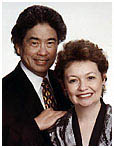
by Harry and Rosemary
Wong
September
2005
A Successful
First Day Is No Secret
This example is so incredulous
that you may think it’s fiction. It’s
not. It is a true situation.
Elise, a new teacher on her first day of school, brought
in a roll of toilet paper. Everyone took as much
as they wanted without knowing what the assignment was.
She kept it a "juicy little secret!" Then, they
had to tell one thing about themselves for each sheet of paper.
What a disaster!
- Students started giving "inappropriate" information
about themselves.
- The self proclaimed "class clown" that took almost
25 sheets had to
make up 25 silly things to say!
- The terribly shy student had to suffer through making up 5
things.
What a mistaken use of valuable class time. The classroom
collapsed. Needless to say, she was miserable and left teaching
after two days and is a telemarketer today.
Classroom Management with Procedures
Chelonnda Seroyer, a teacher in Madison, Alabama, went
to the same college, took many of the same courses, and began
teaching at the same time as Elise. However, Chelonnda
was successful on her first day of school and is recognized today,
after only two years of teaching, as an exceptional teacher.
On her first day of school, Chelonnda was standing at her door,
dressed professionally, greeting her students. Her friendly
smile and firm handshake hid the fear and anxiety she felt, wondering
what her first class and her first day as a teacher would be like.
Shaking internally, Chelonnda nonetheless had a strange premonition.
She turned to look into her room and breathed a sigh of relief.
All of the students were at their desks at work
– and the bell had not even rung to begin the first second
of Chelonnda’s career as a teacher.
Chelonnda can tell you the answer to her success in one
word, Procedures. She further explains,
“My students enjoy having a predictable environment.
They feel safe because they know exactly what to expect each day.
They like consistency in a world that can be very inconsistent.
Procedures are simple, but their impact is enormous.”
Chelonnda’s procedures can be seen at https://teachers.net/wong/FEB05/
and on www.ClassroomManagement.com.
It's All in How You Start
Classrooms are managed with procedures and routines.
Students readily accept a uniform set of classroom procedures
because it simplifies their task in succeeding in school.
Efficient and workable procedures allow many activities to take
place with a minimum amount of confusion and wasted time.
Procedures help a teacher to structure and organize a classroom
for maximum engaged learning time.
The first day of school is the most important day of
the school year. If you start the first day of
school incorrectly, you may never recover for the rest of the
year. Effective teachers know how to begin the first day
of school and maximize use of class time for learning.
Your first priority when class begins is not to take
the roll; it is to get the students to work. An
assignment must be available, and the students must know the procedure
for getting to work immediately. Do not destroy prime time
with non-prime time activities such as taking the attendance,
making announcements, answering questions, or collecting papers.
Have an assignment ready on the board written in the same place
every day. Some teachers call this “bellwork,”
because at the sound of the bell, work must begin. Teach
your students to enter the classroom quietly and start immediately
on the bellwork. Or choose some other activity to start
each day. The important thing is to get the students working
immediately.
Classroom Management Plan in a Binder
Have you ever seen the reality show, "Super Nanny?"
A "Super Nanny" goes into a disrupted home with misbehaving
children and she sets up a consistent routine that solves the
problems. Her major message is CONSISTENCY!
Sarah Jondahl, a teacher in California, was ready the
first day of her teaching career with a specific, consistent classroom
management action plan in a binder. Although the
binder took months of work to compile, her plan resulted
in her success from her very first minute of her teaching career.
Sarah’s plan includes a letter she sends to her students
prior to the first day. It tells a little about her background
and sets her students’ expectations for lots of work and
learning. It also has the class’s first homework assignment.
She scripted or planned each activity the first day of school
as follows:
Greet each student at the door
- Direct them toward their assigned seats (alphabetical)
- Tell child to read and follow the instructions written on
the board – the bellwork
- Introduce myself
- Teach classroom procedures
- Teach classroom rules, consequences, and rewards
- Communicate the expectations of the classroom
The key words in real estate are location, location, location.
In education the three key words for maximizing learning time
are PREPARE, PREPARE, PREPARE.
The two major problems in a classroom are movement and noise.
Sarah had these solved on her first day of school. She planned
out exactly how her students were to enter the classroom in the
morning, come in from recess, line up to leave the classroom,
get ready for lunch, walk in the halls, and get ready for dismissal.
Maximizing Learning Time
Today Sarah Jondahl is an accomplished fifth-year teacher.
She says, “My classroom management plan is based on establishing
procedures I learned from the book, The First Days of School.
Having procedures in place from day one and teaching my students
about these procedures made the educational experience in my classroom
extremely effective.”
Teachers like Sarah Jondahl will succeed in any kind of a school,
because it truly makes no difference whether you teach in a public,
private, or charter school, whether your school is traditional
or year-round, or whether your students are urban or rural.
All effective teachers have procedures to assist in managing a
classroom and maximize learning time.
Sarah Jondahl had procedures and routines ready for her to teach
on the first day and first week of school, such as:
| Entering the Classroom |
Students enter the classroom quietly and calmly, put
their belongings away quickly according to the morning
routine, and do the bellwork.
|
| |
| Bell work |
Each morning there is a bell work assignment on the board
or overhead projector. Students enter the classroom
and get started on the assignment.
|
| |
| Quieting the Class |
I raise my hand to quiet the class.
|
| |
| Taking Class Roll |
A student is taught the procedure of how to be the “Attendance
Keeper.” This student places an “Absent”
folder on that desk of the student who is absent. I can
then glance around the room quickly and know who is absent.
|
| |
| Class Motto |
Every morning the class says the classroom motto, which
is posted on the wall in the front of the room.
Everyone stands and says the motto together to start off
our day.
|
| |
| Collecting Seat Work |
Work is collected according to the configuration of the
desks. If the desks are arranged in rows, students
collect their seatwork by passing the papers across their
rows. Students seated at tables collect their work
by placing their finished papers in the middle of their
table. The student whose job is to collect papers
walks around the room and picks up each table’s
stack of papers and puts them in the finished work basket
at the front of the room.
|
| |
| Turning in Work |
There are two baskets placed in the front of the room.
One basket is labeled “class work” and the
other is labeled “homework.” Children
place their work in the appropriate basket.
|
| |
| Notes From Home |
Students place any notes from home in the basket labeled
“Notes from Home.”
|
| |
| Restroom Breaks |
Individual students are allowed to go to the bathroom
four times a month without having a tally pulled.
They use their daily agendas as their pass and have the
teacher sign and date when they are going. Only
one student may use the restroom at a time. Students
are excused as a class to go to the restroom during lunch
and recess.
|
| |
| Going to Lunch |
Students make two lines by the outside door, one for
“home lunches” and one for “school lunches.”
The students buying their lunches line up in alphabetical
order. Students are picked up after lunch on the
blacktop as they wait in the area of their classroom number.
(Numbers are painted on the blacktop.)
|
| |
| Cafeteria |
Students follow the cafeteria procedures as well as the
classroom rules. Students clean up their sitting
area after they are done. Students should be on
their best behavior by using “Please” and
"Thank You.”
|
| |
| Working in Cooperative Groups |
Students are placed in teacher chosen groups at all times.
They are reminded of the procedure for Support Groups.
|
- You are responsible for your own work.
- You are to ask a “support buddy” for help
if you have a question.
- You must help if you are asked for help.
- You may ask for help from the teacher when the group
agrees on the same question.
|
| |
| Picking Monitors |
Students are chosen to do things in class by picking
a Popsicle stick from the can labeled “Pick a Stick.”
Each student’s name is written on the bottom end
of a Popsicle stick and the sticks are all placed in a
can. The teacher draws a stick in order to pick
students for a variety of things.
|
| |
| Pinning Up Class Work |
Students pin up their work on the clothesline in the
front of the classroom. Whenever an activity that
requires glue or paint is completed, the clothesline is
used to hang the paper to dry. At the end of the
day the students remove their dried papers and stack them
in the “Class Work” basket.
|
| |
| Keeping the Noise Level Down |
A traffic signal is used to remind the students of the
noise level for the classroom. A large cutout stoplight
is hung in the front of the room with three black circles
and a hook on each circle. Green, yellow, and red
circles have been cut to fit over the black circle.
The red circle is hung from its hook to indicate silent
time, the yellow circle for whisper time, and the green
circle for talk freely time.
Classical music is played during class time. Children
keep their noise levels lower than the sound of the music.
|
| |
| Sending Notes Home |
Notes to go home to parents at the end of the day are
placed in the cubbies. This is the cubby keeper’s
job to do. Students are responsible for sharing
all of the notes with parents each evening.
|
| |
| When a Student Is Absent |
When a student is absent, an absent folder with a yellow
sticker is placed on that student’s desk.
Copies of all papers passed out during class or any notes
that need to go home are placed inside the folder.
When the student comes back to school he/she knows to
complete the missed work in the yellow folder. The
absent work is placed on the shelf in the front office
of the school for parents to pick up after 3:00 p.m.
|
| |
| Changing Groups/Transitions |
The teacher gives a verbal announcement of five minutes
left before changing centers, lessons, activities, etc.
When it is time to change, a variety of methods are used.
|
- Play music
- Snap/clap rhythm pattern led by teacher
- A bell is rung
|
Students know what these different signals mean and make
the change quickly and quietly.
|
| |
| If the Teacher Is Out of the Classroom |
Students remain on task while the teacher is out of the
room. Classroom rules and procedures are followed as they
continue their work. The classroom aide or a teacher next
door is available for help if needed.
|
| |
| Daily Closing Message |
At the end of the day the class reads the daily closing
message, a short summary of the day’s events.
One child is chosen to read this message to the class
as everyone else follows along. The daily closing
message is prepared during the day by the teacher and
then photocopied for each student to share with their
parents that evening. This communication tool is
a great way for teachers to keep parents aware of upcoming
events, important information, and the children’s
day in school.
|
| |
| Saying “Thank You.” |
At all times remember to say thank you to one another.
Along with thank you, “please” should also
be used at all times.
|
| |
| End of Class Dismissal |
The bell does not dismiss the class; I dismiss the class.
Students are dismissed when called upon, either individually
or by groups.
|
| |
| Transportation |
Students follow the school’s rules and classroom’s
procedures even when riding in vehicles on school outings.
When walking to or from the bus or car, the procedures
for the halls are followed. Students stay seated
while on the bus or in the car and respect the property.
Seat belts are worn at all times. Low voices are
always used in the vehicle. There is no eating in
the car or bus unless the driver says it’s okay.
|
eLearning Classroom Management
Sarah’s classroom management action plan is the
heart of the eLearning course featured on the web site www.ClassroomManagement.com.
The purpose of the course is to teach teachers how to
structure and organize a classroom for maximum engaged learning
time.
The eLearning course, designed to help you produce a Classroom
Management Action Plan
- can be taken on demand, at school or at home;
- is an interactive course. It is not a talking head lecture
course so common with many online classes—boring and a
giant step backwards in modeling how teaching should be done;
and
- the end result is a two-inch binder with a teacher’s
personal
Classroom Management Action Plan.
This eLearning course is the most advanced and exciting one produced
for educators. It is unlike and far beyond any eLearning
or distance learning course you have seen or experienced.
The graphics, style, and quality of the production will amaze
you.
More importantly, it will help a teacher to produce his
or her own personal classroom management action plan for student
and teacher success.
 For a printable version of this article click
here.
For a printable version of this article click
here.
Harry & Rosemary Wong products: http://www.harrywong.com/product/
Email Harry Wong: harrywong@teachers.net
Gazette Articles by Harry & Rosemary Wong:
If you spot a link that appears to be out-of-date, please alert us at webmaster@teachers.net!
- A Grateful Goodbye After 15 Years (Jun 2015)
- Love, Marriage, and Babies, Oh My! (May 2015)
- Retention Rate Is 100 Percent (Apr 2015)
- Teacher Effectiveness and Human Capital (Mar 2015)
- Training Teachers to Be Effective (Feb 2015)
- Making Deals Is Ineffective (Dec 2014 / Jan 2015)
- Retrieving and Carrying Electronic Devices (Nov 2014)
- Sharing to Succeed (Oct 2014)
- How a University Prepares Its Students (Sep 2014)
- Effective Teaching (Aug 2014)
- Your Future Is in Your Hands (June/July 2014)
- The Classroom Management Book (May 2014)
- When Students Succeed; Teachers Succeed (April 2014)
- Teaching New Teachers How to Succeed (March 2014)
- Execute and Praise (February 2014)
- Shaping a Solid Foundation (Dec 2013 / Jan 2014)
- The Most Misunderstood Word (November 2013)
- How to Start Class Every Day (October 2013)
- Prevention: The Key to Solving Discipline Problems (September 2013)
- Planning, Planning, Planning (August 2013)
- Are You THE One? (June / July 2013)
- Practical Examples That Work (May 2013)
- A Disability Is Not a Handicap (Apr 2013)
- Totally Inexcusable (Mar 2013)
- Be Proud of Public Education (Feb 2013)
- Structure Will Motivate Students (Dec 2012 / Jan2013)
- Orchestrating the Classroom (Nov 2012)
- The Lasting Impact of Instructional Coaching (Oct 2012)
- Learning, Laughing, and Leaving a Legacy (Sep 2012)
- Twenty-two, First Year, and Legit (Aug 2012)
- A Master Teacher of Teachers (June/July 2012)
- Where Going to School Means Success (May 2012)
- A Nationally Celebrated High School (Apr 2012)
- The Highest Rated School in New York City, Part 2 (Mar 2012)
- The Highest Rated School in New York City, Part 1 (Feb 2012)
- The Importance of Culture (Dec 2011 / Jan 2012)
- You Can Teach Classroom Management (Nov 2011)
- Seamless, Transparent, and Consistent (Oct 2011)
- Coaching Teachers to Be Effective Instructors (Sep 2011)
- How a Principal Creates a Culture of Consistency (Aug 2011)
- Graduation Begins in Your Classroom (June/July 2011)
- The Inspiration of a Mother (May 2011)
- How to Be an Effective Leader (Apr 2011)
- Learning Objectives: The Heart of Every Lesson (Mar 2011)
- Even Shakespeare Had Structure (Feb 2011)
- Effectiveness Defined: It's Not a Mystery (Dec 2010 / Jan 2011)
- Surviving Without a Principal (Nov 2010)
- Achieving Greatness: Locke Elementary School, Part 2 (Oct 2010)
- Teaching Greatness: Locke Elementary School, Part 1 (Sep 2010)
- Effective from the Start (Aug 2010)
- Ten Year Summary of Articles, 2000 to 2010 (June/July 2010)
- The Success of a Culture of Consistency (May 2010)
- Training Teachers to Be Effective (Apr 2010)
- Learning to Teach, Teaching to Learn (Mar 2010)
- Turning Teaching Dreams into Reality (Feb 2010)
- Dreams and Wishes Can Come True (Dec 2009 / Jan 2010)
- Success in a State Controlled School (Nov 2009)
- Inner City Is Not An Excuse (Oct 2009)
- Exceeding All Expectations (Sep 2009)
- Teachers Are the Difference (Aug 2009)
- Nine Year Summary of Articles, 2000 to 2009 (Jun/Jul 2009)
- Teachers Are the Greatest Assets (May 2009)
- The Tools for Success (Apr 2009)
- Assessing for Student Learning (Mar 2009)
- To Be an Effective Teacher Simply Copy and Paste (Feb 2009)
- The Sounds of Students Learning and Performing (Dec 2008)
- A School That Achieves Greatness (Nov 2008)
- Boaz City Schools: Professional Learning Teams (Oct 2008)
- It Was Something Close to a Miracle (Sep 2008)
- A Computer Teacher Shows the Way (Aug 2008)
- Eight Year Summary of Articles, 2000 to 2008 (Jun/Jul 2008)
- An Amazing Kindergarten Teacher (May 2008)
- Schools That Beat the Academic Odds (Apr 2008)
- Academic Coaching Produces More Effective Teachers (Mar 2008)
- Coaches Are More Effective than Mentors (Feb 2008)
- Wrapping the Year with Rap! (Dec 2007/Jan 2008)
- The Floating Teacher (Nov 2007)
- Taking the Bite Out of Assessment—Using Scoring Guides (Oct 2007)
- Ten Timely Tools for Success on the First Days of School (Sep 2007)
- First Day of School Script - in Spanish, Too! (Aug 2007)
- Seven Year Summary of Articles, 2000 to 2007 (Jun 2007)
- Effective Teachers End the Year Successfully (May 2007)
- Training Gen Y Teachers for Maximum Effectiveness (Apr 2007)
- Classroom Management Applies to All Teachers (Mar 2007)
- Students Want a Sense of Direction (Feb 2007)
- Rubrics in Two College Classes (Dec 2006/Jan 2007)
- How to Write a Rubric (Nov 2006)
- Assessing Student Progress with a Rubric (Oct 2006)
- A 92 Percent Homework Turn-in Rate (Sep 2006)
- Effective Teachers Are Proactive (Aug 2006)
- Five Year Summary of Articles (Jun 2006)
- Hitting the Bulls Eye as a Beginning Teacher (May 2006)
- They're Eager to Do the Assignments (Apr 2006)
- The Success of Special Ed Teachers (Mar 2006)
- What Teachers Have Accomplished (Feb 2006)
- Fifty Years Ago, The Legacy (Dec 2005/Jan 2006)
- The Emergency Teacher (Nov 2005)
- Classroom Management Is Not Discipline (Oct 2005)
- A Successful First Day Is No Secret (Sep 2005)
- The Most Important Factor (Aug 2005)
- Four Year Summary of Articles (Jul 2005)
- Improving Student Achievement Is Very Simple (Part 2) (Jun 2005)
- Improving Student Achievement Is Very Simple (Part 1) (May 2005)
- Never Cease to Learn (Apr 2005)
- His Classroom Is a Real Life Office (Mar 2005)
- The Power of Procedures (Feb 2005)
- The First Ten Days of School (Jan 2005)
- PowerPoint Procedures (Nov/Dec 2004)
- The Saints of Education (Oct 2004)
- How Procedures Saved a Teacher's Life (Sep 2004)
- How to Help Students with Their Assignments (Aug 2004)
- Three Year Summary of Articles (Jun/Jul 2004)
- His Students are All Certified (May 2004)
- What to Do When They Complain (Apr 2004)
- A Well-Oiled Learning Machine (Mar 2004)
- The Effective Teacher Adapts (Feb 2004)
- How to Start a Lesson Plan (Aug 2003)
- Applying for a Teaching Job in a Tight Market - Part 2 (Jun/Jul 2003)
- Applying for a Teaching Job in a Tight Market (May 2003)
- The Effective Substitute Teacher (Apr 2003)
- A First Day of School Script (Mar 2003)
- How to Retain New Teachers (Feb 2003)
- No Problem With Hurricane Lili (Dec 2002)
- A Class Size of 500 (Nov 2002)
- Effective Practices Apply to All Teachers (Oct 2002)
- Dispensing Materials in Fifteen Seconds (Sept 2002)
- How To Start School Successfully (Aug 2002)
- Teaching Procedures Is Teaching Expectations (June - July 2002)
- $50,000 to Replace Each Teacher (May 2002)
- Even Superintendents Do It (Apr 2002)
- Impossible, No Job Openings? (Mar 2002)
- A Stress Free Teacher (Feb 2002)
- A Most Effective School (Jan 2002)
- Van Gogh in Nine Hours (Dec 2001)
- The Effective Teacher Thinks (Nov 2001)
- How a Good University Can Help You (Sep 2001)
- How to Motivate Your Students (May 2001)
- How to Recognize Where You Want to Be (Apr 2001)
- What Successful New Teachers Are Taught (Mar 2001)
- A Journey of the Heart (Feb 2001)
- The Miracle of Teachers (Jan 2001)
- It's Not the Students. It's the Teacher. (Dec 2000)
- The First Five Minutes Are Critical (Nov 2000)
- How to Start a Class Effectively (Oct 2000)
- The Problem Is Not Discipline (Sep 2000)
- There Is Only One First Day of School (Aug 2000)
- Applying for Your First Job (Jul 2000)
- Your First Day (Jun 2000)
Browse through the latest posts from the Classroom Management
Chatboard...
|


 Chatboards
 Mailrings
 Classifieds
 Lessons
 Jobs
Jobs
 Projects