|

 Chatboards
 Mailrings
 Classifieds
 Lessons
 Jobs
Jobs
 Projects
|
  |

|


 Academic Coaching Produces More Effective Teachers |
| by Harry & Rosemary Wong Special to the Gazette March 1, 2008 |
|
|
Coaching is six times more effective than class-size reduction.
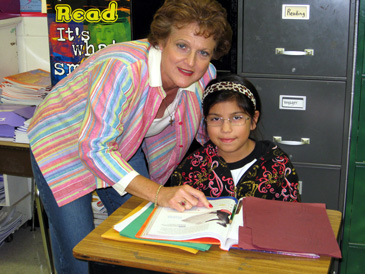
Importance of Academic Coaches Baseball season and Spring Training are upon us. A major league baseball team signed Bill Carpenter, now a retired elementary school principal, when he graduated from high school. At training camp, he recalls, the camp was crawling with coaches. They had coaches for pitching, hitting, catching, base running, outfield play, infield play, sliding, base stealing, taking signals, and warming up drills, just to name a few. They did not give each player a mentor who he could go to if he had a question. There were coaches who were skilled in certain areas and each had a responsibility to bring out the best in every player under the coach’s tutelage. In turn, the coaches met with the manager on a regular basis to assess the progress of each player. Baseball, like a school, is a team function, and everyone needs to know the culture of the team and how it operates in harmony and unison. The most effective schools have coaches. The coaches meet with the principal on a regular basis to assess the progress of every teacher and student. In an effective school, everyone functions as a team and there is a laser focus on student achievement. Responsibility as a Reading Coach When a new teacher joins the staff at Caldwood Elementary School in Beaumont, Texas, he or she will find coaches such as Angie Cook.
Angie is a reading coach with a strong knowledge of providing effective reading instruction. She also has received training in how to work effectively with peer colleagues. These are her responsibilities:
Improved Reading Scores Angie provides bi-weekly professional development meetings with each grade level. Meetings include looking at student data, looking at strengths and weaknesses of the kids, make and take for the reading stations, etc. She usually does walk throughs three days a week and sits in classes for the 90-minute block twice a week. She visits in rooms to observe a particular child or problem a teacher is experiencing. With the new teachers she is in their rooms modeling lessons, sometimes piggybacking off the teacher. She also helps with lesson plans, classroom organization and management, and procedures for the stations. |