
About Hal Portner...
Now, Hal writes, develops materials, trains mentors, facilitates the development of new-teacher induction programs, and consults with school districts and other educational organizations and institutions. He is the author of Mentoring New Teachers (1998 & 2002), Training Mentors Is Not Enough: Everything Else Schools and Districts Need to Do (2001), and Being Mentored: A Guide For Protégés (2002), all three published by Corwin Press.
For 20 years, Hal Portner was a teacher and administrator in two Connecticut public school districts. For the next 10 years, he was with the Connecticut State Department of Education, Bureau of Certification and Professional Development, where, among other responsibilities, he served as coordinator of the Connecticut Institute for Teaching and Learning and worked closely with school districts to developed and carry out professional development and teacher evaluation plans and programs.
Best Sellers
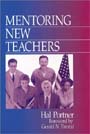
Mentoring New Teachers
by Hal Portner
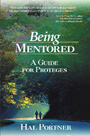
Being Mentored
by Hal Portner
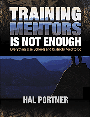
Training Mentors is not Enough
by Hal Portner

 Teachers As Learners...
by Hal Portner Be Your Own Mentor: REFLECT Material for this article is adapted, with permission from the publisher, from Portner, H. (2002) Being Mentored: A Protégé's Guide. Thousand Oaks, CA.: Corwin Press, Inc. When a teacher reflects on her or his professional practice with the objective of learning to teach better, the teacher and learner are the same person. Read the previous sentence again; it has very powerful implications. It means that you have the way to mentor yourself, and the opportunity to monitor your own professional growth. It's June -- the end of the school year. As a teacher, you've experienced quite a bit over the past nine or ten months. You can probably relive many of your experiences in your memory and reflect on them in your thoughts. Chances are, however, that you will learn more from reflection if you do it in writing. Here's how. Keep a Professional Learning Journal Get yourself a notebook, steno pad, or bound blank book and write your reflections in it. There are several ways to format a professional learning journal and you can certainly devise your own. In Dumont, New Jersey, for example, new teachers are encouraged to enter lesson plans, examples of student work, and notes from workshops into a portfolio, then write reflections on their portfolio entries. Another commonly used method is to divide the pages of a notebook into four vertical columns and label them respectively: What & Why | What Happened | Reflections | The Next Step The first two columns can be kept as a diary, i.e., written directly after the event while events are still fresh in your mind and emotions. In the first column, succinctly and objectively record what action(s) you did or did not take, and why you did or did not take it. In column two, indicate what happened as a result of, or in spite of, what was or was not done. Include impressions, feelings and anecdotes as well as objective data. The third column, Reflections, is where learning takes place. Reflections benefit from "aging," so wait a bit before looking back at what happened and what your feelings were at the time so that you can process what you wrote in light of subsequent experiences and expressions. So, in the third column, write down why you think things happened the way they did and what you did or did not do that contributed to the outcome --- successful or otherwise. Column four -- The Next Step -- has to do with reflecting on how you might adjust or modify your approach in order to do it better next time or how you might use the experience to reinforce what you already have done. All too often, folks will do a great job reflecting, but not translate those reflections to action. There is much more to say about translating reflections to action, so I will devote my next month's Gazette article to column four: The Next Step. Focused Reflection Margaret M., a mentor-teacher in California's Beginning Teacher Support and Assessment program (BTSA), reports that her protégés who gather evidence from students, reflect on that data, and modify practice accordingly, move ahead much more rapidly than those who do not focus and reflect on student data. Based on her experience, Margaret offers the following advice and observations.
√ What did my students do well today? I would add these to Margaret's list.
Make reflecting a regular strategy in your career-long mission to learn to teach better. After all, what you learn through reflection, you learn from a master teacher -- yourself!
 For a printable version of this article click here.
Gazette Articles by Hal Portner:
Browse through the latest posts on the Beginning Teachers Chatboard...
|