Find Lessons
Eight Days on Deafness and ASL
This is an integrated unit plan consisting of five classroom subjects that include Language Arts, Art, Music, Social Studies and Math. While this plan may be changed to fit a particular classroom, I left it in its current form because I actually created and…
LanguagePrime and Composite Numbers with Use of Manipulatives
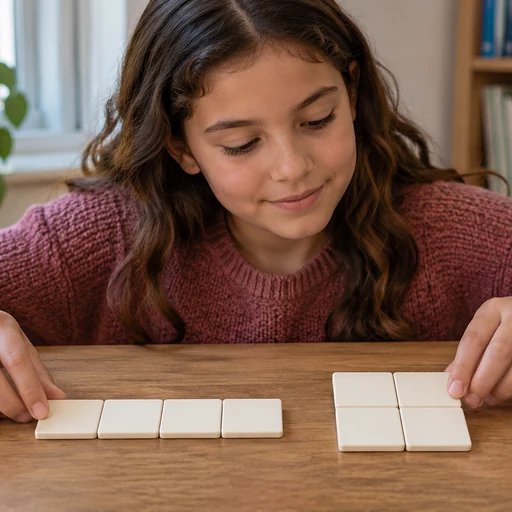
The teacher models factor pairs by arranging tiles into rectangles; student groups arrange assigned numbers on bathroom layouts, identify factors, and classify each number as prime or composite.
MathematicsElementary (K–5)Middle School (6–8)Construction Square Fun
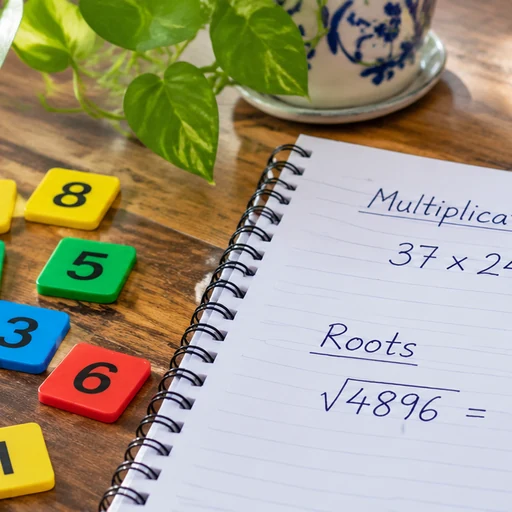
The teacher introduces and models prime and composite numbers and prime factorization; students use number squares to identify and factor numbers, then complete examples independently.
MathematicsElementary (K–5)Emmy's Handbook
Practice math computation, especially knowing basic facts of addition, subtraction, and multiplication. This can be done with a computer program, flash cards, etc.
A Forgotten Science
The article describes Vedic mathematics, its historical background, sutras, and examples of mathematical operations it addresses.
MathematicsPerimeter and Area
Students work in small groups to use perimeter and area clues to draw mystery rectangles on graph paper, agree on a solution, and explain it to the class.
MathematicsElementary (K–5)Lesson Planning 101
The resource advises teachers on planning units, from setting objectives and selecting materials to organizing practice, checks, evaluation, and reflection.
Giggle, Giggle, Quack Pizza Fractions
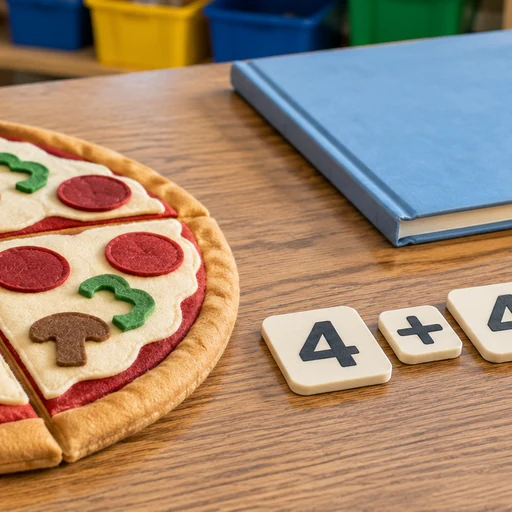
Students read Giggle, Giggle, Quack, use repeated addition and snap cubes to work out how many pizzas are needed for the class, then check their groupings with pizza slices.
MathematicsElementary (K–5)Websites for Songs That Teach Concepts
A collection of websites offers educational songs for language arts, mathematics, science, and social studies across younger and older age ranges.
MusicElementary (K–5)An Academic, Economic, Cultural, and Political Lesson Plan
Students complete pre- and post-activity questionnaires, discuss cultural identity and Prosperity’s components and goals, then play the game in groups of four.
Elementary (K–5)Middle School (6–8)High School (9–12)