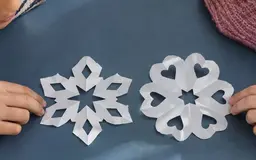
Snow Flake Bentley
By Raymond Orsua
Read Snow Flake Bentley and create paper snow crystals from a prescribed set of geometric cuts.


Start with what changes where your students live. Shorter days, colder mornings, or even just a change in what people wear can lead into weather graphs, stories, and investigations of ice and animal behavior.
35 lesson plans Science, literacy, math & the arts · Preschool through secondary
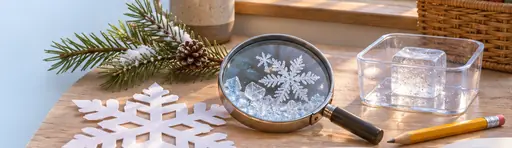
By Raymond Orsua
Read Snow Flake Bentley and create paper snow crystals from a prescribed set of geometric cuts.
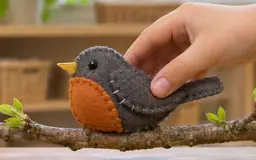
By TT on Kindergarten Chatboard
Use a classroom branch and model animals that appear and disappear with the seasons to introduce migration.

By Sara I. Register
Use The Mitten for character masks, drama and winter-themed learning centers.
Begin with a local observation and have students record it in words, pictures, or numbers. Compare it with evidence from another place. Classes without snow can work from photographs, weather records, and an ice tray.
Chart the weather, sort seasonal images, and use a model of Earth to explain why the two hemispheres have different seasons.
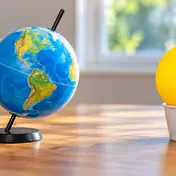
By Stephanie Deindorfer-Tomaszek
Model Earth’s constant axial orientation as it orbits the Sun and explain the cause of seasons.
By Trent Kissinger
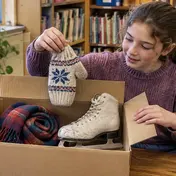
Sort objects by season and investigate Pennsylvania’s seasonal climate and weather.
By Debby Klein
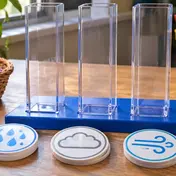
Observe the day’s weather, place it on a pictograph that includes snowy days and compare the counts.

By Kati Bauman
Sort weather images by season while learning Spanish weather and season vocabulary.
Ask what can be observed or measured. Compare snow images or records, then look at how ice melts and how salt changes a freezing mixture.
By Meghan Webb
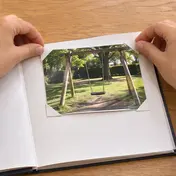
Connect Snowflake Bentley to snow geography, observation and a response worksheet.

By Sue
Collect 12 days of snowfall from three places, compare multiple graphs and use lift-ticket prices to analyze spread and median.
By Susan Bradshaw
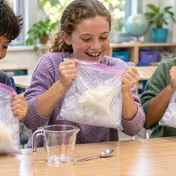
Measure, time and shake an ice-cream batch with salt and ice, then hypothesize why salt affects winter roads.

By Deb Bosle on Teachers.Net Early Childhood Mailring
Make marks with an ice cube and powdered color and observe the ice melting.
Compare seasonal movement, hibernation, and insulation. Study Antarctic field data as a separate habitat example and locate it on a map.

By Lisa/3/CT
Organize a multi-activity unit around migration, hibernation and other winter adaptations, using reading, observation and reporting.
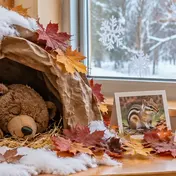
By Deirdre Cardona
Combine a read-aloud, outdoor observation, charts and a bear-den model to study hibernation.
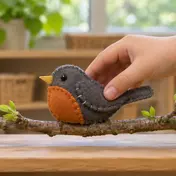
By TT on Kindergarten Chatboard
Use a classroom branch and model animals that appear and disappear with the seasons to introduce migration.
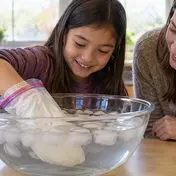
By Joanne Griffin
Compare the feel of cold through an insulated shortening mitten and a control in ice water.
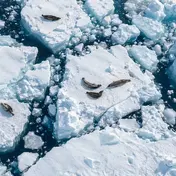
By Jean Pennycook
Count Weddell seals from aerial images, compare group counts and discuss sampling and uncertainty.
Move from a predictable read-aloud to a closely observed scene. Students can perform a story, infer the setting from clues, or write a procedure in order.

By Sara I. Register
Use The Mitten for character masks, drama and winter-themed learning centers.
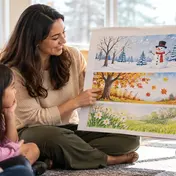
By Elaine Engerdahl
Use the predictable winter shared-reading text for emergent literacy and seasonal vocabulary.
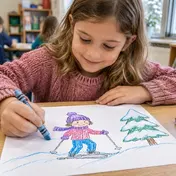
By Tami Sickels
Draw a winter activity and dictate or copy a sentence about it.
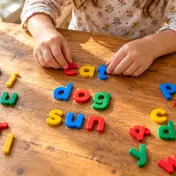
By Theresa Chappell
Build increasingly complex words from the letters in snowflake and sort spelling patterns.
By Harris Dollinger
Introduce snowy-weather vocabulary with illustrations, then read and respond to Robert Frost’s winter poem.
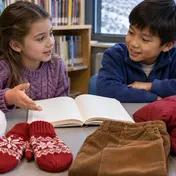
By Erica
Use a winter poem to practice predicting, vocabulary and comprehension.
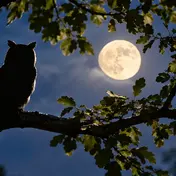
By Meghan Webb
Use the setting, illustrations and text of Owl Moon to make predictions and infer winter conditions.
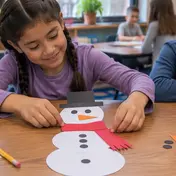
By Denice
Discuss a snowman book and film, then invent new destinations and write a class story.

By Casey
Plan, sequence and write the steps for making a snowman as an expository piece.
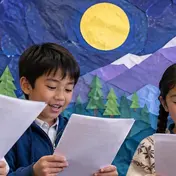
By Meghan Webb
Perform a multi-voice winter folktale with a personified snowflake and sound effects.
Use snow figures to teach perspective, symmetry, and size. Groundhog shadows invite observation and a discussion about the difference between folklore and evidence.
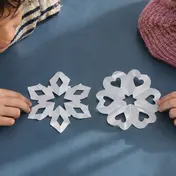
By Raymond Orsua
Read Snow Flake Bentley and create paper snow crystals from a prescribed set of geometric cuts.
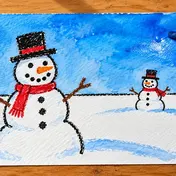
By Paula Schinski
Vary the size and placement of snow figures to teach perspective, the horizon and depth.
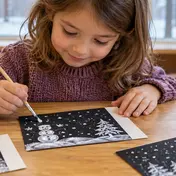
By samreen
Paint a snowy landscape on a dark background.
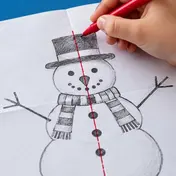
By SymmetryMan
Draw a snowman and other figures, then mark their lines of symmetry.
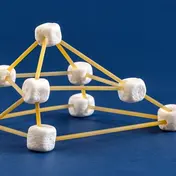
By Elaine and Michele
Build shapes, make patterns and use marshmallows in early math stations designed for the end of a winter unit.
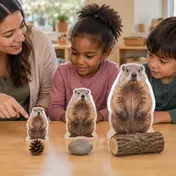
By Will Frost
Compare and order three groundhog shapes by size.

By Mary Miehl
Read a Groundhog Day poem, draw a shadow and discuss predictions.
Teach about observances and stories using named sources and optional participation. Introduce Hanukkah as a Jewish festival and Kwanzaa as an African American and Pan-African celebration of heritage and community.
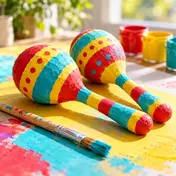
By Addie Gaines
Read Nine Days to Christmas and explore Las Posadas, vocabulary, poinsettias and crafts in a Mexican Christmas unit.
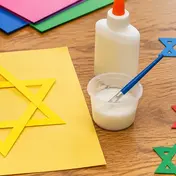
By B.D. DiClemente
Use dreidel-themed movement and matching, plus a seven-candle paper Kwanzaa activity in preschool centers.
By Jean Tribol
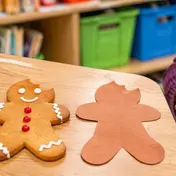
Collect and graph the first bites taken from gingerbread cookies using pictorial cutouts.
By Marcia Goudie
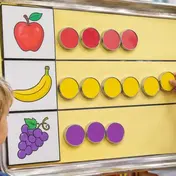
Use hands-on class graphing prompts about favorite winter activities and New Year’s resolutions.
By Tandy Reifsnyder
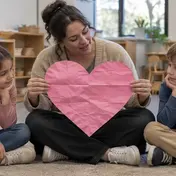
Use a Valentine picture book and a paper-heart discussion to examine how words hurt or help.
 Snow, Ice, and Winter Science
12 lesson plans
Turn observations into investigations of snow, water, heat, and weather data.
 Christmas Lessons and Classroom Activities
15 lesson plans
Find Christmas-specific reading, language, music, crafts, and math.
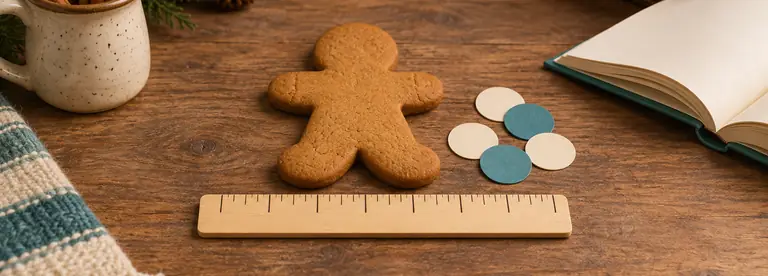 Gingerbread Math and Literacy
6 lesson plans
Build an early-grade unit around a folktale, counting, and measurement.
 Science Lesson Plans
589 lesson plans
Extend a seasonal investigation into broader earth, life, and physical science.
 Elementary School Lesson Plans
1,956 lesson plans
Explore more lessons for elementary classrooms.