
|


 At-Risk Students: A Point of Viewing “At-Risk Students: Children who are expected to fail because teachers cannot motivate, control, teach, or interest them using traditional methods and prescribed curriculum.” ~ At-Risk Students: Understanding Their Defensive Ploys - Bill Page |
||

A Position Paper by Bill Page Regular contributor to the Gazette December 1, 2008 “A point-of-view is how one views something; a point-of-viewing is where one stands while s/he is viewing something. I have been, (and still am), at-risk. I have stood where the troublemakers stood. I have seen the classroom from the bottom end. I have suffered failure and embarrassment. I have felt classroom discrimination, hostility, and injustice. I didn’t like it. It hurt. Now, here’s my point of viewing:” Nothing is more frustrating for teachers than the daunting task of teaching kids who can’t, don’t, or won’t even try to learn, cooperate, follow procedures, or behave. Currently failing students and those at risk of failing are education’s number one problem. Furthermore, the collateral damage of failure in the form of dropouts, truants, illiterates, delinquents, and criminals is a national shame, an economical waste, and an educational travesty. And, the “at-risk problem” is equally egregious for students, parents, administrators, and society. Twenty-five percent of all students may be at risk of failure. And, fifteen percent of all students qualify as chronically failing and repeating grades, making them “at-certain” of failure and of dropping out. Traditional remediation strategies and alternative programs for improving achievement of at-risk students have been notoriously ineffective, especially with the hardcore group at the “bottom” or with middle and secondary students who may have endured years of failure, bad behavior, and bad attitudes. Students who have been retained in grade usually survive school only long enough to reach dropout age, while many marginalized students go through the motions of schooling with no measurable learning achievement. Remedial Procedures Have Not Worked for At-Risk Students Traditional remedial teaching methods have emphasized controlling and modifying the students’ misbehavior rather than changing failed school policies, examining underlying causes, and acknowledging the ineffective behavior, attitude, and relationship of well-meaning teachers. Student behavior is a manifestation of beliefs, attitudes, emotions, and experiences. Reasons for misbehavior are internal and cannot be manipulated from outside by teachers or by parents. Use of punishment as a remedy treats the symptoms not the causes of misbehavior. Predictably, the misbehavior accelerates to retaliation measures such as vandalism, hostility, apathy, and rebellion creating even greater problems. Beliefs and perceptions must be examined and altered by students so they can change their own behavior. Behavior modifications can be made only by the students themselves. But, since the causal factors that are currently driving them are the same ones necessary for making a change, students cannot be expected to initiate that change on their own. Students need a responsible adult to intercede and advise, but they are reluctant to take advice or counsel from anyone they don’t trust, they don’t like, or who has already failed to help them. Since these problem students see teachers on a daily basis, it is imperative that a good student-teacher relationship be established before students can be helped to improve and begin to take responsibility for their behavior and success. Achievement Is the Function of Choice and Commitment Schools cannot change student behavior by compulsion, exhortation, coercion, cajoling, reward, or punishment. They’ve been trying for 100 years! Individual student achievement is the function of choice and commitment; it is never the result of coercion. If sufficiently powerful, coercion can cause a degree of compliance or perhaps cause the student to behave as though complying; but, as schools discovered long ago, coercion can also cause resistance, resentment, hostility, defiance, passive aggression, violence, subversion, vandalism, hopelessness, passivity, and a full range of notorious, disruptive and undesirable behaviors by students at-risk. At-risk students need help seeing themselves in new and different ways, and with renewed hope and possibilities. If they perceive themselves differently, they will behave differently. I am the only one who can change me and only students can change themselves. Change must emanate from inside each individual. Perception cannot be manipulated from the outside. Through a caring relationship with mutual trust and respect, teachers can help students change their perceptions by facilitating a willingness and freedom to examine, question, compare, and consider other possibilities. Until students see themselves as capable, or until the have the desire to change, they cannot acquire the study and learning skills by which they can ultimately improve their behavior and academic achievement.   | ||
|



 New Jobs on Teachers.Net

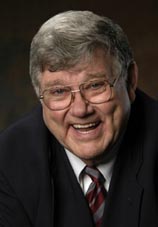 Bill Page, a farm boy, graduated from a one-room school. He forged a career in the classroom teaching middle school “troublemakers.” For the past 26 years, in addition to his classroom duties, he has taught teachers across the nation to teach the lowest achieving students successfully with his proven premise, “Failure is the choice and fault of schools, not the students.”