
|


 A Great Model Of Differentiation The secret to differentiating instruction and motivating students just might be found in extra-curricular activities. | |||||
| by Bill Page Regular contributor to the Gazette June 1, 2008 |
|||||
|
|||||
|
Looking for motivated kids, individualized learning, success, and differentiation? Check out the extra-curricular activities As long as teachers rely on grouping, single assignments for the whole class, and control of the step-by-step learning procedures through assignments, worksheets, grading and homework, students must necessarily be treated as groups; thereby every student treated pretty much alike according to the needs of the group… regardless of his or her differences in interests, abilities and needs. For teachers, the only alternative to grouping is individualizing; conversely, the only alternative to individualizing is grouping. Short of complete one-on-one individualizing, teachers have only the choice of what size group or what grouping criteria. Learning Is Constructed By Each Student Teachers know that learning is a personal, individual experience; that it is constructed within the unique perceptions and experiences of each student. They are well aware of differing personalities, learning styles and backgrounds; but, since a one-to-one ratio of teacher to student is not practical in classrooms, schools must, of necessity, group students.
Teaching Individuals In A Group What needs to be considered are ways to individualize learning in a group of learners.Teachers have learned to differentiate in the three major areas of instruction: 1.) assignments, 2.) procedures, 3.) assessment, regarding each as a separate area. By far, the best examples of individualization, including inclusion, diversity, self-directed learning, peer coaching, cooperation, mentoring, and ethnic sensitivity have been in out-of-school activities and in-school extra-curricular activities. In these settings, ranging from little league, scouts, and ballet classes to chess clubs and FFA, kids of all ages, abilities, and backgrounds can come together; can function meaningfully, learn and enjoy the activities as individuals in a group of diverse learners – without the reward-punishment-control concerns. Individualizing In Sports I have always marveled that a high school coach can take 60 or more kids who range from 78 lb freshmen to 280 lb seniors, from kids who don't know how to put on a uniform, to three year varsity lettermen, and without help, report cards or direct supervision, teach the kids to play football at a highly skilled, highly competitive level. And, can bring on new members and lose the best players each year, while maintaining team integrity. Understanding how this is done is an important key to classroom differentiation.
Characteristics of Extra-Curricular Activities Some of the many characteristics of out-of-school, extra-curricular success that hold the key to differentiated learning for classrooms are these:
Some Authentic Units The best examples of having an extra-curricular esprit de corps in my classrooms, is when I have authentic situations. When we made my seventh grade class into a “Westward Movement Museum” complete with model Conestoga wagons, audiotape instructions on building a sod house, and reports, diaries, and stories of pioneer life, we had nearly every one of the characteristics listed above. When my high school journalism classes produced the school newspaper, yearbook and creative writing journal, they were real products with real feedback, real deadlines, real paid subscriptions, and real feelings of accomplishment. Science projects for the county science fair; art projects for display at the state teacher’s convention; civic club; citywide essay contests; geometry class presentations to the school board; the spring music concert… are all authentic projects. I suspect that if the Algebra II class had to go to the floor of the gym on a Friday night in front of other students, parents, community members and the media, in competition with Algebra II students from the rival high school, the activities during that preceding week would probably have been different. Public performance is another matter.
Classrooms Should To Be “Teams” Often, the classroom teacher tries to be a coach, a leader, a referee, a facilitator, a resource; but there is one big problem – s/he has no team. The class is too often a bunch of individual players, all competing for the same position. The students are not a cohesive group except for their being in the same room and all having similar goals for individual achievement. Only when a teacher creates a learning community do the students see that the way to reach individual goals is to work together sharing efforts and ideas, helping one another as a means of helping themselves. Kids learn from the company they keep; they strive to be like their friends; they value the things that those to whom they feel kinship value. Learning thus becomes more a matter of socialization than of instruction. Extra-curricular activities are dependent on that fact. Teachers would do well to utilize those elements in the activities in the regular classroom. Toward Greater Authenticity Whenever we do real, authentic activities or lessons we get real, authentic reactions and real, authentic learning. When teachers build cooperative classroom communities, wherein each member from the least of them to the highest share common goals and work together for their mutual benefit, they can become resources rather than task-masters. They can be resourceful, helping each kid rather than to try reaching each kid through group lessons and instruction. While there are certainly other characteristics and other dynamics of extra-curricular activities, the obvious, continued success of most all of the programs - their popularity and voluntary participation - make them worthy of study, comparison and emulation. The enthusiasm of the participants, the lack of extrinsic reward or at least its relatively minor role, the support, interest and enthusiasm of those not directly participating, and the long lasting, continuing interest in the activities, are sufficient to use them as a model toward which teachers might work in their classrooms. With joy in sharing, billpage@bellsouth.net   | |||||
|



 New Jobs on Teachers.Net

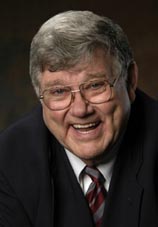 Bill Page, a farm boy, graduated from a one-room school. He forged a career in the classroom teaching middle school “troublemakers.” For the past 26 years, in addition to his classroom duties, he has taught teachers across the nation to teach the lowest achieving students successfully with his proven premise, “Failure is the choice and fault of schools, not the students.”