About
Effective Teaching
The
most important factor in improved student learning is an effective
teacher. Written ten times a year, Harry and Rosemary Wong's
columns feature effective teachers and administrators and their techniques
for enhancing student learning. An archive of past articles
can be found at the end of every column.
Harry
and Rosemary Wong are happy to share with the profession the strategies
and techniques of effective teachers. If you have an effective
technique that works, please share this by sending it to hwong@harrywong.com.
The Wongs will consider it for sharing in future Effective Teaching
columns.
About Harry and Rosemary
Wong...
Harry
and Rosemary Wong are teachers. Harry is a native of San Francisco
and taught middle school and high school science. Rosemary is
a native of New Orleans and taught K-8, including working as the school
media coordinator and student activity director.
Harry
Wong has been awarded the Outstanding Secondary Teacher Award, the
Science Teacher Achievement Recognition Award, the Outstanding Biology
Teacher Award, and the Valley Forge Teacher's Medal. He was
selected as one of the most admired people in the world of education
by readers of Instructor magazine. Rosemary was chosen
as one of California's first mentor teachers and has been awarded
the Silicon Valley Distinguished Woman of the Year Award.
Harry
Wong is the most sought after speaker in education today. He
has been called "Mr. Practicality" for his common sense,
user-friendly, no-cost approach to managing a classroom for high-level
student success.
Nearly
a million teachers worldwide have heard his message. Because
he is fully booked for two years, he has agreed to and has invited
his wife to join him in doing a monthly column for teachers.net so
that more people can hear their message.
About Their Work...
Harry and Rosemary Wong are committed to bringing quality and dignity
to the materials they produce. For this, they have formed their own
publishing company, of which Rosemary is the CEO. They have
dedicated their lives to leaving a legacy in education and making
a difference in the lives of teachers and students.
Their latest contribution to helping teachers succeed is an eLearning
course, Classroom Management with Harry and Rosemary Wong.
The course can be taken in private at the learner's convenience.
The outcome of the course is a 2 inch binder with a personalized Classroom
Management Action Plan.
This Action Plan is similar to the organized and structured plan
used by all successful teachers. Details for the classroom management
course can be seen at www.ClassroomManagement.com.
The Wongs have written The First Days of School,
the best-selling book ever in education. Over 3 million copies
have been sold.
The third edition of The First Days of School
includes an added bonus, an Enhanced CD featuring Harry Wong. The
Enhanced CD, Never Cease to Learn, is dedicated
to those teachers who know that the more they learn, the more effective
they become.
The Wongs have also produced the DVD series, The Effective
Teacher, winner of the Telly Award for the best educational
video of the past twenty years and awarded the 1st place Gold Award
in the International Film and Video Festival.
You can hear Harry Wong LIVE on a set of CDs,, called How
to Improve Student Achievement, recorded at one of his
many presentations. He is the most sought after speaker in education
and his presentations are legendary.
When the book, video series, CD, and eLearning course are used together,
they form the most effective staff training tool for developing effective
teachers. Staff developers and administrators who would like to know
how to implement the aforementioned book, video series, and CD are
encouraged to consult the book, New Teacher Induction:
How to Train, Support, and Retain New Teachers. Information
about these products can be found by visiting the publisher's website
at www.EffectiveTeaching.com
or www.HarryWong.com.
Best Sellers
 The First Days of School with Enhanced CD, Never
Cease to Learn
The First Days of School with Enhanced CD, Never
Cease to Learn
by Harry & Rosemary Wong
$23.96 from Amazon.com
More
information
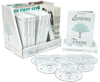 The Effective Teacher (Video Set)
Presented by Harry Wong
8 DVDs, with Facilitator's
Handbook in PDF, book The First Days of
School, and storage case, $695.00 from EffectiveTeaching.com
(volume discounts available)
More
information
Classroom
Management with Harry and Rosemary Wong
eLearning course for individual
use, CEUs available Preview the course and order at www.ClassroomManagement.com
$124.95 (Group discounts available.)
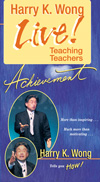
How to Improve Student Achievement
Hear Harry Wong Live! in this 2 CD set
$31.95
More
information
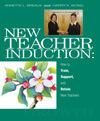
New Teacher Induction: How to Train, Support, and Retain
New Teachers
by Annette L. Breaux, Harry K. Wong $24.05
from Amazon.com
More
information

Pathways: A Guide for Energizing & Enriching Band, Orchestra, &
Choral Programs
by Joseph Alsobrook
$12.57 from Amazon.com
More
information
Results : The Key to Continuous School Improvement
by Mike Schmoker
$20.95 from Amazon.com
More
information
Improving Schools from Within : Teachers, Parents, and Principals
Can Make the Difference
by Roland Sawyer Barth
$13.30 from Amazon.com
More
information
A First-Year Teacher's Guidebook, 2nd Ed.
by Bonnie Williamson, Marilyn Pribus (Editor), Kathy Hoff, Sandy Thornton
(Illustrator)
$17.95 from Amazon.com
More
information
Schools That Learn: A Fifth Discipline Fieldbook for Educators,
Parents, and Everyone Who Cares About Education
by Peter M. Senge (Editor), Nelda H. Cambron McCabe, Timothy Lucas,
Art Kleiner, Janis Dutton, Bryan Smith
$24.50 from Amazon.com
More
information
The Courage to Teach : Exploring the Inner Landscape of a Teacher's
Life
by Parker J. Palmer
$16.76 from Amazon.com
More
information

If You Don't Feed the Teachers They Eat the Students : Guide to
Success for Administrators and Teachers
by Neila A. Connors
$13.96 from Amazon.com
More
information
|
|  Effective
Teaching...
Effective
Teaching...
by Harry and Rosemary
Wong
September
2007
Ten Timely
Tools for Success on the First Days of School
We teach
you to plan so you can plan to teach.
We love to play Mexican Train®.
For those who are not familiar with this game, it’s a dominos
type game where there are three or more games going on simultaneously—at
the same time! There’s your game, your opponents’
games, and a side game called the Mexican Train.
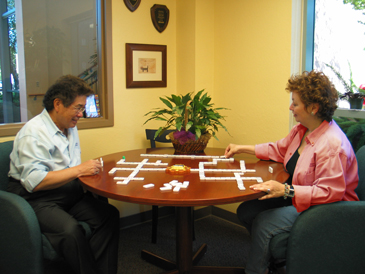
The game requires strategy, intelligence, and skill. It
can get intense, but when it’s over there is usually a smile
and the winner can even say, “That was fun.”
Fun is the result of a well-played game.
Ask anyone who has done a report or paper. The process
requires diligence, hard work, and perseverance. But if
the result is a good grade or commendation, then the writer can
sit back and smile at the accomplishment and then correctly say,
“That was fun.” But it was no fun doing the
process. It was hard work.
It is so common for new teachers to come into the profession
with the mantra of “school should be fun.”
Where they acquire this buzz is unknown as the schools of education
surely don’t teach that. They teach classroom management,
instructional delivery, assessment for learning, student engagement,
parental relationships, educational psychology, differentiated
instruction, problem solving, positive expectations, inclusive
classrooms, and a host of other skills that are required of an
effective teacher.
Schools are institutions of instruction and learning.
The purpose of school is for students to acquire knowledge, learn
skills, and develop habits and principles that will make them
productive citizens and help them grow to their fullest potential
as human beings. (The First Days of School,
page 5.)
We love fun, but fun is not the purpose of a lesson.
Fun is the satisfaction that results when a lesson is completed
with accomplishment and achievement. So, when we
play Mexican Train, we play to win. Fun comes over our faces
after accomplishing a well-played game.
Students can achieve this same kind of satisfaction with their
lessons. When you design a lesson for student learning,
you design it backwards. Backward design contends that instead
of planning a lesson around a fun or bunch of favorite activities,
a more effective lesson should start with the end results you
want to achieve. Then, plan backwards to what you can do
to bring student accomplishment of that goal. Accomplishment
of the goal will bring joy to the students and will make them
eager to want to achieve more.
Effective Classrooms Are Consistent
For a student to demonstrate accomplishment and achievement
in school, there must be a plan that organizes the classroom for
student learning and success.
The most important factor to establish the first week of school
is consistency. A consistent classroom has no surprises.
Everyone knows how the classroom is organized and structured for
learning. Effective teachers have a classroom that is structured,
organized, and CONSISTENT in how the classroom
is run.
As with any game, the more you play it, the better you become
familiar with the rules and strategies that operate that game.
There is consistency to the rules, you know what happens.
Even when you land on “Go to Jail,” you sigh and move
your marker there—without begging for second chances or
blaming it on someone else. You accept the structure of
the game and know it’s there to ensure that you have a great
time while you’re playing.
Here are some of the items you’ll want to make sure you
use consistently in your classroom to better the chances of your
students winning each and every day.
- BEGINNING NEEDS OF STUDENTS. Students
want to know seven things on the first day of school: 1)
Am I in the right room? 2) Where am I supposed to sit?
3) What are the rules in this classroom? 4) What
will we be doing this year? 5) How will I be graded? 6)
Who are you as a person? 7) Will I be treated as a human
being? Have answers to these questions ready and use them
as part of your welcome to the students on the first day of
school. Help can be found in our August 2000 column, “There
Is Only One First Day of School,” and in The
First Days of School, page 105.
- CLASSROOM MANAGEMENT PLAN. Sarah Jondahl
began as a first-year teacher six years ago, with a binder complete
with a classroom management plan. She had a plan for how
she wanted to operate her classroom. She knew the procedures
she wanted her students to follow. With procedures in
place, she says, “The educational experience in my classroom
is extremely effective.” Use Sarah’s plan
to help you plan for your student’s success. The
plan can be seen in our September 2005 column, “A
Successful First Day Is No Secret,” and at www.ClassroomManagement.com.
- SCRIPT. Diana Greenhouse, third-grade
teacher near Fort Worth, Texas, starts her school year with
a PowerPoint script of her classroom management plan.
It’s ready to show to students who miss the opening of
school and is a terrific Show and Tell for Back to School night.
Diana says, “When I look back at all I’ve accomplished
in one school year, it takes my breath away. My students
learned. I loved every minute of teaching, and it all
started with that very first minute of the first day of school.”
Her PowerPoint can be seen in our October 2005 column,
“Classroom
Management Is Not Discipline,” and for more information
read The First Days of School, page
95.
- BELLWORK. Chelonnda Seroyer, English
teacher in Alabama, says that she spent two months preparing
for one day, the first day of school. On her first day
as a first-year teacher, her students entered her classroom
and began to work immediately, and every day thereafter.
She has an assignment posted and it is posted in the same location
every day. There is a consistent procedure in her classroom
and the students know that when the bell rings, they are to
get to work immediately. Chelonnda’s plan can be
seen in our February 2005 column, “The
Power of Procedures,” and for more information read
The First Days of School, page 124.
- ATTENTION PROCEDURE. Barbara DeSantis
can bring her class to attention in five seconds by calmly saying,
“Give me five, please.” This is because she
knows the steps to teach a procedure, which are 1) Clearly
state and demonstrate a procedure; 2) Rehearse the procedure;
and 3) Assess the rehearsal and reinforce the procedure.
All procedures must be rehearsed, until the procedure becomes
a routine. Her plan can be seen in our August 2006 column,
“Effective
Teachers are Proactive,” and for more information
read The First Days of School, page
184.
- HAND SIGNALS. While students are working,
you can reduce the noise level in the classroom by using a set
of hand signals. For instance, one finger could indicate
a desire to speak, two fingers a desire to leave the seat, and
three fingers to request help from the teacher. You respond
by shaking your head or waving a hand that responds, “Yes,”
“No,” or “Wait.” This technique
can be seen in The First Days of School,
page 187.
- DISTRIBUTION OF MATERIALS. We know
that students learn best with hands-on activities. Do
not place materials on a central table and have continuous student
movement in the classroom. Rather, place all materials
needed for the activity in a container and post an inventory
of the contents of the container in the classroom. Assign
a student to carry the container to the group for the activity
and return it after checking the inventory list that is posted.
This technique can be seen in our September 2002 column, “Dispensing
Materials in Five Seconds.”
- SCHOOL-WIDE PROCEDURES. The most effective
schools have procedures that are used consistently by all teachers.
These are ready and posted on the first day of school.
Students can move from teacher to teacher knowing what to do.
For instance, they know that all classrooms have an assignment,
so they enter all classrooms knowing what to do and start their
assignment. Work with your colleagues to get some general
procedures established at your grade level teaching team or
your school. A school with such a plan can be seen in
our January 2002 column, “A
Most Effective School.”
- TEACH TO AN OBJECTIVE. The effective
teacher tells the class the objective of the lesson. You
determine what you want your students to learn, perhaps based
on state or district standards, and then you backward design
a lesson to begin with an objective or objectives. Objectives
are student learning targets. When the students know what
they are aiming for, they know what they are responsible for
learning.
Julie Johnson of Minnesota structures her lessons as follows:
1) She determines what she wants her students to learn;
2) She shows them what they are to learn; 3) They practice
what they are to learn; and 4) They are tested on what
they are to learn. She says, “There is no secret
as to what is expected of them. When I do this they
all succeed.” If students know what they are to
learn, you greatly increase the chances that the students
will learn. Julie’s technique can be seen in our
April 2006 column, “They’re
Eager to Do the Assignment” and in The
First Days of School, page 241.
- ASSESS FOR LEARNING. The purpose of
a test is not to grade the student. The results of a test
are to be used to assess for learning. When a doctor gives
a patient a test, such as a blood test, the results are not
used to grade the patient. The results are used by the
doctor to assess the patient’s health and to determine
if any medication or treatment is needed to improve the patient’s
health. Likewise, an effective teacher uses the results
of a test to determine what instruction is needed to improve
the learning of a student. Several columns were written
in 2006 and 2007 on this subject. One is October 2006,
“Assessing
Student Progress with a Rubric.”
How well you begin school with an organized, consistent, and
well managed classroom will determine your success and your students’
success for the rest of the school year.
With procedures firmly in place, you will
have time
to devote yourself to the art and craft of teaching and
become the effective teacher your students need and deserve.
Success Begins with You
You are the determiner of success in your classroom.
Not only by what you do, as in the “Ten Timely Tools,”
but more importantly in your attitude and belief in children and
your ability to make a difference in their lives.
- Believe that every child who enters your classroom this year
wants to grow and learn and be successful and has the capacity
to do so.
- Believe in yourself that you have the skills needed to reach
children and move them to new heights.
- Believe that every day is a new day with the opportunity to
start anew.
- Believe that you are part of a greater community of educators
who are proud of their profession and dedicated to their calling.
- Believe that the smile of welcome you radiate to your students
everyday will warm the hearts of more bodies that you will ever
imagine.
- Believe in partnerships with colleagues, administrators, and
parents that will nurture children.
- Believe that you are both a teacher and a learner and grow
yourself professionally each year.
- Believe that hard work is required of success.
- Believe that education is the bedrock for humanity.
- Believe that we are here to help you and your students achieve
success.
The result of writing this month’s column has been
a fun experience for us. It has required us to
think back to our classrooms and recall what was helpful at the
start of school. It has required us to review past teachers.net
articles and share with you some outstanding colleagues.
It has required us to think about our perception of education
and what it means to us. The pleasure and enjoyment of this
process is what has created the smiles, the chuckles, and the
energy to keep writing and sharing.
Make your school year one of pleasure and enjoyment packed with
learning for you and your students.
 For a printable version of this article click
here.
For a printable version of this article click
here.
Harry & Rosemary Wong products: http://www.harrywong.com/product/
Email Harry Wong: harrywong@teachers.net
Gazette Articles by Harry & Rosemary Wong:
If you spot a link that appears to be out-of-date, please alert us at webmaster@teachers.net!
- A Grateful Goodbye After 15 Years (Jun 2015)
- Love, Marriage, and Babies, Oh My! (May 2015)
- Retention Rate Is 100 Percent (Apr 2015)
- Teacher Effectiveness and Human Capital (Mar 2015)
- Training Teachers to Be Effective (Feb 2015)
- Making Deals Is Ineffective (Dec 2014 / Jan 2015)
- Retrieving and Carrying Electronic Devices (Nov 2014)
- Sharing to Succeed (Oct 2014)
- How a University Prepares Its Students (Sep 2014)
- Effective Teaching (Aug 2014)
- Your Future Is in Your Hands (June/July 2014)
- The Classroom Management Book (May 2014)
- When Students Succeed; Teachers Succeed (April 2014)
- Teaching New Teachers How to Succeed (March 2014)
- Execute and Praise (February 2014)
- Shaping a Solid Foundation (Dec 2013 / Jan 2014)
- The Most Misunderstood Word (November 2013)
- How to Start Class Every Day (October 2013)
- Prevention: The Key to Solving Discipline Problems (September 2013)
- Planning, Planning, Planning (August 2013)
- Are You THE One? (June / July 2013)
- Practical Examples That Work (May 2013)
- A Disability Is Not a Handicap (Apr 2013)
- Totally Inexcusable (Mar 2013)
- Be Proud of Public Education (Feb 2013)
- Structure Will Motivate Students (Dec 2012 / Jan2013)
- Orchestrating the Classroom (Nov 2012)
- The Lasting Impact of Instructional Coaching (Oct 2012)
- Learning, Laughing, and Leaving a Legacy (Sep 2012)
- Twenty-two, First Year, and Legit (Aug 2012)
- A Master Teacher of Teachers (June/July 2012)
- Where Going to School Means Success (May 2012)
- A Nationally Celebrated High School (Apr 2012)
- The Highest Rated School in New York City, Part 2 (Mar 2012)
- The Highest Rated School in New York City, Part 1 (Feb 2012)
- The Importance of Culture (Dec 2011 / Jan 2012)
- You Can Teach Classroom Management (Nov 2011)
- Seamless, Transparent, and Consistent (Oct 2011)
- Coaching Teachers to Be Effective Instructors (Sep 2011)
- How a Principal Creates a Culture of Consistency (Aug 2011)
- Graduation Begins in Your Classroom (June/July 2011)
- The Inspiration of a Mother (May 2011)
- How to Be an Effective Leader (Apr 2011)
- Learning Objectives: The Heart of Every Lesson (Mar 2011)
- Even Shakespeare Had Structure (Feb 2011)
- Effectiveness Defined: It's Not a Mystery (Dec 2010 / Jan 2011)
- Surviving Without a Principal (Nov 2010)
- Achieving Greatness: Locke Elementary School, Part 2 (Oct 2010)
- Teaching Greatness: Locke Elementary School, Part 1 (Sep 2010)
- Effective from the Start (Aug 2010)
- Ten Year Summary of Articles, 2000 to 2010 (June/July 2010)
- The Success of a Culture of Consistency (May 2010)
- Training Teachers to Be Effective (Apr 2010)
- Learning to Teach, Teaching to Learn (Mar 2010)
- Turning Teaching Dreams into Reality (Feb 2010)
- Dreams and Wishes Can Come True (Dec 2009 / Jan 2010)
- Success in a State Controlled School (Nov 2009)
- Inner City Is Not An Excuse (Oct 2009)
- Exceeding All Expectations (Sep 2009)
- Teachers Are the Difference (Aug 2009)
- Nine Year Summary of Articles, 2000 to 2009 (Jun/Jul 2009)
- Teachers Are the Greatest Assets (May 2009)
- The Tools for Success (Apr 2009)
- Assessing for Student Learning (Mar 2009)
- To Be an Effective Teacher Simply Copy and Paste (Feb 2009)
- The Sounds of Students Learning and Performing (Dec 2008)
- A School That Achieves Greatness (Nov 2008)
- Boaz City Schools: Professional Learning Teams (Oct 2008)
- It Was Something Close to a Miracle (Sep 2008)
- A Computer Teacher Shows the Way (Aug 2008)
- Eight Year Summary of Articles, 2000 to 2008 (Jun/Jul 2008)
- An Amazing Kindergarten Teacher (May 2008)
- Schools That Beat the Academic Odds (Apr 2008)
- Academic Coaching Produces More Effective Teachers (Mar 2008)
- Coaches Are More Effective than Mentors (Feb 2008)
- Wrapping the Year with Rap! (Dec 2007/Jan 2008)
- The Floating Teacher (Nov 2007)
- Taking the Bite Out of Assessment—Using Scoring Guides (Oct 2007)
- Ten Timely Tools for Success on the First Days of School (Sep 2007)
- First Day of School Script - in Spanish, Too! (Aug 2007)
- Seven Year Summary of Articles, 2000 to 2007 (Jun 2007)
- Effective Teachers End the Year Successfully (May 2007)
- Training Gen Y Teachers for Maximum Effectiveness (Apr 2007)
- Classroom Management Applies to All Teachers (Mar 2007)
- Students Want a Sense of Direction (Feb 2007)
- Rubrics in Two College Classes (Dec 2006/Jan 2007)
- How to Write a Rubric (Nov 2006)
- Assessing Student Progress with a Rubric (Oct 2006)
- A 92 Percent Homework Turn-in Rate (Sep 2006)
- Effective Teachers Are Proactive (Aug 2006)
- Five Year Summary of Articles (Jun 2006)
- Hitting the Bulls Eye as a Beginning Teacher (May 2006)
- They're Eager to Do the Assignments (Apr 2006)
- The Success of Special Ed Teachers (Mar 2006)
- What Teachers Have Accomplished (Feb 2006)
- Fifty Years Ago, The Legacy (Dec 2005/Jan 2006)
- The Emergency Teacher (Nov 2005)
- Classroom Management Is Not Discipline (Oct 2005)
- A Successful First Day Is No Secret (Sep 2005)
- The Most Important Factor (Aug 2005)
- Four Year Summary of Articles (Jul 2005)
- Improving Student Achievement Is Very Simple (Part 2) (Jun 2005)
- Improving Student Achievement Is Very Simple (Part 1) (May 2005)
- Never Cease to Learn (Apr 2005)
- His Classroom Is a Real Life Office (Mar 2005)
- The Power of Procedures (Feb 2005)
- The First Ten Days of School (Jan 2005)
- PowerPoint Procedures (Nov/Dec 2004)
- The Saints of Education (Oct 2004)
- How Procedures Saved a Teacher's Life (Sep 2004)
- How to Help Students with Their Assignments (Aug 2004)
- Three Year Summary of Articles (Jun/Jul 2004)
- His Students are All Certified (May 2004)
- What to Do When They Complain (Apr 2004)
- A Well-Oiled Learning Machine (Mar 2004)
- The Effective Teacher Adapts (Feb 2004)
- How to Start a Lesson Plan (Aug 2003)
- Applying for a Teaching Job in a Tight Market - Part 2 (Jun/Jul 2003)
- Applying for a Teaching Job in a Tight Market (May 2003)
- The Effective Substitute Teacher (Apr 2003)
- A First Day of School Script (Mar 2003)
- How to Retain New Teachers (Feb 2003)
- No Problem With Hurricane Lili (Dec 2002)
- A Class Size of 500 (Nov 2002)
- Effective Practices Apply to All Teachers (Oct 2002)
- Dispensing Materials in Fifteen Seconds (Sept 2002)
- How To Start School Successfully (Aug 2002)
- Teaching Procedures Is Teaching Expectations (June - July 2002)
- $50,000 to Replace Each Teacher (May 2002)
- Even Superintendents Do It (Apr 2002)
- Impossible, No Job Openings? (Mar 2002)
- A Stress Free Teacher (Feb 2002)
- A Most Effective School (Jan 2002)
- Van Gogh in Nine Hours (Dec 2001)
- The Effective Teacher Thinks (Nov 2001)
- How a Good University Can Help You (Sep 2001)
- How to Motivate Your Students (May 2001)
- How to Recognize Where You Want to Be (Apr 2001)
- What Successful New Teachers Are Taught (Mar 2001)
- A Journey of the Heart (Feb 2001)
- The Miracle of Teachers (Jan 2001)
- It's Not the Students. It's the Teacher. (Dec 2000)
- The First Five Minutes Are Critical (Nov 2000)
- How to Start a Class Effectively (Oct 2000)
- The Problem Is Not Discipline (Sep 2000)
- There Is Only One First Day of School (Aug 2000)
- Applying for Your First Job (Jul 2000)
- Your First Day (Jun 2000)
Browse through the latest posts from the Classroom Management
Chatboard...
|
| |
|


 Chatboards
 Mailrings
 Classifieds
 Lessons
 Jobs
Jobs
 Projects

