Games can make practice feel less like repetitive work and more like an activity that children want to complete. A child practicing addition through a game, for example, may solve dozens of problems without feeling that they are simply doing a worksheet. The immediate feedback also helps children understand whether an answer is correct and gives them an opportunity to try again.
Another benefit is that games can encourage problem solving. Puzzle games, word games, memory activities, math challenges, and strategy games can require children to think about what to do next rather than simply remember an answer. When the activity is designed well, the child is actively making decisions and learning from the results.
Games can also make it easier to practice the same skill multiple times. Repetition is important in learning, but repeated exercises can quickly become boring. A well designed game can provide repetition while changing the challenge, pace, or situation so that the child remains interested.
There is also an important difference between games that are simply entertaining and games that are designed around a learning objective. Not every game is educational, and adding points or rewards to an activity does not automatically make it useful for learning. The strongest educational games connect the activity directly to a skill the child is expected to develop.
For teachers, games can also be useful as an additional classroom activity. They can be used after a lesson, during independent practice, as a warm up, or as an optional activity for students who finish their regular work early. Browser based games can be particularly convenient because students can access them without installing software.
At the same time, games should not replace teachers, books, discussion, writing, experiments, or hands on activities. Children benefit from different learning approaches, and what works well for one student may not work as well for another. Games are best viewed as another tool that teachers and parents can use when it supports the learning goal.
The quality of the game matters too. A useful educational game should be easy enough for a child to understand but challenging enough to require thinking. It should provide clear feedback, avoid unnecessary distractions, and give the child a reason to keep practicing.
There are now many free educational games available online covering subjects such as mathematics, spelling, vocabulary, typing, memory, logic, and problem solving. For example, resources such as gamesmom.com offer browser based activities that children can use without downloading an app or creating an account.
The bigger question is not whether games are always better than traditional learning. It is how we can use games alongside other teaching methods to give children more opportunities to practice, explore, and think.
What has been your experience using educational games with your students? Which types of games have actually helped children learn, and which ones have not worked as well?
That was one of the reasons we built gamesm...See MoreI agree that games can play a useful role in making learning more engaging, especially for younger students. Well designed educational games can give children a chance to practice problem solving, math, language, memory, and critical thinking in a more interactive way than traditional worksheets.
That was one of the reasons we built gamesmom.com, with free browser based educational games for kids that require no download or signup. We are also exploring ways to make the games useful for parents and teachers, not just entertainment.
Can anyone recommend some good websites for reading stories online?
I know https://www.openclassics.org which is great for classic tales: texts based on selected historical editions, great historical illustrations, and modernized versions to ease the reading.
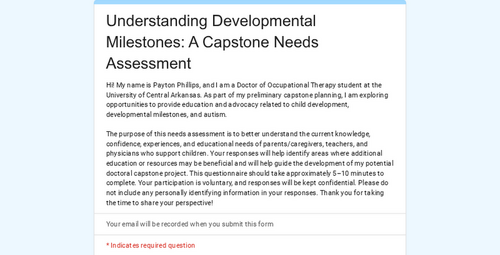
I am looking for parents/caregivers...See MoreHi everyone! My name is Payton Phillips, and I am a Doctor of Occupational Therapy student at the University of Central Arkansas. As part of my preliminary capstone planning, I am exploring opportunities to provide education and advocacy related to child development, developmental milestones, and autism.
I am looking for parents/caregivers, teachers/educators, and physicians/healthcare providers who work with or support children to complete a short needs assessment survey. The purpose of this survey is to better understand current knowledge, confidence, experiences, and educational needs related to developmental milestones, autism, and advocating for children.
The survey should only take about 5-10 minutes to complete. Your feedback will help guide the development of my capstone project and identify areas where additional education or resources may be beneficial.
I would greatly appreciate your participation, and please feel free to share with others who may be interested! Thank you!
With AI becoming more common in education, could it eventually replace some of the work teachers currently do, such as lesson planning, grading, answering student questions, and providing personalized learning support? Or will AI remain a tool that helps teachers rather than replacing the human role in education? What do other educators think?
I am a Master's student at the University of Wolverhampton conducting research exploring moral injury, emotional exhaustion and psychological wellbeing among UK secondary school teachers.
I am currently looking for qualified secondary school teachers working in the UK to participate in an anonymous online survey.
Who can take part?
• Qualified secondary school teachers
• Currently working in the UK
• Aged 18 or over
• Fluent in English
Time: Approximately 10-15 minutes
Participation: Voluntary and anonymous
Ethics: The study has received university ethical approval
Full participant information and consent information are provided before the survey begins.
I would be extremely grateful to anyone who is eligible and willing to participate. Please also feel free to share the survey with other eligible secondary-teaching colleagues.
The one-year moratorium — part of a broader assessment of how children in the nation's largest school system interact with the technology — will apply to "all software that uses student-facing generative AI" for students through eighth grade, the mayor's office said. It described the policy as the most expansive prohibition in the country.
My daughter and sister-in-law moved to Texas to work for local school districts there. They make better money and get paid during the summer months when school is out. Our system is flawed. Why do we undervalue educators in this state? I wish they didn't have to leave California to be paid what they are worth.









That was one of the reasons we built gamesm...See More